 Save on Pinterest
 The first time I made minestrone, I was living in a tiny apartment with a kitchen that could barely fit two people. My grandmother had called me and simply said "make soup" when I complained about being broke and cold. I raided my fridge, found whatever vegetables were on their last legs, and ended up with something that wasn't quite Italian but felt like home. Now, whenever I make a proper minestrone, I think about how the best soups are really just about using what you have and feeding people you love.
Last winter, my friend Sarah came over after a terrible day at work. I was halfway through making this minestrone, the house smelling like garlic and tomatoes. She sat at my counter with a glass of wine, watching me chop vegetables, and by the time the soup was ready, she hadn't said a word about her day. We ate in comfortable silence with crusty bread, and later she told me that soup had fixed something she didn't know was broken.
Ingredients
- 2 tablespoons olive oil: This is your flavor foundation, so use the good stuff you'd drizzle on finished dishes
- 1 medium onion, finely chopped: Yellow onions work beautifully here, becoming sweet and mellow as they cook
- 2 cloves garlic, minced: Fresh garlic is non-negotiable, it blooms in that hot olive oil and makes your whole kitchen smell like heaven
- 2 medium carrots, diced: These add natural sweetness and that classic soup flavor we all recognize from childhood
- 2 celery stalks, diced: Don't skip these, they create that aromatic base that makes soup taste professional
- 1 medium zucchini, diced: Summer squash holds its shape beautifully and absorbs all those herbal flavors
- 1 medium potato, peeled and diced: The secret to body and creaminess without actually adding cream
- 1 cup green beans, cut into 1-inch pieces: Fresh beans bring crunch and color that canned vegetables can't match
- 1 (14 oz / 400 g) can diced tomatoes: The juices become part of your broth, so don't drain them
- 4 cups (1 liter) vegetable broth: Homemade is ideal, but a good quality store-bought broth works perfectly
- 2 cups water: This stretches the broth without diluting flavor, thanks to all those vegetables
- 1 (15 oz / 425 g) can cannellini beans: These creamy white beans make it substantial enough to be a full meal
- 3/4 cup small pasta: Ditalini is traditional, but any tiny pasta shape will work beautifully
- 1 teaspoon dried oregano: Earthy and essential for that Italian soup profile
- 1 teaspoon dried basil: Sweet and floral, it complements the oregano perfectly
- 1 bay leaf: The quiet hero that adds depth you'll notice most when it's missing
- Salt and freshly ground black pepper: Taste as you go, this is your opportunity to balance everything
- 1/4 cup chopped fresh parsley: Bright and grassy, it lifts all those rich cooked flavors
- 2 tablespoons chopped fresh basil: If you can find it, fresh basil at the end is absolutely worth it
- Freshly grated Parmesan cheese: The traditional finishing touch that adds salty umami richness
Tired of Takeout? 🥡
Get 10 meals you can make faster than delivery arrives. Seriously.
One email. No spam. Unsubscribe anytime.
Instructions
- Build your flavor foundation:
- Heat olive oil in a large pot over medium heat until it shimmers slightly, then add onion and garlic. Sauté for 2 to 3 minutes, stirring occasionally, until the onion turns translucent and your kitchen starts smelling amazing.
- Soften the vegetables:
- Add carrots, celery, zucchini, potato, and green beans all at once. Stir everything together and let it cook for 5 to 6 minutes until the vegetables start to soften and look glossy.
- Create the soup base:
- Pour in the diced tomatoes with all their juices, vegetable broth, and water. Add dried oregano, dried basil, bay leaf, salt, and pepper. Bring everything to a gentle boil, watching as the broth turns a beautiful rust color.
- Let it simmer:
- Reduce heat to low, cover the pot, and let it cook undisturbed for 15 minutes. This gives all the flavors time to become friends and the vegetables time to get perfectly tender.
- Add the heart:
- Stir in cannellini beans and pasta. Continue simmering uncovered for 10 to 12 minutes, testing pasta for doneness. You want it al dente because it will keep cooking in the hot soup.
- Finish with fresh herbs:
- Fish out and discard the bay leaf. Stir in fresh parsley and basil, then taste the soup and adjust salt and pepper as needed. This is your moment to make it perfect.
- Serve with love:
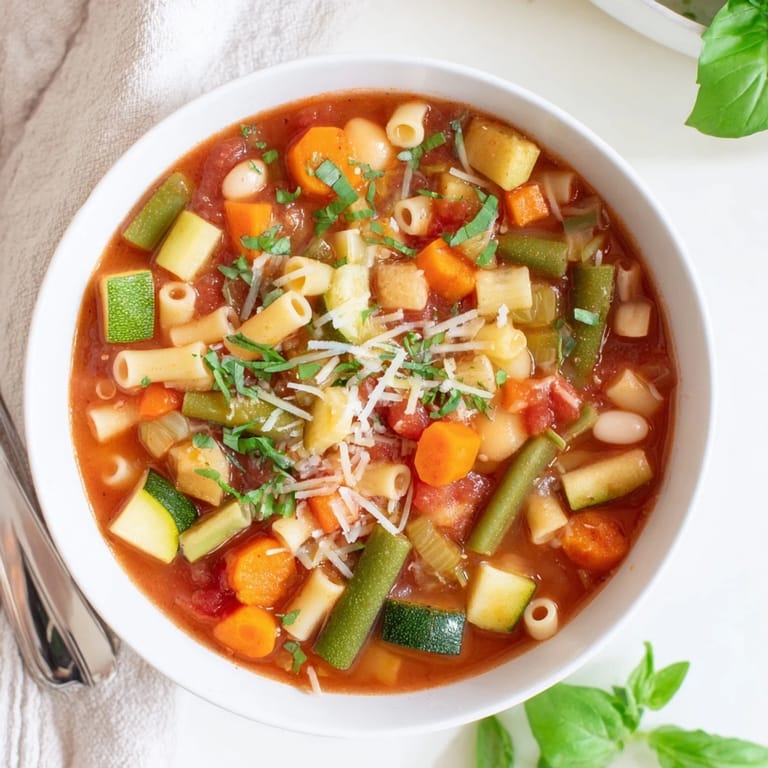
- Ladle hot soup into bowls and top with freshly grated Parmesan cheese. Put extra cheese on the table because everyone always wants more.
 Save on Pinterest
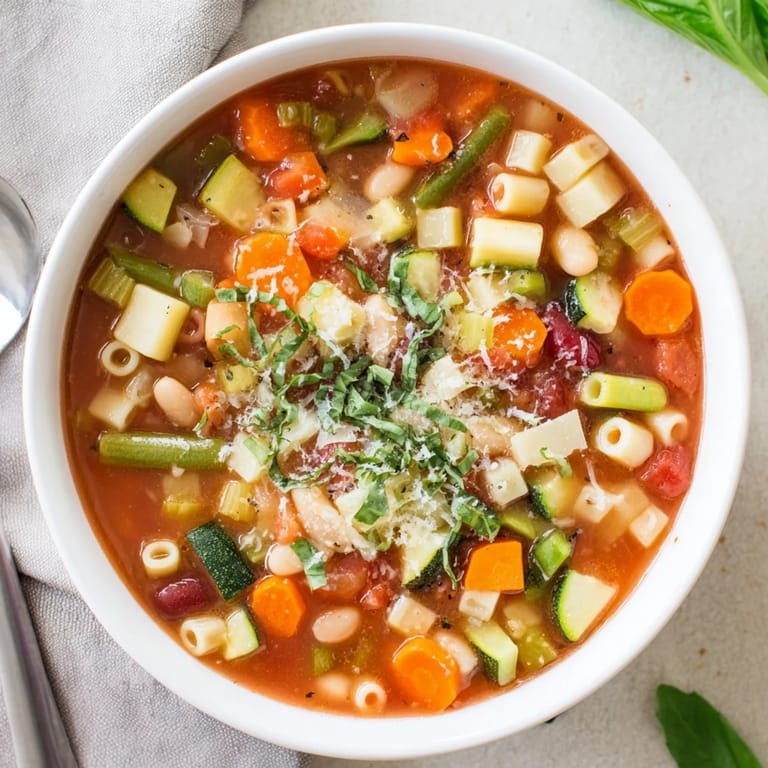
 My dad used to say that soup was just love you could eat, and making minestrone has become my love language. There's something profoundly satisfying about taking a handful of humble vegetables and transforming them into something that feeds both body and soul. Every time I make it, I think of all the kitchens and all the hands that have made this same soup across generations.
Making It Your Own
The beauty of minestrone lies in its flexibility. I've made versions with spinach in spring, cabbage in winter, and even added roasted butternut squash in fall. Think of this recipe as a template rather than a strict set of rules. The only non-negotiable elements are good broth, fresh aromatics, and patience while everything simmers together.
The Bread Question
Proper minestrone deserves proper bread. A crusty Italian loaf is traditional, but honestly any sturdy bread will work beautifully. I like to tear pieces directly into my bowl, letting them soak up that flavorful broth until they're soft and custardy. It's not elegant, but it's absolutely the best way to eat it.
Storage and Leftovers
This soup keeps beautifully in the refrigerator for up to four days, and I actually think it tastes better on day two. The flavors have time to meld and deepen in ways they can't during the initial cooking. If you're planning ahead, you might want to cook the pasta separately and add it when reheating, keeping the pasta from becoming too soft.
- Cool the soup completely before refrigerating, never put hot soup directly into your fridge
- Freeze individual portions for those nights when cooking feels impossible
- The broth may seem thin initially but will thicken as it sits, especially with the pasta continuing to absorb liquid
 Save on Pinterest
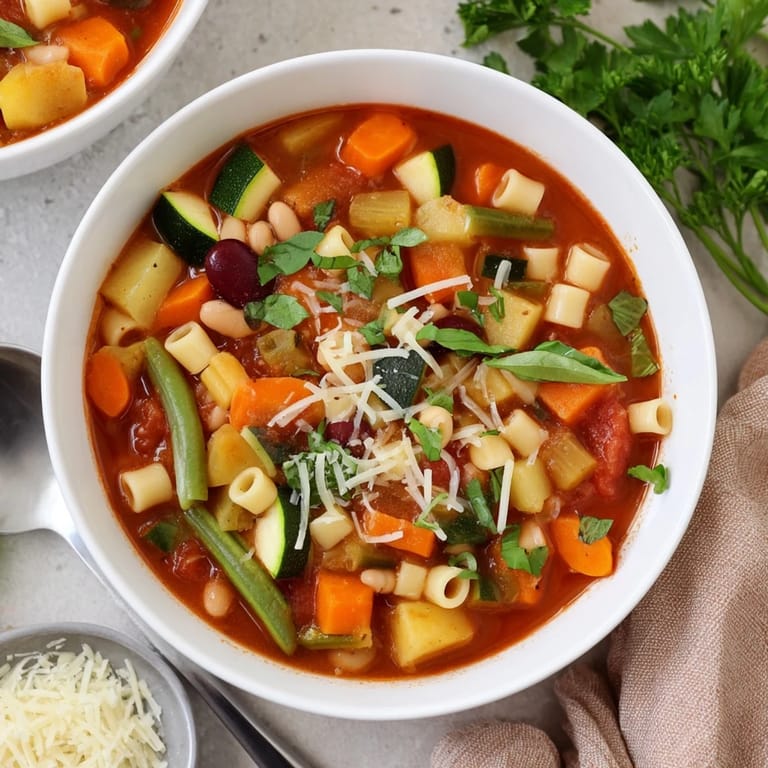
 There's nothing quite like standing at the stove, spoon in hand, tasting that first perfect bite of soup you've made yourself. I hope this recipe finds you on cold nights and becomes part of your own story.
Recipe Questions & Answers
- → Can I make minestrone soup ahead of time?
Yes, the flavors actually develop and improve when made ahead. Store in the refrigerator for up to 3 days. Add the pasta just before serving if you prefer it al dente, as it will continue softening in the broth.
- → What vegetables work best in minestrone?
Traditional minestrone includes carrots, celery, zucchini, green beans, and tomatoes. You can easily adapt based on seasonality—try spinach, kale, cabbage, or swiss chard in cooler months, or fresh peas and asparagus in spring.
- → Is minestrone soup freezer-friendly?
Yes, it freezes well for up to 3 months. For best results, slightly undercook the pasta before freezing, or omit it entirely and add freshly cooked pasta when reheating. Thaw overnight in the refrigerator before warming gently on the stove.
- → Can I make minestrone without pasta?
Absolutely. For a lower-carb version, simply omit the pasta or substitute with extra vegetables, rice, or quinoa. The soup remains satisfying thanks to the beans and hearty vegetables. Add more liquid if you prefer a thinner consistency.
- → What's the best way to store leftover minestrone?
Cool completely and transfer to airtight containers. Refrigerate for up to 3 days or freeze for longer storage. The pasta will absorb more liquid as it sits, so you may need to add a splash of water or broth when reheating.
- → Can I use dried herbs instead of fresh?
Yes, dried oregano and basil work beautifully during cooking. Use about one-third the amount of fresh herbs since dried flavors are more concentrated. Fresh parsley and basil added at the end provide a bright, aromatic finish.