 Save on Pinterest
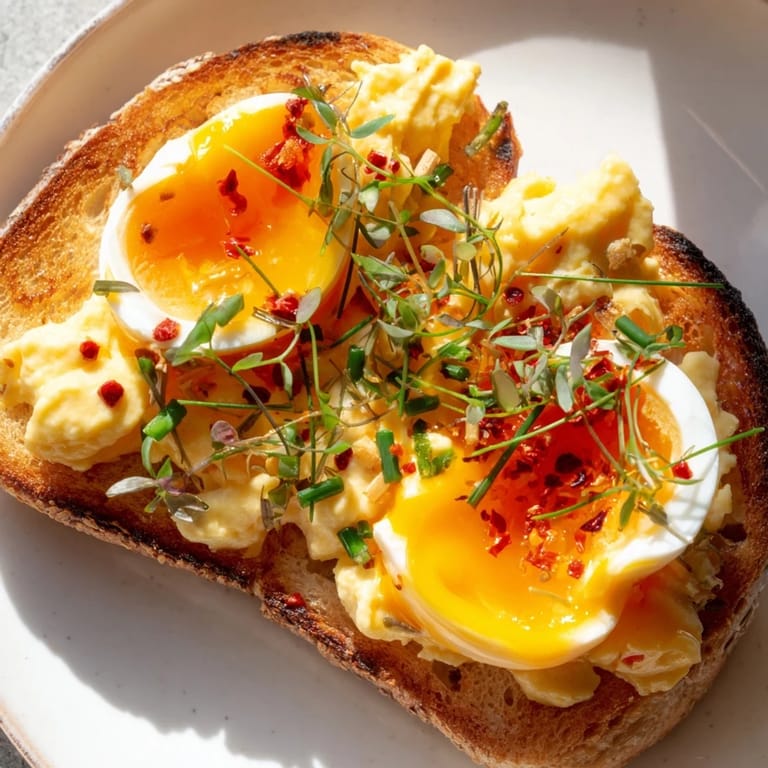
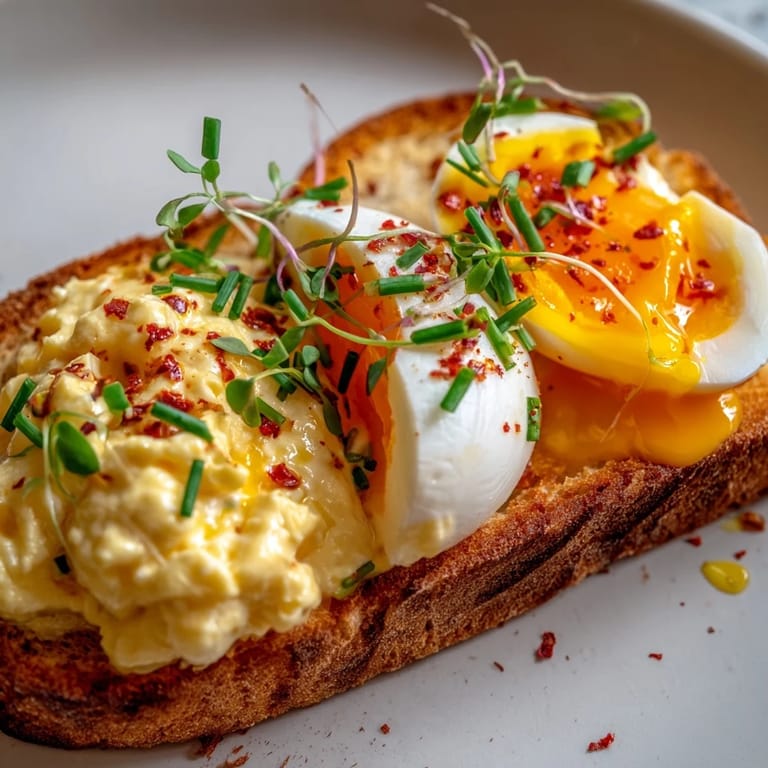
 There's something about a breakfast plate that makes you feel like you've accomplished something before the day even starts. I discovered egg flight toast on a lazy Sunday morning when I had three eggs left in the carton and wanted to use them creatively instead of making the same scrambled batch. The idea hit me while standing at the kitchen counter: why not prepare each egg a different way and showcase them all on one beautiful slice of toasted bread? It felt playful and indulgent, exactly what a weekend breakfast should be.
I made this for my roommate on a Tuesday when she was stressed about work, and watching her face light up when she saw the three different preparations arranged like a tasting menu was worth every extra pan I had to wash. She kept pointing at each section and asking how I managed to make them all at once, which made me realize how impressive it actually looks despite being straightforward. That breakfast became our tradition on mornings when we both needed something to look forward to.
Ingredients
- Sourdough or country-style bread: A thick slice gives you enough foundation to hold all three egg preparations without getting soggy, and the tanginess complements the richness of the eggs beautifully.
- Scrambled egg: Low heat is your secret weapon here, creating that cloud-like, creamy texture that makes scrambled eggs feel luxurious.
- Soft-boiled egg: Timing matters, so the six-and-a-half-minute mark gives you that jammy yolk that's still warm and runny when you cut into it.
- Fried egg: Medium heat prevents the whites from browning too much while letting the yolk stay glossy and intact.
- Unsalted butter: It cooks better than salted at higher temperatures and lets you control the salt level throughout.
- Olive oil: A small amount adds body to the pan and prevents the fried egg from sticking without overwhelming the delicate flavors.
- Salt and freshly ground black pepper: Season each preparation individually so the flavors are intentional rather than an afterthought.
- Chives, chili flakes, and microgreens: These garnishes add brightness and visual drama, transforming a simple plate into something you'd want to photograph.
Tired of Takeout? 🥡
Get 10 meals you can make faster than delivery arrives. Seriously.
One email. No spam. Unsubscribe anytime.
Instructions
- Toast your bread to golden perfection:
- Preheat the oven to 180°C and place your bread slice on a baking sheet for five to seven minutes until it's crispy on the outside but still has some structure inside. This gives you a sturdy base that won't collapse under the weight of the eggs.
- Bring water to a rolling boil for your soft-boiled egg:
- Gently lower the egg into boiling water and set your timer for six and a half minutes—this exact timing is what gives you that runny, warm yolk. Transfer it immediately to ice water so it stops cooking, then peel and halve it when it's cool enough to handle.
- Create creamy scrambled eggs over gentle heat:
- Whisk one egg with salt and pepper, then pour it into a skillet with melted butter over medium-low heat. Stir constantly with a spatula, moving slowly and deliberately, until the curds just set and the whole thing looks soft and pillowy. Remove it from heat while it still looks slightly underdone because carryover heat will finish the job perfectly.
- Fry your third egg with intention:
- Wipe out the skillet, add butter and olive oil over medium heat, then crack the egg directly in. Let the whites set completely while the yolk stays runny and glossy, which takes about two to three minutes depending on your stove. Season it the moment it comes off the heat so the salt doesn't pull moisture from the white.
- Arrange your eggs like you're telling a story:
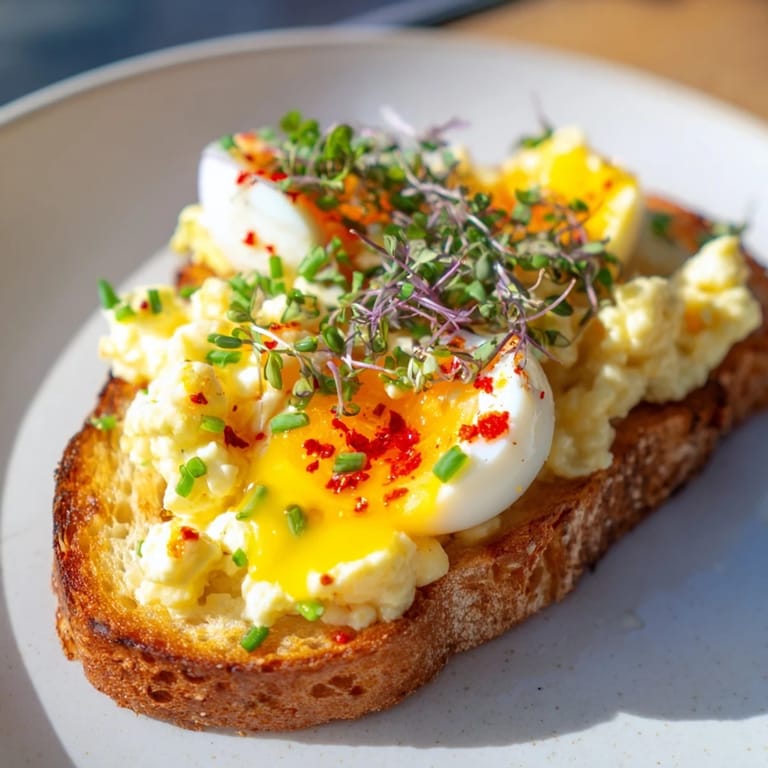
- Place the toasted bread on your plate and divide it mentally into three sections. Put the scrambled egg on one third, the soft-boiled halves on the second third, and the fried egg on the last third, creating a visually interesting landscape of preparations.
- Finish with garnishes that matter:
- Sprinkle chives and microgreens over everything for freshness and color, then add a pinch of chili flakes if you want a subtle heat that plays against the richness of the yolks. Serve immediately while everything is still warm and the toast is still crispy.
 Save on Pinterest
 The first time someone I was trying to impress ate this breakfast, they asked if I'd learned this at culinary school, which made me laugh because it's really just three simple egg techniques on one piece of toast. But that moment taught me that presentation and intentionality matter just as much as the cooking itself—you're not just making breakfast, you're creating an experience.
Why Each Egg Style Matters
The scrambled eggs are comfort and softness, the fried egg is boldness with that assertive runny yolk, and the soft-boiled is elegance and restraint all in one plate. Together they tell a complete story about what eggs can be, and tasting all three in quick succession teaches your palate something new every time. This is why I've started making flights of things instead of just one preparation—it's more interesting and somehow more satisfying.
Timing and Temperature Control
The hardest part of this recipe isn't the technique—it's coordinating the timing so everything finishes around the same moment. The oven toast should come off just as you're finishing the fried egg, so the bread is still warm and crispy when you plate everything. If you're new to cooking multiple preparations at once, write down the timing and follow it step by step your first time, because once you've done it once, your hands will remember the rhythm.
Customizing Your Flight
Once you master the basic three-egg approach, this recipe becomes a template for your creativity and the ingredients you have on hand. The beauty is that you're learning three separate cooking techniques that work for any breakfast situation, so you're building skills that stick with you. Try these variations to make it your own.
- Swap the fried egg for a poached egg if you want something more delicate, or use an omelette for a different texture that still brings richness.
- Add avocado slices, smoked salmon, or quickly sautéed spinach for extra nutrition and flavor layering that transforms the dish.
- Use gluten-free bread if you need to, remembering that some varieties toast differently so adjust your oven time by a minute or two.
 Save on Pinterest
 This breakfast reminds me that sometimes the most satisfying meals are the ones where you're intentional about every element, rather than rushing through the morning routine. It's become my go-to when I want to feel like I'm taking care of myself.
Recipe Questions & Answers
- → What types of eggs are used in this dish?
It features scrambled, soft-boiled, and fried eggs, each prepared to highlight different textures and flavors.
- → Can I substitute the bread used for toasting?
Yes, sourdough or country-style bread work best, but gluten-free alternatives can be used if preferred.
- → How is the soft-boiled egg cooked perfectly?
Boil the egg in water for 6½ minutes, then transfer to ice water to stop cooking and allow easy peeling.
- → What garnishes complement this dish well?
Fresh chives, chili flakes, and microgreens add color and subtle flavor enhancements.
- → Are there tips for adding extra nutrition?
Adding avocado slices, smoked salmon, or sautéed spinach can boost both nutrition and taste.
- → How do you achieve a runny yolk in the fried egg?
Fry the egg over medium heat until whites set but yolk remains soft, about 2–3 minutes.