 Save on Pinterest
 My tía first showed me brazo gitano on a humid afternoon in San Juan, when she pulled this golden-brown log from her oven with the kind of confidence that comes from making it a hundred times before. The kitchen filled with this sweet vanilla warmth, and I watched her move through each step like she was telling a story with her hands. She never measured twice, never second-guessed the rolling, and when she spread that guava paste across the warm cake, she winked at me like she was sharing the easiest secret in the world. That dessert became my blueprint for understanding how Puerto Rican cooking balances lightness with pure, unapologetic sweetness.
I made this for my neighbor's birthday last spring, and she stood in my kitchen asking questions while the cake was still cooling, taking notes on her phone like she was uncovering something precious. The moment she bit into the slice, her whole face softened, and she told me it reminded her of a café in Old San Juan she visited once. That's when I realized brazo gitano isn't really about the ingredients at all—it's about creating a moment someone carries with them.
Ingredients
- Eggs, separated: The magic happens when you whip those whites into clouds—they're what makes this cake light and airy instead of dense, so don't skip the separation step or use cracked eggs that mixed yolks into the whites.
- Granulated sugar, divided: Splitting the sugar between yolks and whites gives you both richness and stability; using it all in one batch creates a different texture entirely.
- Vanilla extract: A teaspoon is enough to perfume the whole cake without overwhelming it, though pure vanilla tastes noticeably better than imitation if you can find it.
- All-purpose flour: Sift it before folding so you're not creating dense pockets that trap air and sink the cake.
- Salt: Just a whisper of it brightens the sweetness and strengthens the egg white foam—taste the batter and you'll notice the difference.
- Guava paste: Buy the blocks sold in Latin markets rather than the jarred versions; they melt more smoothly and taste less processed.
- Water: Two tablespoons loosen the guava paste just enough to spread without thinning it into syrup.
- Egg whites for meringue: Use fresh ones from separated eggs or buy pasteurized liquid egg whites if you're nervous about raw eggs, though meringue that's browned has minimal raw egg exposure.
- Cream of tartar: It stabilizes the meringue so it holds its peaks longer, but if you don't have it, a squeeze of lemon juice works too.
Tired of Takeout? 🥡
Get 10 meals you can make faster than delivery arrives. Seriously.
One email. No spam. Unsubscribe anytime.
Instructions
- Prep your pan like you mean it:
- Preheat your oven to 180°C and line that jelly roll pan with parchment paper so it overhangs the edges—this is how you'll pull the whole cake out without tearing it. A light grease under the parchment prevents sticking better than relying on the paper alone.
- Beat the yolks into submission:
- With half the sugar and vanilla, beat those egg yolks until they're pale yellow and thick enough that the beaters leave a trail when you lift them. This usually takes 3 to 4 minutes on high speed, and it's the foundation of your cake's structure.
- Create egg white mountains:
- In a spotlessly clean bowl (any yolk residue deflates the whites), beat the egg whites with salt and remaining sugar until they form stiff, glossy peaks that stand straight up when you pull the beater out. Add cream of tartar if you have it to accelerate this process.
- Fold with a gentle hand:
- Pour the yolk mixture into the whites and fold slowly, using a spatula to cut down the middle, sweep across the bottom, and fold up and over—this preserves the air you just spent time whipping in. Do the same with the flour, stopping as soon as no white streaks remain.
- Bake until it springs back:
- Spread the batter evenly into your prepared pan and bake for 12 to 15 minutes, or until the cake springs back when you press your finger gently into it. You're looking for a pale golden color, not browning.
- Roll while warm and daring:
- Dust a clean kitchen towel with sugar and invert the hot cake onto it, then peel away the parchment paper—don't hesitate here, or the cake will crack as it cools and sets. Roll the cake up tightly from the short end, using the towel to guide it, and let it cool completely in a coil.
- Soften the guava paste:
- In a small saucepan over low heat, stir the guava paste with water until it loosens into a spreadable consistency, about 2 to 3 minutes. Let it cool to room temperature so it doesn't warm up your cake when you spread it.
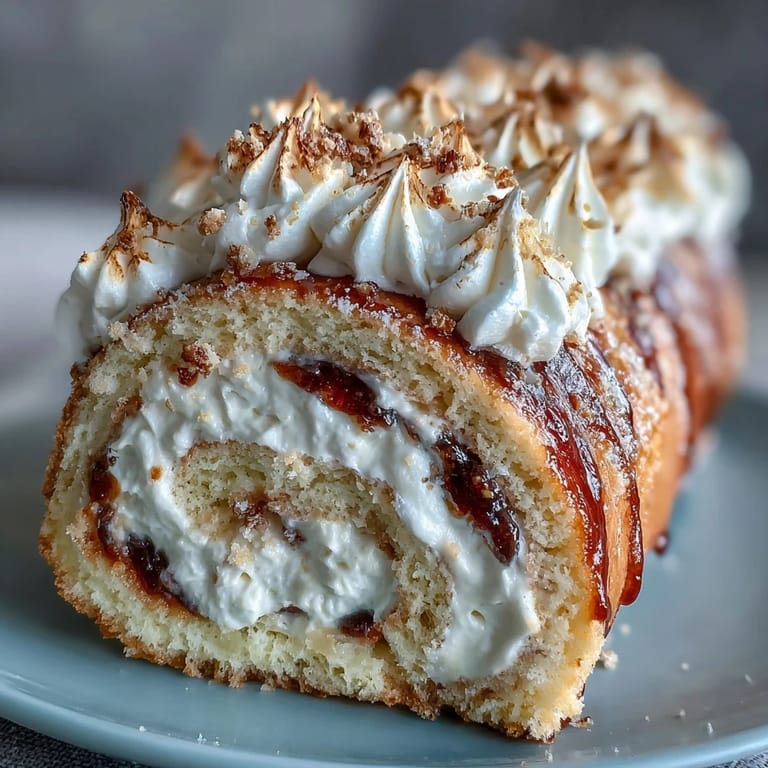
- Unroll and fill with purpose:
- Carefully unroll the cooled cake and spread the guava filling evenly across the surface, leaving a thin margin at the edges so it doesn't squeeze out when you roll again. Roll it tightly this time without the towel and place it seam-side down on your serving platter.
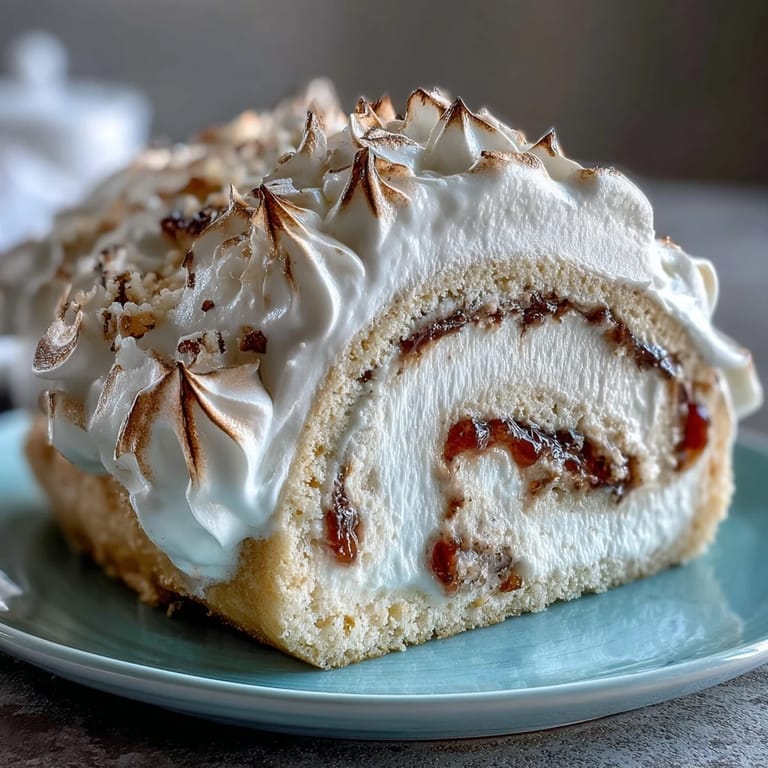
- Make meringue that gleams:
- Beat egg whites until soft peaks form, then gradually add sugar while beating, continuing until the peaks are stiff and glossy—this takes about 5 minutes total. The meringue should look like shaving cream, thick and smooth.
- Crown your masterpiece:
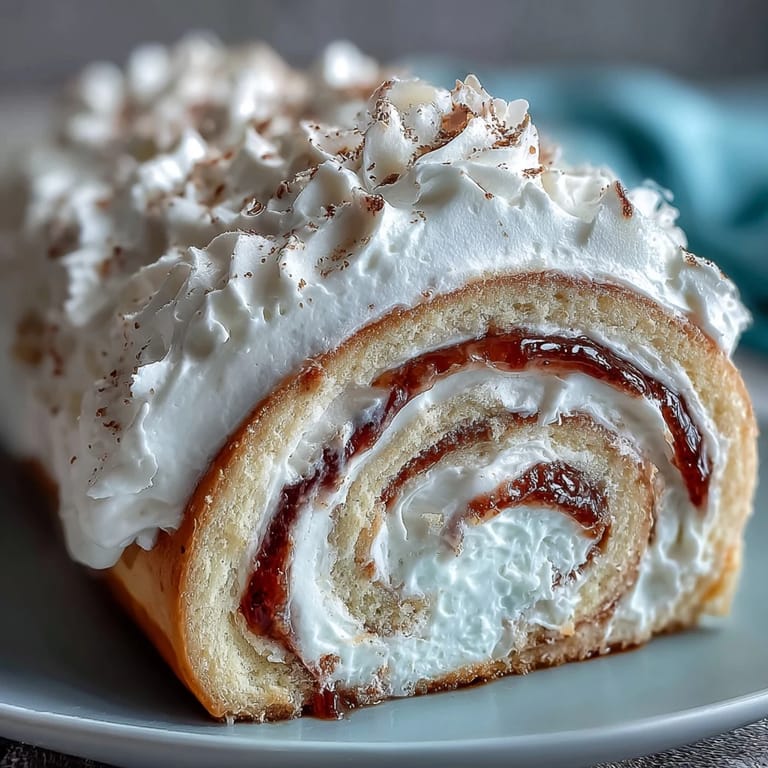
- Spread or pipe the meringue over the top and sides of the roll, making peaks and swirls as fancy or simple as you feel. These peaks brown beautifully when torched, creating contrast between the caramelized tips and white valleys.
- Toast if you're feeling bold:
- Use a kitchen torch to lightly brown the meringue peaks until they're golden, or briefly run it under the broiler—either way, watch closely so you don't go from golden to burnt in seconds. Let the meringue cool slightly before chilling.
- Chill and steady your hand:
- Refrigerate for at least 30 minutes so the filling sets and the meringue firms up, making slicing cleaner and easier. A sharp, warm knife dipped in hot water between cuts prevents the meringue from dragging.
 Save on Pinterest
 Years later, I served this at a dinner party where my usually quiet friend started talking about moving back to Puerto Rico, how the taste transported her to a specific street corner she hadn't thought about in a decade. Food has this invisible power to unlock places inside us, and brazo gitano does it better than almost anything I know how to make.
The Science of Sponge Cake
This cake uses the foam method, which means you're essentially beating air into eggs and then trapping that air with flour, so the cake rises in the oven without leavening agents like baking powder. When you whip egg whites separately, you're unraveling their protein structure and creating tiny bubbles, which expand with heat. The egg yolks contribute fat and richness, which actually helps stabilize those bubbles, and folding them together gently preserves the airiness you worked to build—this is why folding technique matters more than you'd think when you're first learning to make sponge cakes.
Guava Paste Variations and Swaps
While guava is traditional and absolutely delicious, the beauty of brazo gitano is its flexibility—mango paste brings tropical brightness, raspberry paste adds tartness that balances the sweetness, and even dulce de leche creates a completely different but equally Puerto Rican dessert. I've experimented with mixing guava and cream cheese for a more complex flavor, and it works beautifully if you like something slightly tangier. If you want to go really adventurous, a thin layer of whipped cream spread over the guava before rolling adds luxurious texture without overwhelming the original flavors.
Mastering the Meringue
Meringue intimidates home bakers, but it's really just three things: clean equipment, the right sugar ratio, and patience during beating. A single drop of grease or yolk in your egg whites prevents them from forming peaks, so wash your bowl and beaters in hot soapy water beforehand, and use eggs that are completely separated. The gradual addition of sugar is key—dumping it all at once creates grainy meringue, while adding it slowly dissolves it into the foam and creates that glossy, stable finish that can handle torching.
- If your meringue looks dull and grainy: You either added sugar too quickly or aren't beating it long enough; keep going for another minute or two until it becomes glossy again.
- If it weeps underneath after a few hours: The cake released moisture, which is natural; serve within a few hours or lightly torch the top just before serving to reseal it.
- If it browns too fast when torching: You're holding the torch too close or too long; keep the flame about 3 inches away and keep moving in circles.
 Save on Pinterest
 This dessert asks you to trust the process, to fold gently when everything in you wants to rush, and to roll a warm cake with the kind of confidence that only comes from knowing someone else has done it successfully a thousand times before. Once you've made it once, you'll understand why my tía made it with her eyes closed.
Recipe Questions & Answers
- → What is Brazo Gitano?
Brazo Gitano, meaning 'gypsy's arm' in Spanish, is a rolled sponge cake filled with sweet guava paste and topped with meringue. It's a beloved Puerto Rican dessert that combines tropical flavors with classic European baking techniques, creating a stunning and delicious treat perfect for special occasions.
- → Why is my sponge cake cracking when rolling?
Cracking usually occurs when the cake has cooled too much before rolling. The key is to invert the warm cake onto a sugar-dusted towel immediately after baking, peel off the parchment, and roll it up with the towel. This technique helps the cake 'remember' the rolled shape as it cools, making it pliable for filling later.
- → Can I make Brazo Gitano ahead of time?
Yes! You can prepare the sponge cake and guava filling a day in advance. Store the cooled, unfilled cake wrapped in plastic at room temperature. Once assembled with filling and meringue, it's best served the same day but can be refrigerated for up to 24 hours. Note that the meringue may weep slightly over time.
- → What can I use instead of guava paste?
While guava paste is traditional, you can substitute with other fruit pastes like mango, passion fruit, or membrillo (quince paste). For a different flavor profile, try dulce de leche, Nutella, or even a thick layer of fruit preserves. Just ensure whatever filling you choose is thick enough not to ooze out when rolling.
- → Is the meringue topping necessary?
The meringue is classic and adds beautiful sweetness and texture, but it's not strictly necessary. For a lighter finish, simply dust the assembled roll with powdered sugar. You could also top with whipped cream or a light glaze. However, the torch meringue creates an impressive presentation and delightful toasted marshmallow flavor.
- → How do I store leftovers?
Store any leftover Brazo Gitano in the refrigerator, covered loosely with plastic wrap or placed in an airtight container. The meringue may become slightly soft after refrigeration. For best texture, bring to room temperature for about 15 minutes before serving. Consume within 2-3 days for optimal freshness.