 Save on Pinterest
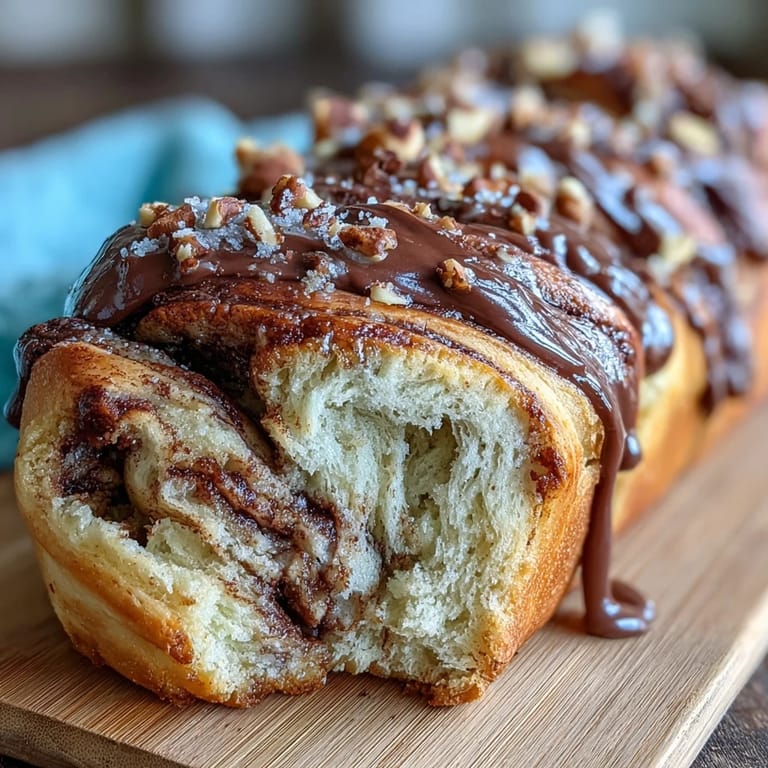
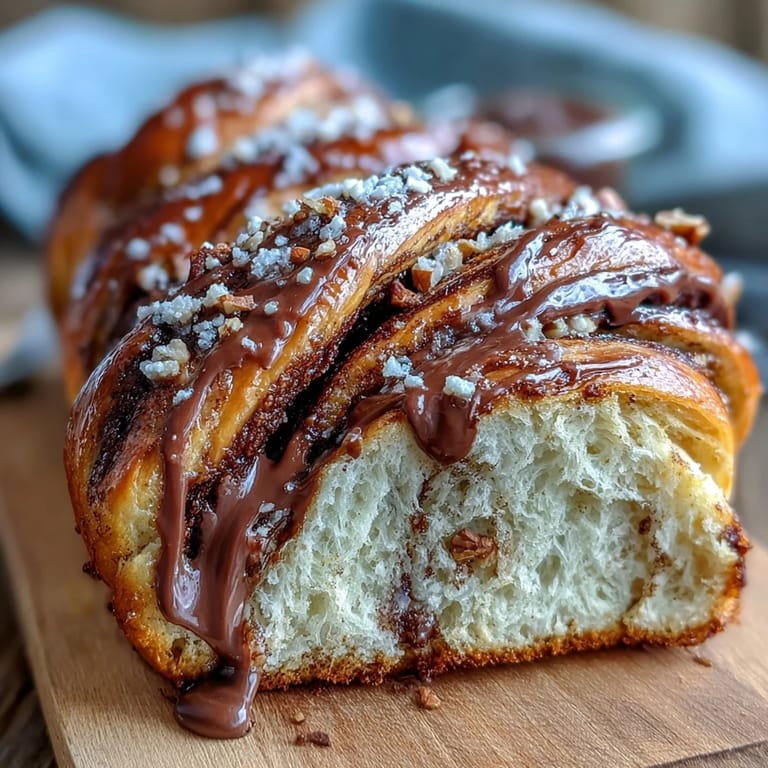
 The kitchen always feels a little more like a patisserie when the scent of sweet dough and Nutella swirls in the air. The first time I made Nutella Babka was on a rainy afternoon when staying inside felt like both a necessity and a treat. Getting my hands sticky with flour and chocolate wasn't planned, but the hush broken only by dough slaps on the counter made it oddly meditative. It's the kind of bake where a chocolatey smudge on your cheek is almost a badge of success. Now, just the thought of that glossy swirl draws friends to the kitchen as if by instinct.
One weekend I tried making this babka for a brunch crowd that unexpectedly doubled in size—stretching a single loaf wasn't easy, but the enthusiastic chorus of chocolate-flecked smiles made up for every uneven slice.
Ingredients
- All-purpose flour: Choose a fresh, high-quality flour for the softest crumb and don't forget to spoon and level for accurate measuring.
- Granulated sugar: I've learned that just the right amount brings out both the buttery dough and hazelnut chocolate swirls—too much and it competes, too little and it falls flat.
- Instant yeast: Always test your yeast in warm milk if in doubt—it should dissolve and turn a little foamy, which means it will give your babka the perfect lift.
- Salt: Just a touch sharpens the sweetness and keeps things balanced.
- Whole milk: Lukewarm is key; too hot and your yeast protests, too cold and your rise slows right down.
- Eggs: Room temperature eggs help everything blend together beautifully, making the dough plush and rich.
- Vanilla extract: Even a teaspoon adds aromatic depth that you truly notice in the finished loaf.
- Unsalted butter: Let it soften fully so it slips right into the dough, creating the babka's signature tenderness.
- Nutella or chocolate-hazelnut spread: Melting it slightly gives you those luscious, even swirls—don't skip this step if you want dramatic layers.
- Chopped toasted hazelnuts (optional): Scattering them over the filling adds irresistible crunch and intensifies the nutty joy.
- Granulated sugar for syrup: Brushing syrup over the hot loaf glazes every twist with gleam and a final touch of sweetness.
- Water for syrup: Only a little, but it transforms sugar crystals into a smooth, shiny coating.
Tired of Takeout? 🥡
Get 10 meals you can make faster than delivery arrives. Seriously.
One email. No spam. Unsubscribe anytime.
Instructions
- Create your dough base:
- In a stand mixer, combine the flour, sugar, yeast, and salt, then slowly pour in lukewarm milk, eggs, and vanilla, mixing in bursts until a shaggy, sticky dough emerges from the bowl.
- Work in the butter:
- Add softened butter piece by piece with the mixer running; you'll see the dough transform to smooth, elastic, and glossy after 8–10 minutes—it's sticky, so resist the urge to add more flour.
- Let it rise:
- Shape into a ball, tuck into a greased bowl, and cover—watch it swell and grow in a warm spot for 1–1.5 hours, until doubled.
- Prepare your filling:
- Gently warm your Nutella to help it glide across the dough; if you're feeling bold, stir in some melted butter for even richer flavor.
- Shape and fill:
- Punch down the dough and roll it out into a generous rectangle, then spread the Nutella smoothly, leaving a small border—if you're a crunch fan, sprinkle on chopped hazelnuts.
- Roll, slice, and twist:
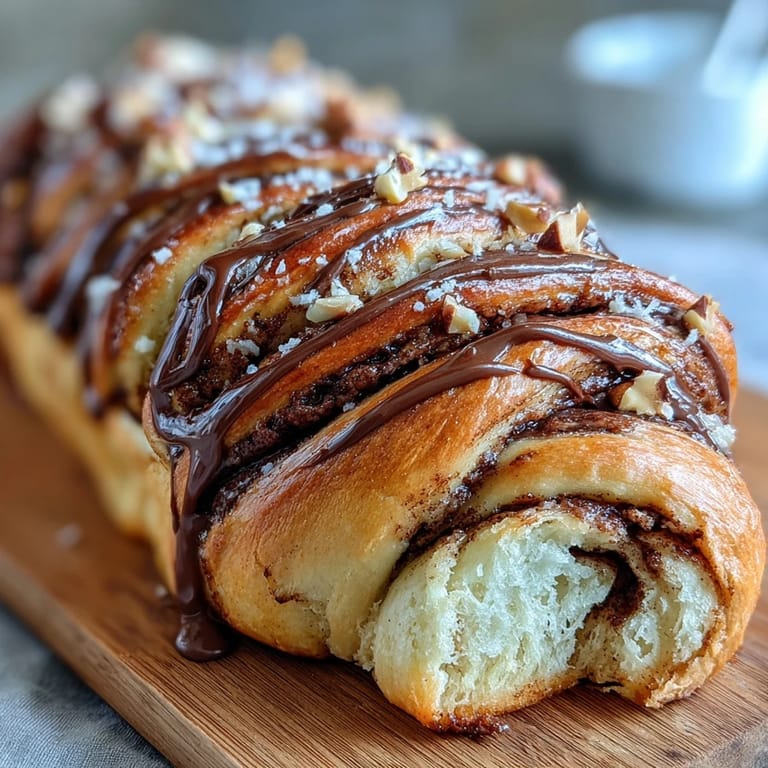
- From the long edge, roll the dough into a tight log, then slice it lengthwise with a confident stroke to reveal the marbled innards; twist both halves, cut sides out, and nestle into a greased loaf pan.
- Proof for a second time:
- Cover and let the twisted beauty rise for 45–60 minutes, until it looks satisfyingly puffed.
- Bake to golden perfection:
- Preheat your oven to 350°F (175°C), then bake for 30–35 minutes—it's done when fragrant and deep golden, and a tap yields a gentle hollow sound.
- Make the syrup:
- While baking, combine sugar and water in a pan, bringing it to a brisk boil until clear, then set aside to cool just a little.
- Glaze and cool:
- As soon as the babka emerges, brush every inch with syrup while hot for shine and moistness; let it rest in the pan before a final release onto a rack.
 Save on Pinterest
 The day I brought this out for an afternoon book club, the conversation halted mid-sentence as the first slice fell open, ribbons of chocolate gleaming—it's a rare kind of recipe that commands that kind of attention.
Making Babka When You’re Short On Time
On busier mornings, I’ve prepped the dough ahead, popped it in the fridge overnight, and finished the shaping and baking the next day—turns out the slower, cooler rise just makes it taste better, and your future self will thank you for it.
What To Serve With Nutella Babka
If you’ve never dunked a slice of babka into icy cold milk or let it sit beside a strong coffee, you’re missing the ritual—its rich buttery layers are the perfect excuse to linger over breakfast or sneak a midnight snack.
Extra Swirl Tips & Final Reminders
The beauty of babka is that even small imperfections in rolling and twisting just become character—don't aim for perfection, aim for good swirls and you'll always win.
- If your dough tears while twisting, pinch it back together and keep going.
- Line your pan with parchment for easier removal—learned that after one stubborn loaf.
- Don’t be shy with the syrup glaze, since it keeps everything moist and shiny for days.
 Save on Pinterest
 May your kitchen always smell like warm chocolate and your babka slices never last long enough to go stale.
Recipe Questions & Answers
- → How do I keep the crumb soft and tender?
Use an enriched dough with milk, eggs and ample softened butter. Knead until smooth but still slightly tacky, and allow full rises; the combination of fat and proper fermentation yields a soft, tender crumb.
- → Can I make the filling easier to spread?
Warm the chocolate-hazelnut spread briefly in a microwave-safe bowl or over a warm water bath until pliable—take care not to overheat. A thinner spread layers more evenly and prevents tearing the dough.
- → What’s the best way to twist the loaf without losing filling?
After slicing the rolled log lengthwise, keep the cut sides up and gently press excess filling back into the layers as you twist. Work firmly but gently to maintain structure and transfer the twisted loaf to the pan carefully.
- → How do I tell when it’s fully baked?
The exterior should be deep golden brown and spring back slightly when touched. An internal temperature around 190–200°F (88–93°C) indicates doneness for enriched loaves; if unsure, tent with foil to avoid overbrowning while finishing.
- → Why brush with sugar syrup and when should I do it?
Brushing hot sugar syrup right after baking adds shine, keeps the loaf moist and balances richness. Apply while the loaf is hot so the syrup absorbs into the crumb and creates a glossy finish.
- → Can I prepare the dough ahead of time?
Yes—after the first rise, you can refrigerate the shaped dough or the rolled log overnight to slow fermentation. Bring it back to warm room temperature before the final rise and baking for best results.