 Save on Pinterest
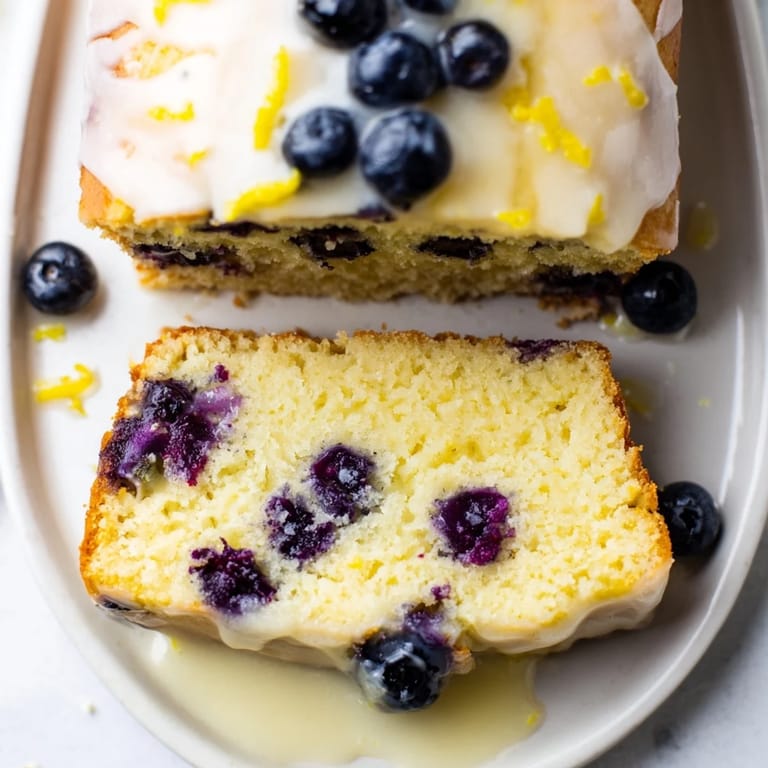
 There's something about a blender that makes baking feel less intimidating. I stumbled onto this lemon blueberry yogurt loaf during a lazy Sunday morning when I didn't want to drag out the hand mixer, and honestly, it became my go-to when friends drop by. The yogurt keeps everything impossibly moist while the lemon sings through, and the blueberries burst with tartness—no fancy technique required, just a whir of the blender and ten minutes of actual effort.
My sister brought her new roommate over for coffee, and I baked this loaf the night before because I was nervous about making a good impression. The moment they walked in, the kitchen smelled like a lemon grove, and I didn't have to say a word—the cake spoke for itself. Watching someone's face light up when they bit into it, not expecting how soft and moist it would be, that's when I realized this recipe was a keeper.
Ingredients
- Eggs: Two large eggs bind everything together and give the cake its structure; I learned the hard way that room temperature eggs blend more smoothly into that yogurt base.
- Greek yogurt: One cup gives the loaf a subtle tanginess and keeps it incredibly moist for days—plain yogurt works too, but Greek yogurt adds a little richness.
- Vegetable oil: Half a cup of neutral oil makes the crumb tender and prevents the loaf from drying out; don't swap it for butter here.
- Lemon zest: One tablespoon freshly grated is where the magic happens—that bright, almost floral note that makes people ask what you did differently.
- Fresh lemon juice: A quarter cup adds acidity that balances the sweetness and makes the blueberries taste more alive.
- Vanilla extract: One teaspoon rounds out the flavors without announcing itself.
- All-purpose flour: One and a half cups is the structure; measuring by weight is more reliable if your scale is nearby.
- Granulated sugar: Three-quarters cup sweetens without being heavy—the yogurt and lemon juice do most of the flavor lifting.
- Baking powder and baking soda: Two teaspoons of powder and half a teaspoon of soda create a gentle rise and ensure the crumb stays tender.
- Sea salt: A quarter teaspoon enhances everything and tames any one-note sweetness.
- Fresh blueberries: One cup scattered through the batter—frozen berries work just as well and actually prevent the loaf from browning too fast on top.
Tired of Takeout? 🥡
Get 10 meals you can make faster than delivery arrives. Seriously.
One email. No spam. Unsubscribe anytime.
Instructions
- Get the oven ready:
- Preheat to 350°F and line your loaf pan with parchment paper so the edges don't stick and you can lift the whole cake out to cool properly.
- Blend the wet base:
- Add eggs, yogurt, oil, lemon zest, lemon juice, and vanilla to the blender and pulse until completely smooth—this should take about 20 seconds and look almost like pale lemonade. Watch for the zest to break down; you want no visible bits.
- Add the dry ingredients:
- Sprinkle the flour, sugar, baking powder, baking soda, and salt on top of the wet mixture and pulse gently until just combined, maybe 8 to 10 pulses. Stop as soon as you don't see flour streaks; overmixing makes the crumb tough and the gluten overdeveloped.
- Fold in the blueberries:
- Toss your blueberries with that tablespoon of flour—it clings to them and keeps them from sinking to the bottom—then gently fold them in with a spatula. This hand step matters because the blender would crush them into purple specks.
- Bake low and slow:
- Pour into the pan, smooth the top, and bake for 50 to 55 minutes until a toothpick comes out clean or with just a crumb or two clinging to it. If the top is browning too fast around minute 40, tent with foil to protect it.
- Cool with patience:
- Let it sit in the pan for 10 minutes so the structure sets, then turn it out onto a rack to cool completely—this keeps the bottom from getting soggy.
- Add the glaze:
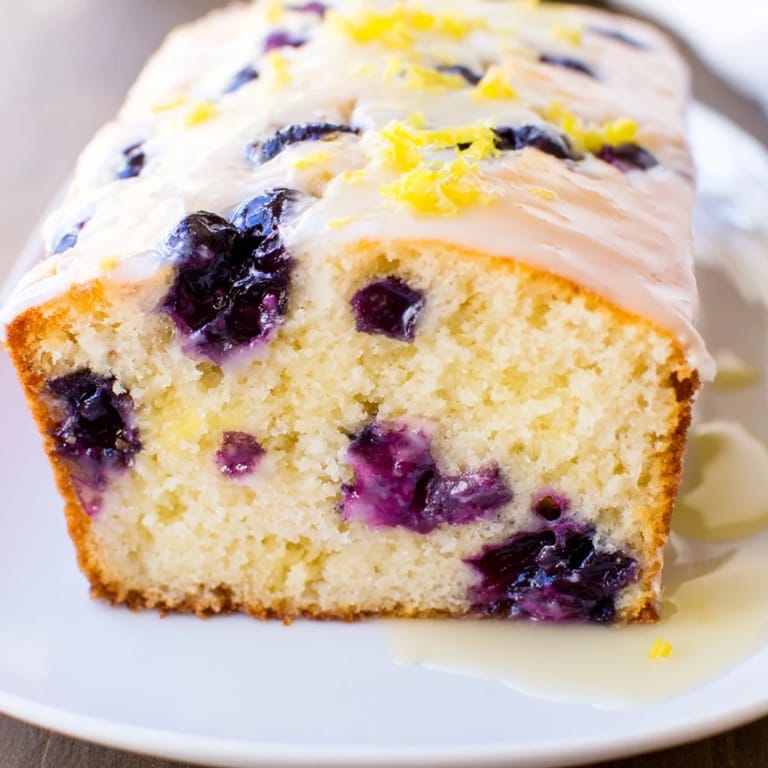
- Whisk powdered sugar with a tablespoon or two of fresh lemon juice until it's drizzle-able and smooth, then let it cascade over the cooled loaf. A little thinner than you'd expect is best—it should flow, not coat.
 Save on Pinterest
 I once made this loaf in the morning and forgot about it on the cooling rack while I was out. When I came home six hours later, it had somehow become even better—still soft, still moist, and the lemon flavor had deepened and settled into every corner. That's when I realized this cake is as good the next day as it is fresh, which maybe isn't earth-shattering, but it's the kind of thing that made this recipe permanent in my rotation.
Flavor Twists That Actually Work
The base is tart and bright, but it's forgiving enough to play with. I've added a half-teaspoon of almond extract for a subtle floral undertone that makes people pause mid-bite trying to figure out what they're tasting. Poppy seeds scattered on top add a gentle nuttiness, and I've even stirred in half a teaspoon of fresh thyme once—it sounds weird, but it echoes the lemon in a way that felt right.
Why This Blender Method Actually Matters
Most people assume blending a cake batter would overwork the gluten and ruin the texture, but the wet ingredients are doing the blending, not the flour. The yogurt and oil create a cushion that keeps the flour from getting whipped into submission, and you're only pulsing the dry goods in at the end. It's less about technique and more about physics working in your favor.
Serving and Storage Secrets
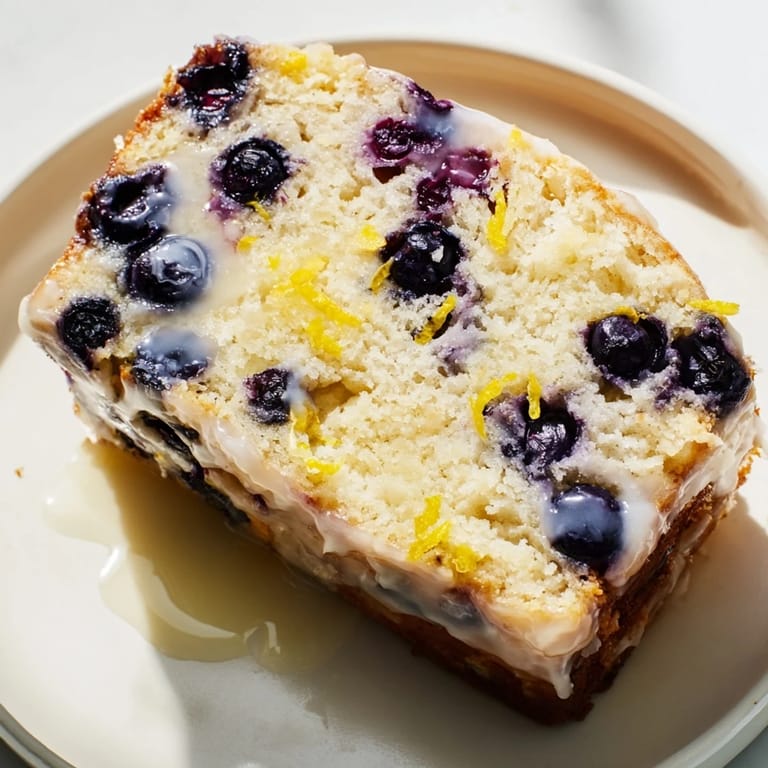
This loaf tastes incredible still slightly warm with a cup of Earl Grey tea, or cold the next morning with coffee. It keeps beautifully wrapped in plastic wrap for four or five days, and it actually freezes well for up to a month if you want to bake ahead. A thin slice with a dollop of whipped cream transforms it from a casual snack into something that feels almost dessert-like.
- Toast a slice lightly before serving if it's been in the fridge—it wakes up the flavor and softens the crumb.
- The glaze is optional but worth it; it adds a little polish and extra lemon brightness.
- If you're sharing it, slice with a hot, wet knife and wipe between cuts for clean edges that look intentional.
 Save on Pinterest
 This loaf isn't fancy, but it has a way of making ordinary moments feel a little brighter. Whether it's sitting on your kitchen counter feeding to neighbors or wrapped in your bag for a Tuesday afternoon when you need something to look forward to, it's the kind of recipe that sticks around.
Recipe Questions & Answers
- → Can frozen blueberries be used?
Yes, frozen blueberries work well and do not require thawing before folding into the batter.
- → How do I prevent blueberries from sinking?
Toss blueberries with a tablespoon of flour before folding them gently into the batter to keep them evenly distributed.
- → Is it possible to make this loaf dairy-free?
Use coconut yogurt and a neutral oil instead of dairy yogurt and vegetable oil to make a dairy-free version.
- → What is the best way to bake the loaf evenly?
Bake at 350°F (175°C) for 50–55 minutes. Tent with foil during the last 15 minutes if the top browns too quickly.
- → Can I add extra flavor twists?
Adding 1/2 teaspoon of almond extract provides a nice variation to the lemon and blueberry flavors.