 Save on Pinterest
 The steam rising from a bowl of coconut broth on a rainy Tuesday became my reset button. I'd been stuck in a dinner rut, cycling through the same three meals, when a friend mentioned poaching fish in something creamy and spiced. I had cod in the freezer, a can of coconut milk in the pantry, and a packet of udon noodles I'd bought months ago on a whim. What came together that night wasn't just a meal, it was proof that comfort food doesn't need to be complicated.
I made this for my sister when she came over exhausted from a long shift at the hospital. She sat at the counter while I chopped vegetables, and the smell of ginger and garlic filled the kitchen like a warm hug. When I set the bowl in front of her, she closed her eyes after the first spoonful and said it felt like being taken care of. That's when I realized this dish wasn't just about the food, it was about the feeling it created.
Ingredients
- Cod fillets: Cod is mild and flaky, perfect for gentle poaching, but haddock or halibut work beautifully too if you want something firmer.
- Neutral oil: Canola or sunflower oil won't compete with the delicate spices, letting the aromatics shine through without any greasy heaviness.
- Onion: Sliced thin, it melts into the broth and adds a subtle sweetness that balances the heat from the chili and curry paste.
- Garlic cloves: Minced fresh garlic releases a pungent, savory depth that dried garlic just can't match in a broth like this.
- Ginger: Grated ginger brings warmth and a slight tingle that wakes up your palate, and I always use a spoon to scrape off the skin instead of peeling it.
- Red chili: Thinly sliced fresh chili adds a bright, sharp heat, but you can leave it out entirely if you prefer things mild.
- Red curry paste: This is where the magic happens, delivering complex spice and a hint of lemongrass without needing a dozen individual ingredients.
- Coconut milk: Full-fat coconut milk creates a lush, creamy base that coats the noodles and fish with silky richness.
- Fish or vegetable stock: Stock thins out the coconut milk just enough to keep the broth light and sippable rather than heavy.
- Fish sauce: A tablespoon of fish sauce adds umami and saltiness that makes everything taste more like itself.
- Soy sauce: Soy sauce deepens the savory notes and adds a touch of color to the broth.
- Lime juice: Freshly squeezed lime brightens the whole bowl and cuts through the richness with a clean, citrusy zing.
- Fresh udon noodles: Udon noodles are thick and chewy, and they soak up the broth without falling apart like thinner noodles might.
- Baby spinach: Spinach wilts in seconds and adds a pop of green and a mild, earthy flavor that rounds out the bowl.
- Carrot: Julienned carrot adds sweetness and a little crunch, plus it looks beautiful floating in the broth.
- Shiitake mushrooms: Shiitakes have a meaty texture and a deep, earthy flavor that makes the broth taste even more substantial.
- Spring onions: Sliced spring onions add a fresh, sharp bite and a splash of color right at the end.
- Fresh coriander leaves: Coriander is the final flourish, adding a bright, herbal note that ties all the flavors together.
Tired of Takeout? 🥡
Get 10 meals you can make faster than delivery arrives. Seriously.
One email. No spam. Unsubscribe anytime.
Instructions
- Build the Aromatic Base:
- Heat the oil in a large saucepan over medium heat, then add the sliced onion and sauté for 3 minutes until it softens and turns translucent. Stir in the garlic, ginger, and chili, cooking for just 1 minute until the kitchen smells incredible and the garlic is fragrant but not browned.
- Bloom the Curry Paste:
- Add the red curry paste and cook for 1 minute, stirring constantly to release the oils and spices. This step deepens the flavor and prevents the paste from tasting raw in the finished broth.
- Create the Coconut Broth:
- Pour in the coconut milk and fish or vegetable stock, then bring everything to a gentle simmer. The broth should bubble softly, not boil aggressively, to keep it silky and prevent the coconut milk from separating.
- Season the Broth:
- Add the fish sauce, soy sauce, and lime juice, then taste and adjust the seasoning if needed. You're looking for a balance of salty, tangy, and slightly sweet.
- Poach the Cod:
- Slide the cod fillets into the simmering broth, cover the pan, and poach gently for 6 to 8 minutes until the fish is just opaque and flakes easily with a fork. Don't let the broth boil or the fish will toughen and break apart.
- Prepare the Noodles:
- While the fish poaches, cook the udon noodles according to the package instructions, then drain and divide them among 4 serving bowls. Fresh udon usually only needs 2 to 3 minutes in boiling water.
- Add the Vegetables:
- Add the spinach, julienned carrots, and sliced shiitake mushrooms to the broth, simmering for 2 to 3 minutes until just tender. The vegetables should still have a bit of bite and bright color.
- Assemble the Bowls:
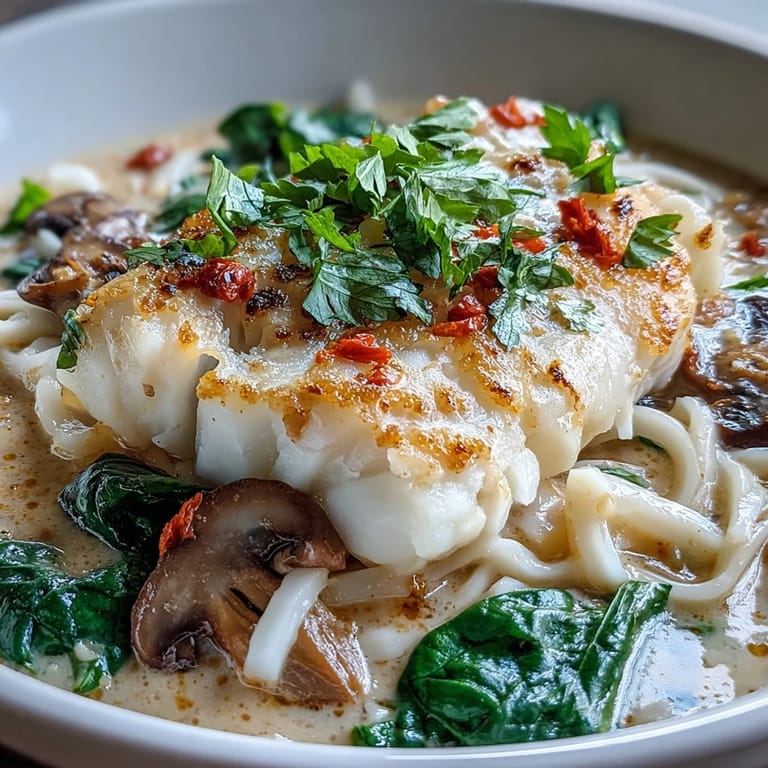
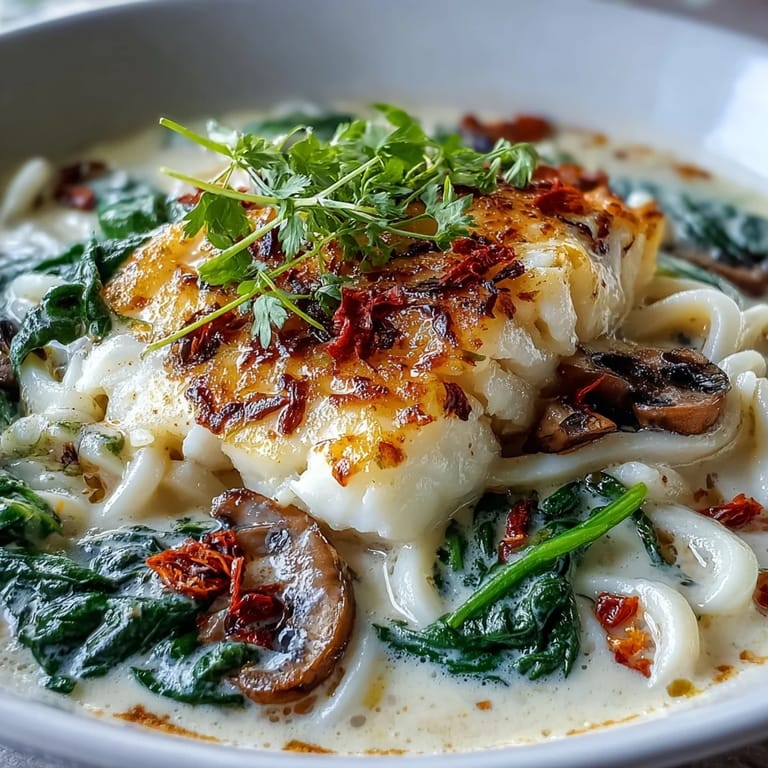
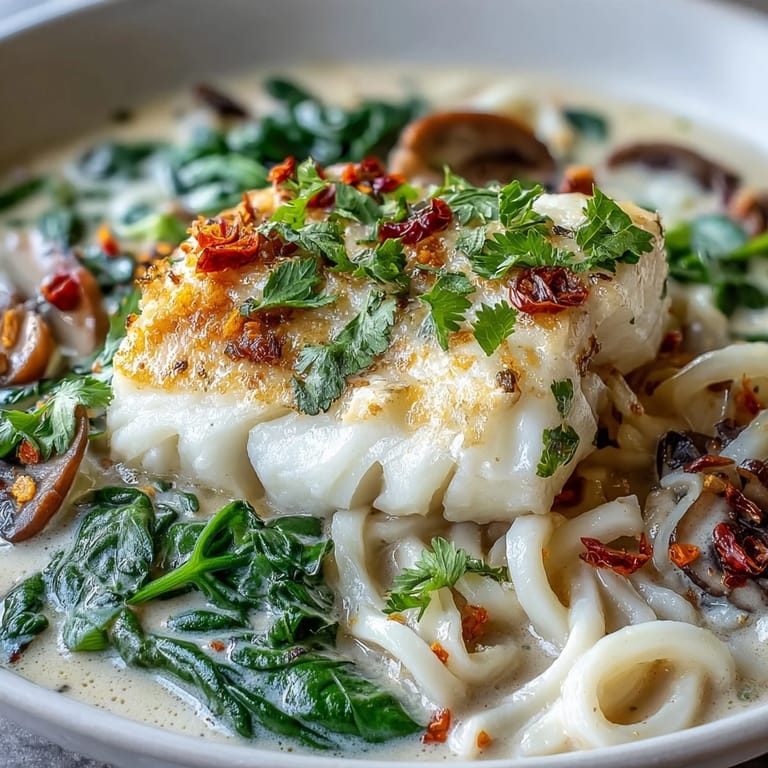
- Carefully remove the poached cod and set it aside, then ladle the hot broth and vegetables over the noodles in each bowl. Top each serving with a piece of cod, a scattering of spring onions, and a handful of fresh coriander leaves, then serve immediately while everything is steaming hot.
 Save on Pinterest
 One evening, I made this for a small dinner party and served it in deep bowls with spoons and chopsticks. My friend who claimed he didn't like fish scraped his bowl clean and asked for the recipe. Watching people lean over their bowls, breathing in the steam and slurping noodles, reminded me that the best meals are the ones that make you slow down and savor every bite.
Choosing Your Fish
Cod is forgiving and easy to find, but any firm white fish will work beautifully in this broth. Haddock has a slightly sweeter flavor, while halibut is meatier and holds up even better to gentle poaching. I've also tried it with sea bass when it was on sale, and the result was just as delicious. Just make sure the fillets are skinless and boneless, because nobody wants to pick bones out of a noodle bowl.
Making It Your Own
This recipe is a template, not a rulebook, and I've tinkered with it more times than I can count. Sometimes I add a handful of snap peas or baby corn for extra crunch, or swap the spinach for bok choy when I find it at the market. If you like heat, a drizzle of chili oil or a spoonful of sambal oelek will take the spice level up a notch. For a gluten-free version, use rice noodles and tamari instead of soy sauce, and the dish stays just as satisfying.
Serving and Storing
This is a dish that demands to be eaten fresh, with the noodles still slippery and the broth piping hot. If you have leftovers, store the broth, fish, and noodles separately in airtight containers in the fridge for up to 2 days. The noodles will soak up the broth if left together, turning everything into a mushy mess. When you reheat, warm the broth gently on the stove, add fresh noodles or rehydrate the old ones in hot water, and assemble just before serving.
- Pair this with a crisp, aromatic white wine like Riesling or Sauvignon Blanc to complement the spice and richness.
- If you're serving this to kids or anyone who doesn't like heat, leave out the chili and go easy on the curry paste.
- Always have extra lime wedges on hand, because a final squeeze of citrus right before eating makes everything taste brighter and more vibrant.
 Save on Pinterest
 This dish has become my go-to when I need something nourishing without a lot of fuss, and it never fails to make me feel grounded and cared for. I hope it does the same for you.
Recipe Questions & Answers
- → Can I use a different type of fish instead of cod?
Yes, any firm white fish works well. Try haddock, halibut, or sea bass as they hold up beautifully during poaching and absorb the coconut broth flavors.
- → How do I know when the cod is perfectly poached?
The cod is done when it turns opaque white and flakes easily with a fork. This typically takes 6-8 minutes in gently simmering broth. Avoid boiling to keep the fish tender.
- → Can I make this dish gluten-free?
Absolutely. Replace udon noodles with rice noodles and use tamari instead of soy sauce. Ensure your fish sauce and curry paste are also gluten-free.
- → What can I substitute for udon noodles?
Rice noodles, ramen, or soba noodles all work well. Adjust cooking times according to package instructions and choose based on your dietary preferences.
- → How can I adjust the spice level?
Omit the red chili for mild heat, or add more chili and a drizzle of chili oil for extra kick. The red curry paste also contributes spice, so adjust quantity to taste.
- → Can I prepare any components ahead of time?
Yes, you can prepare the broth base up to step 4 and refrigerate. When ready to serve, reheat the broth, then poach the fish and cook noodles fresh for best texture.