 Save on Pinterest
 The first time I made paella, I wasn't planning to—a friend called saying they'd be in town that evening with three others, and I panicked. I had saffron sitting in a drawer from a trip to Barcelona, some shrimp in the freezer, and pride that wouldn't let me order takeout. By the time they arrived, the kitchen smelled like the Mediterranean, and watching their faces light up when I carried that golden, steaming pan to the table made every nervous minute worth it.
I've made this countless times now, but I remember one autumn evening when my partner's parents were visiting and I decided to take the plunge with paella. My mother-in-law—who's Spanish—watched from the kitchen counter with that look that said she was ready to critique. When she tasted it, she just nodded and asked for seconds. That approval meant everything.
Ingredients
- 12 large shrimp, peeled and deveined: These are your showstoppers; buy them fresh if you can because frozen ones sometimes release too much water into the pan.
- 12 mussels and 12 clams, scrubbed and debearded: Living seafood tastes exponentially better, and honestly, the ritual of scrubbing them clean feels like part of the cooking.
- 1 1/2 cups short-grain paella rice (Bomba or Arborio): This matters more than you'd think—regular long-grain rice will turn to mush and ruin everything.
- 1 medium onion, finely chopped: The base of everything; don't rush this step or you'll taste the difference.
- 1 red bell pepper and 1 green bell pepper, sliced into strips: The colors are part of the magic here, so don't skip either one.
- 2 cloves garlic, minced: Fresh garlic only—jarred stuff tastes stale against the saffron.
- 1 medium tomato, grated or finely chopped: Grating it on a box grater gives you better texture than chopping.
- 1/4 teaspoon saffron threads: This is expensive, but even a tiny amount transforms the entire dish into something special.
- 4 cups fish or seafood stock: This is where the depth lives; good stock makes the difference between okay paella and the kind people remember.
- 1 teaspoon smoked paprika: It adds a whisper of smoke that complements the saffron beautifully.
- 1/2 teaspoon salt and 1/4 teaspoon black pepper: Season as you taste; seafood needs assertive seasoning.
- 2 tablespoons olive oil: Use something you actually like tasting—cheap oil ruins this.
- 2 tablespoons fresh parsley for garnish: The final flourish that makes it look like a restaurant made it.
- Lemon wedges for serving: Essential; the brightness cuts through the richness.
Tired of Takeout? 🥡
Get 10 meals you can make faster than delivery arrives. Seriously.
One email. No spam. Unsubscribe anytime.
Instructions
- Infuse your stock with saffron:
- Pour the stock into a saucepan and drop in those precious saffron threads, then keep it warm over low heat. The saffron needs time to bloom and turn the stock this gorgeous golden color—this isn't optional, it's the soul of the dish.
- Build your flavor base:
- Heat the olive oil in your paella pan over medium heat until it shimmers slightly. Add the onion and let it soften for about two minutes, then add the garlic and cook until it fills the kitchen with that irresistible aroma—you'll know when it's right.
- Soften the vegetables:
- Add both bell peppers and cook for three to four minutes, stirring occasionally, until they start to lose their crispness. Stir in the tomato and keep cooking until most of the liquid evaporates and everything smells concentrated and rich.
- Toast the rice:
- Add the rice and stir it constantly for a minute or two, making sure every grain gets coated with the oil and vegetable mixture. Sprinkle in the paprika, salt, and pepper, and you'll notice the rice starting to smell toasty—that's exactly what you want.
- Add the stock without stirring:
- Pour in the warm saffron-infused stock and distribute the rice evenly with a gentle stir, but then stop stirring completely. This is the hardest part because your instinct will scream to keep stirring, but trust the process.
- Nestle in the seafood:
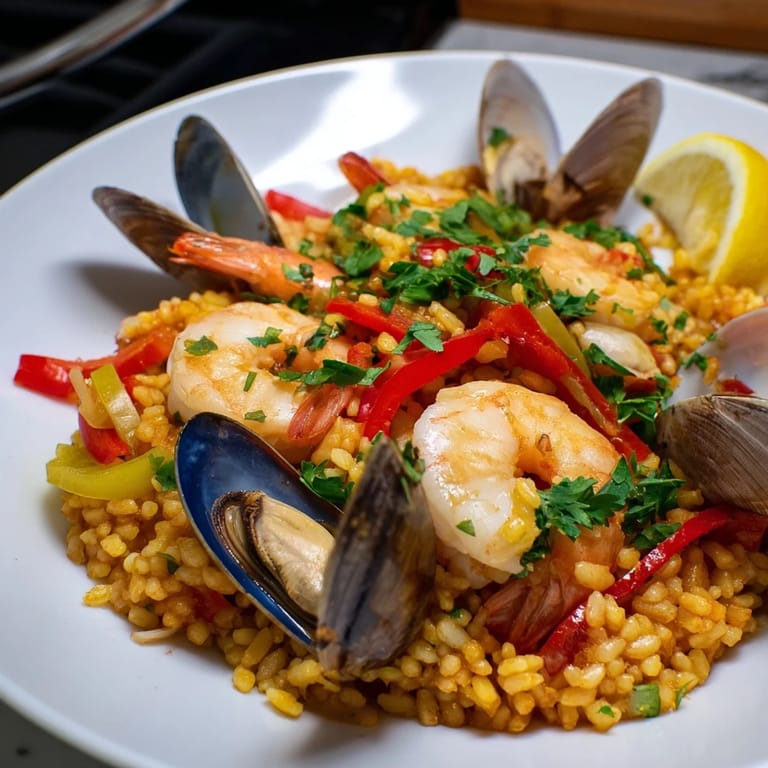
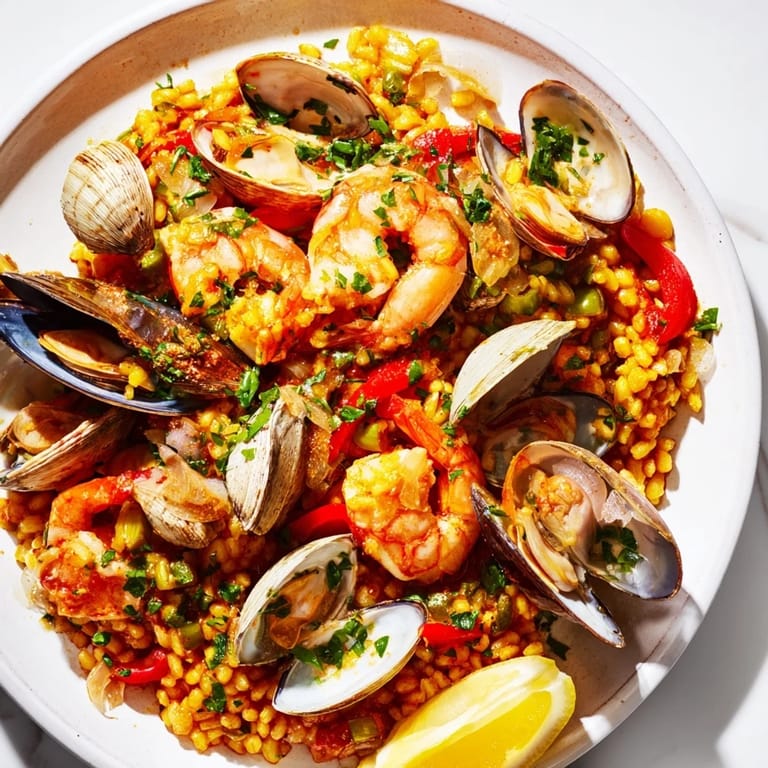
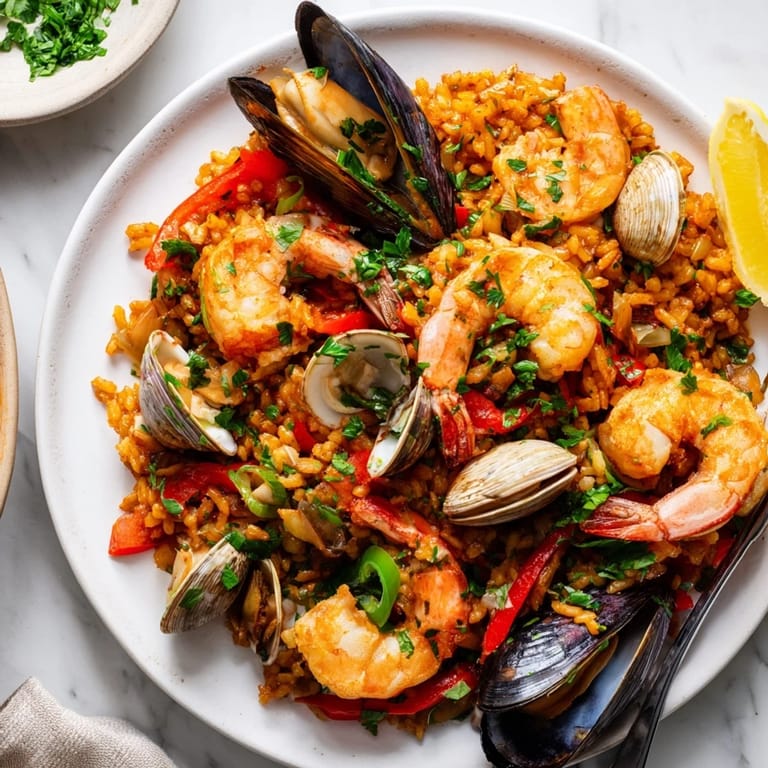
- Arrange the shrimp, mussels, and clams over the rice in whatever pattern feels natural. Cover the pan loosely with foil or a lid and let everything cook over medium-low heat for twenty to twenty-five minutes, until the rice is tender and the shellfish have opened their shells.
- Rest and finish:
- Remove the pan from heat and let it sit covered for five minutes—this resting period lets everything settle and absorb the last bit of flavor. Scatter the fresh parsley over the top, squeeze some lemon juice over individual portions, and serve straight from the pan so everyone can see what you've made.
 Save on Pinterest
 My favorite moment with this dish happens right after I set the lid on and step back. The entire kitchen transforms into something warm and anticipatory, and I find myself hovering, watching, waiting. There's something almost meditative about a paella cooking—you've done the work, and now it's just time.
The Secret of Saffron
Saffron intimidates a lot of people, and I understand why—it costs more than most spices and comes in a tiny container. But here's the thing: a little goes an impossibly long way. Those delicate threads aren't just flavoring your rice; they're creating a story, a moment, a reason for everyone at the table to pause and notice what they're eating. When it blooms in warm stock, it releases this golden, slightly floral warmth that nothing else can replicate.
Choosing and Preparing Your Seafood
The seafood you choose sets the entire tone of the meal. I learned this the hard way when I bought pre-peeled shrimp from a sketchy grocery store and they fell apart during cooking. Now I seek out the best-looking seafood I can find, and I'm not shy about asking the fishmonger questions. Fresh mussels and clams should close when tapped, and they should smell like the ocean, not fishy or off. If any seafood feels wrong to you before it hits the pan, trust that instinct.
Making It Your Own
Once you've made this paella a couple of times and it becomes second nature, that's when you can start playing. A handful of frozen peas scattered over the rice in step five adds sweetness and color. A handful of fresh squid rings arranged with the other seafood brings a different texture. A splash of white wine poured in alongside the stock deepens the flavor profile. Pair it with a crisp Spanish white like Albariño and you've got yourself a proper evening.
- If you can't find good short-grain paella rice, Arborio rice from the risotto section works as a backup.
- Make sure your stock is actually warm when you pour it in—cold stock will shock the rice and cook unevenly.
- Don't peek too much while it's cooking; every time you lift that lid, heat escapes and the timing shifts.
 Save on Pinterest
 Paella has taught me that some of the best meals are the ones where you show up with intention and ingredients that matter. It's a dish that rewards attention without demanding stress, and it brings people together in a way that feels almost magical.
Recipe Questions & Answers
- → What type of rice is best for Spanish paella?
Short-grain varieties like Bomba or Arborio work best, as they absorb liquid well without becoming mushy.
- → How do I prevent the seafood from overcooking?
Add shrimp, mussels, and clams near the end of cooking and steam them just until shells open and shrimp turn opaque.
- → Can saffron be substituted in this dish?
Saffron provides a unique aroma and color; turmeric can be a mild substitute, though the flavor will differ.
- → How should I serve this dish for the best flavor?
Serve warm, garnished with chopped parsley and lemon wedges to enhance the citrus notes and freshness.
- → Is it important not to stir after adding the stock?
Yes, avoiding stirring helps create the characteristic crispy rice layer at the bottom, known as 'socarrat.'
- → Can other seafood be used in place of clams or mussels?
Yes, calamari or firm white fish may be substituted to vary the texture and flavor profile.