 Save on Pinterest
 I'll never forget the holiday party where my grandmother unveiled her "Twelve Days of Christmas" cheese board, and suddenly everyone stopped talking. Each section told its own story—a creamy Brie nestled beside honeyed apple, a bold Roquefort paired with sweet pear—and I realized that a cheese board could be so much more than just snacking. It was a journey, a celebration, a way to say "I thought about you" without speaking a word. That night, I promised myself I'd create my own version someday, and this board has become my favorite way to welcome people into my home during the holidays.
I remember serving this for the first time at a small gathering, watching my friend with the sophisticated palate go quiet at the sight of it, then watching her light up as she realized each cheese had been thoughtfully paired. That's when I knew this board was more than decoration—it was an invitation to slow down and taste the world, twelve days at a time.
Ingredients
- 50 g Brie: Creamy and forgiving, it's your gateway cheese—buttery, approachable, the one that makes people smile
- 50 g Aged Cheddar: Sharp and dependable, this one has character. Look for a deep golden color that promises complexity
- 50 g Manchego: The Spanish beauty with a subtle nuttiness that pairs beautifully with almonds and brings Old World elegance
- 50 g Roquefort or Blue Cheese: Bold and unapologetic, this one separates the curious from the committed—pair it with something sweet to balance the drama
- 50 g Goat Cheese: Tangy and bright, it tastes like spring no matter the season, especially when fresh herbs touch its snowy surface
- 50 g Gruyère: Nutty and complex, this is the cheese that makes people say "this tastes like something special"
- 50 g Camembert: The French classic, almost as creamy as Brie but with more character—slice it right and it's pure indulgence
- 50 g Gouda: Smoky undertones hide beneath its caramel sweetness, making it the bridge between familiar and adventurous
- 50 g Comté: Aged to perfection, it has the most delicate, almost fruity notes that reveal themselves slowly on your palate
- 50 g Pecorino: Sharp, salty, and proudly Italian, this one needs sweet accompaniments to show its best self
- 50 g Havarti: Creamy Danish style that melts on your tongue, understated but quietly excellent
- 50 g Smoked Cheese (Smoked Provolone): The dramatic one that announces itself—pair with dark chocolate for a moment of pure contrast
- 12 slices of artisanal bread or assorted crackers: These are the vehicles for your cheese—choose ones with personality, not bland supports
- 2 tbsp honey: Golden magic that transforms sharp cheeses into something singing
- 2 tbsp fig jam: Sophistication in a jar, the pairing that makes you feel fancy
- 2 tbsp whole grain mustard: Subtle heat and texture that makes Gruyère shine
- 24 seedless grapes: Two per section, little bursts of sweetness that cleanse your palate
- 12 dried apricots: Chewy sweetness that pairs surprisingly well with the earthiness of aged cheeses
- 12 walnut halves: Earthy depth that makes bold cheeses feel at home
- 12 toasted almonds: Buttery and gentle, they soften the edges of sharp varieties
- 12 thin apple slices: Crisp and bright, the universal favorite that works with almost everything
- 12 slices of fresh pear: Delicate and sweet, they're the elegant choice that whispers rather than shouts
- 12 pieces of dark chocolate: Dark enough to surprise, sweet enough to satisfy—the ending punctuation mark
- 12 cornichons: Tart little pickles that reset your palate between tastings
- Fresh herbs (thyme, rosemary): For garnish and flavor, these make your board look like it came from a rustic Italian countryside
Tired of Takeout? 🥡
Get 10 meals you can make faster than delivery arrives. Seriously.
One email. No spam. Unsubscribe anytime.
Instructions
- Map your board like you're planning a dinner party:
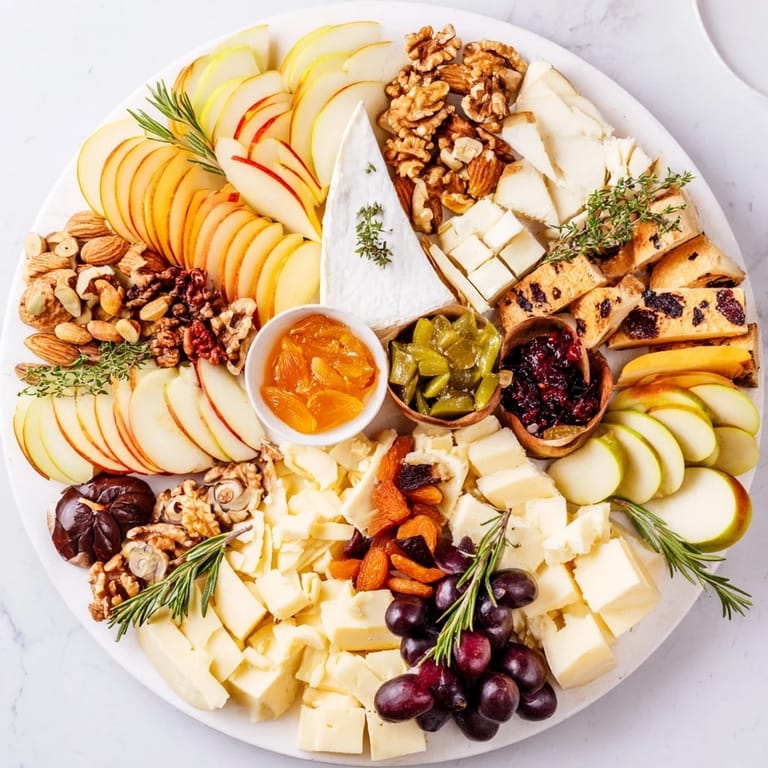
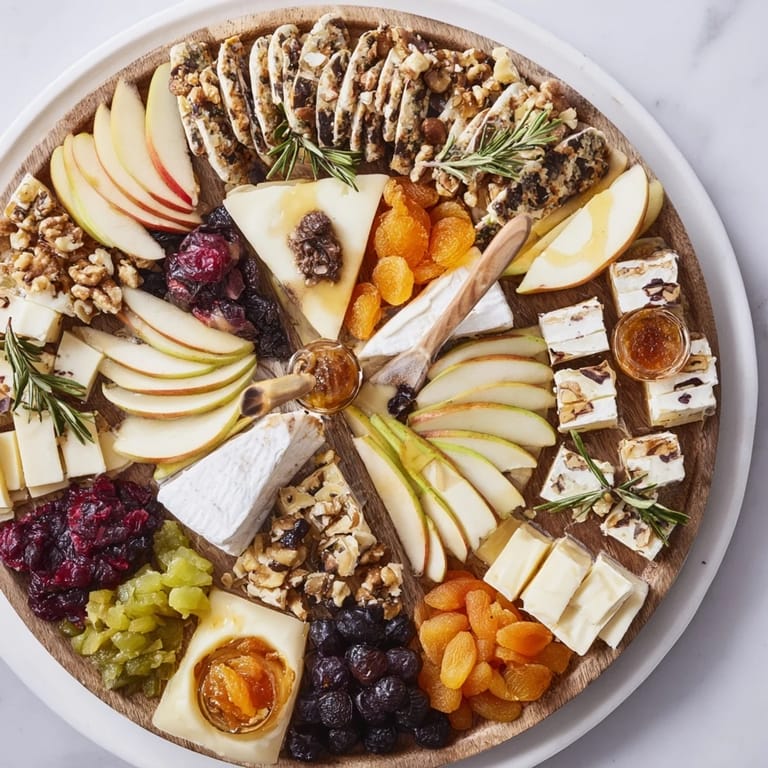
- Take your large serving board and imagine it divided into 12 equal sections, like a clock face. You can lightly score it with chalk, place small ramekins as dividers, or simply arrange the items intentionally. This is your canvas, so take a moment to visualize how it will look. Remember that people will eat their way around it, so think about flow and balance.
- Introduce each cheese to its section:
- Now comes the meditative part—place one cheese in each section, cutting larger pieces into bite-sized portions that invite a single bite. Leave some pieces slightly thicker so people can really taste the texture. Arrange them in a way that feels natural and appetizing, not too crowded but not sparse either. This is where you're starting to tell the story of each pairing.
- Craft each pairing with intention:
- Here's where it gets fun: for each cheese, you're creating a small edible conversation. Brie gets the honey kiss and crisp apple slice. The aged Cheddar receives its fig jam and nutty walnut companion. Roquefort demands the sweetness of pear and another walnut. Goat cheese gets embraced by thyme and grapes. Each pairing should make someone stop and think "oh, of course they go together." Take your time with this step—it's not just assembly, it's creation.
- Frame your masterpiece:
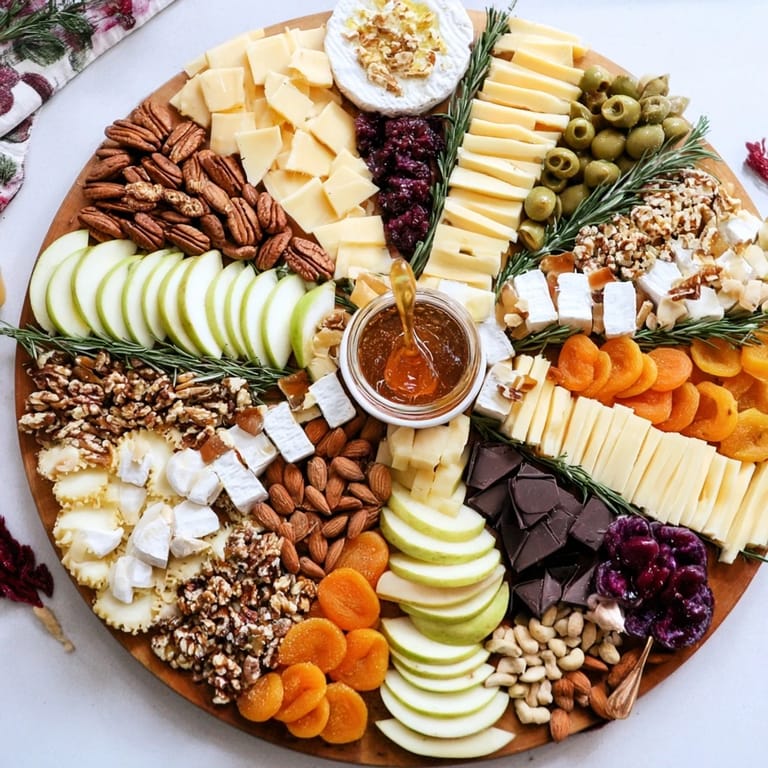
- Arrange your crackers and bread slices around the outer edges of the board, like a frame around a painting. Make sure you have enough for each section—you want people to have options, and you don't want anyone to run out of vehicles for their cheese journey. Tuck them in artfully, at angles, so they feel inviting rather than merely functional.
- Add the final flourish:
- Scatter your fresh herbs—thyme sprigs and rosemary—across the board. This isn't just garnish; it's giving visual promise of flavor and bringing a garden freshness to your creation. Let some herbs settle next to specific cheeses, hinting at the pairing journey.
- Rest and reveal:
- Step back and let your board sit at room temperature for about 30 minutes before serving. This allows all the flavors to come alive and the cheeses to soften into their best selves. When your guests arrive, present it with quiet pride—this is a gift you've made with your hands and your heart.
 Save on Pinterest
 I'll always remember the quiet moment when my usually chatty friend picked up a piece of Manchego with an almond, tasted it, closed her eyes, and said nothing for a full minute. Then she looked at me and said, "This is what friendship tastes like." That's when I understood that a cheese board isn't really about the cheese at all—it's about creating space for people to slow down and connect.
The Art of the Pairing
The magic of a cheese board lives in the pairing—that moment when two flavors meet and become greater than themselves. Creamy cheeses love the brightness of honey or the sharp cut of mustard. Bold, blue-veined cheeses crave sweetness to balance their intensity. Nutty aged cheeses find their soulmate in dried fruit. Tangy goat cheese sings when fresh herbs are involved. When you understand these natural affinities, you're not just arranging food—you're conducting flavor symphonies. Each pairing on this board is designed to teach you something about balance, contrast, and harmony.
Serving Your Board Like a Storyteller
When you set this board down in front of your guests, you're giving them more than food—you're giving them permission to taste slowly, to be curious, to have preferences. The twelve sections naturally guide people through a journey; they know there's more to explore after each tasting. You might notice people start with familiar cheeses and work their way toward the bold ones, or you might have an adventurer who heads straight for the Roquefort. Let them. The board works because it respects every palate while gently introducing them to new experiences. Some guests will linger on one perfect pairing for the whole evening, and that's absolutely right.
Making It Your Own
This board is a template, not a prescription. If you love sharp cheeses more than mild ones, load up on aged Cheddar and Manchego. If you're serving a summer gathering, swap the dried apricots for fresh berries and the dark chocolate for candied citrus. Some of my favorite versions have included local cheeses I discovered at farmers' markets, paired with regional specialties. The structure stays the same—twelve distinct conversations between cheese and accompaniment—but the ingredients can reflect your tastes, your season, your story.
- Sparkling wine, light reds, and even dry ciders are natural partners for this board
- Prep the board up to 4 hours ahead, cover it loosely, and let it come to room temperature just before serving
- If you're making this for a crowd, know that each person will probably taste 5–7 pairings rather than all twelve, so there's generous coverage built in
 Save on Pinterest
 This board has become my way of saying welcome, celebrate, and let's slow down together. Every time I build one, I'm reminded that the best meals are the ones where people linger.
Recipe Questions & Answers
- → What types of cheese are included?
The board features Brie, Aged Cheddar, Manchego, Roquefort or Blue Cheese, Goat Cheese, Gruyère, Camembert, Gouda, Comté, Pecorino, Havarti, and Smoked Cheese.
- → How should the cheeses be paired?
Each cheese is paired with unique accompaniments such as honey with Brie, fig jam with Aged Cheddar, quince paste with Manchego, and dark chocolate with Smoked Cheese, enhancing their flavors.
- → Can this be made vegan?
Using plant-based cheeses and suitable accompaniments allows for a vegan-friendly version while maintaining the board's festive presentation.
- → What serving suggestions enhance the board?
Serving the board at room temperature optimizes flavors, and garnishing with fresh herbs like thyme and rosemary adds aroma and visual appeal.
- → What beverages pair well with this board?
Sparking wine, light red wines, or cider complement the variety of cheeses and accompaniments, enhancing the overall tasting experience.