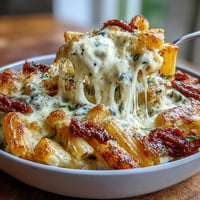
 Save on Pinterest
 There's something about a weeknight when the fridge feels empty and your energy is depleted that makes you crave something both indulgent and quick. I stumbled onto this garlic Parmesan pasta on one of those evenings, desperate for comfort without the fuss, and it became the dish I reach for whenever I need dinner on the table in fifteen minutes flat. The secret isn't fancy technique—it's using real butter, real cream, and real Parmesan, all working together to create something that tastes like you spent hours at the stove.
I made this for my partner on a particularly rough Tuesday, when we'd both been running on fumes since morning. The way the kitchen filled with the smell of butter and garlic—that moment when you know something good is about to happen—shifted the entire mood of the evening. He took one bite and just looked at me with relief, like we'd somehow turned things around with nothing but pasta and cream.
Ingredients
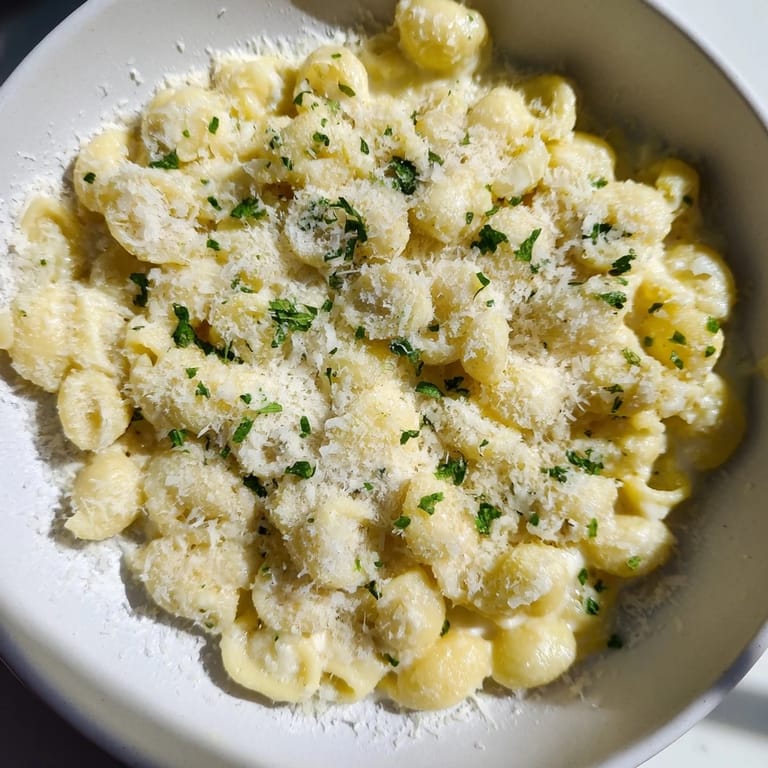
- Ditalini pasta, 300 g: These small, tubular shapes are perfect for catching the sauce in every bite; any small pasta shape works, but ditalini feels intentional.
- Water, 1.5 L: More than you think you need, because salt water is your seasoning foundation.
- Salt, 1 tsp: For the water—taste it before you add the pasta, it should taste like the sea.
- Unsalted butter, 2 tbsp: Start with real butter, because margarine will disappoint you here.
- Garlic, 4 cloves, finely minced: Mince it yourself if you can; jarred garlic shifts the whole flavor.
- Heavy cream, 200 ml: This is where the silky richness lives; don't skip it or substitute without thinking.
- Whole milk, 100 ml: Tempers the heaviness just enough so you don't feel like you're drowning in fat.
- Freshly ground black pepper, 1/2 tsp: Grind it fresh—pre-ground tastes stale and flat by comparison.
- Crushed red pepper flakes, 1/4 tsp (optional): Just a whisper if you like heat, a lovely counterpoint to the richness.
- Parmesan cheese, 80 g, finely grated: Please grate it yourself; pre-grated cheese has cellulose that prevents melting smoothly.
- Fresh parsley, 2 tbsp, chopped (optional): A bright, fresh finish that makes it look intentional rather than rushed.
Tired of Takeout? 🥡
Get 10 meals you can make faster than delivery arrives. Seriously.
One email. No spam. Unsubscribe anytime.
Instructions
- Boil the pasta:
- Bring your water to a rolling boil—you'll know it's ready when the steam rises confidently and bubbles are breaking the surface rapidly. Add salt so it tastes like the sea, then drop in the ditalini and stir once or twice so nothing sticks to the bottom; let it cook according to the package, usually around 8–9 minutes, until it's tender but still has a tiny bit of resistance when you bite it.
- Make your rescue water:
- Before you drain, fish out about 100 ml of that starchy pasta water with a measuring cup or ladle—this is your secret weapon for adjusting the sauce later.
- Toast the garlic:
- In the same pot (no need to wash it), melt your butter over medium heat until it's foaming and smells nutty. Add your minced garlic and let it sizzle for about a minute until it becomes fragrant and golden; if it turns brown, start over because burnt garlic tastes bitter and harsh.
- Build the sauce base:
- Pour in your cream and milk, stirring gently so everything comes together into one smooth, pale mixture. Bring it to a gentle simmer—you want small, lazy bubbles, not an aggressive boil.
- Bring pasta home:
- Add your drained ditalini back into the pot and stir it through the sauce so every piece gets coated. This is where the transformation happens.
- Add the Parmesan:
- Sprinkle the grated Parmesan over the pasta slowly while stirring constantly—this prevents it from clumping and creates a smooth, creamy sauce. If it feels too thick (sauce should coat the pasta loosely, not cling like cement), add a splash of that reserved pasta water and stir until it's the consistency you want.
- Season and serve:
- Crack fresh black pepper over everything and add red pepper flakes if you're using them. Taste it—you should taste garlic, butter, and cheese in equal measure. Serve immediately into bowls, topped with extra Parmesan and a scatter of parsley if you have it.
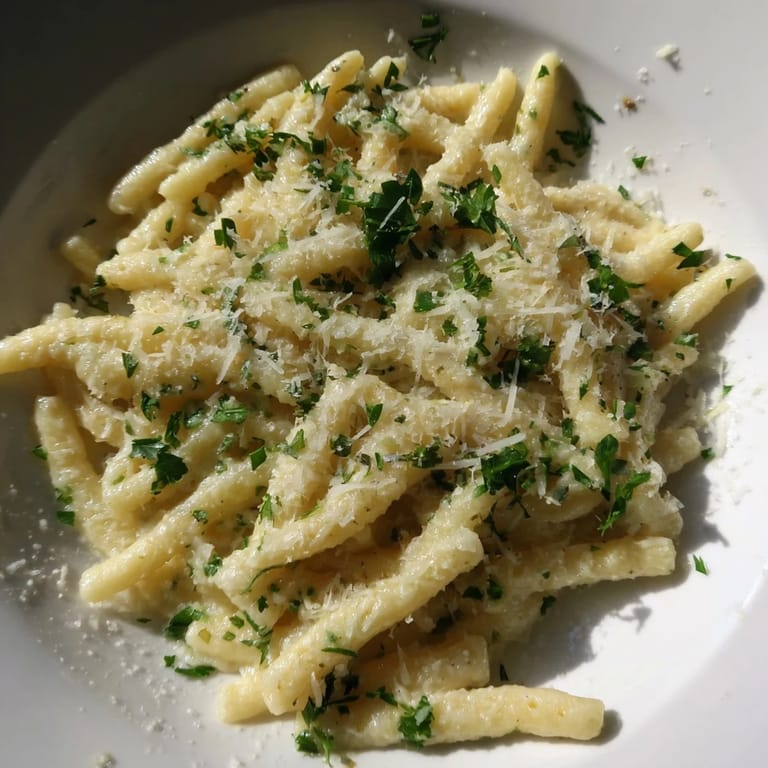 Save on Pinterest
 What strikes me most about this dish is how something so simple can feel like a small act of self-care. On nights when cooking feels like another obligation, this reminds me that feeding yourself well doesn't require complexity—just intention and real ingredients.
Why This Works as a Weeknight Dinner
The beauty of a one-pot pasta is that you're not juggling multiple pans and timers; everything happens in one place, which means less cleanup and less stress. Because the pasta water stays in the ecosystem and the sauce comes together as the pasta finishes, the timing feels almost magical—by the time everything is drained and back in the pot, you're maybe two minutes away from eating. It's the kind of dish that works on nights when you're tired because it requires attention, but not the kind that leaves you mentally drained.
Variations and Flexibility
While this recipe is delicious as written, it's also forgiving enough to adapt to what you have on hand. If you don't have heavy cream, half-and-half or even a splash of whole milk with a bit more butter will work; the sauce won't be quite as velvety, but it'll still be good. You can swap the ditalini for any small pasta shape—elbow macaroni, small shells, little stars—and it will work just as well. Some nights I add a squeeze of lemon juice at the end, which brightens everything and cuts through the richness beautifully.
Pairing and Serving Suggestions
This pasta is rich and silky, so it pairs beautifully with something light and crisp to drink—a Pinot Grigio or even a cold, unoaked white wine makes the whole meal feel a bit more special than just pasta on a weeknight. A simple green salad with a sharp vinaigrette on the side balances the creaminess, and a piece of crusty bread for soaking up the last of the sauce is never a bad idea. Save this dish for when you want comfort without apology, and serve it immediately while the sauce is still warm and glossy.
- A squeeze of fresh lemon juice just before serving brightens the flavors and cuts through the richness.
- Fresh basil, torn over the top at the last moment, adds a peppery note that elevates it slightly.
- A tiny pinch of nutmeg stirred into the sauce (I'm talking a whisper) brings an unexpected warmth that makes people ask what the secret ingredient is.
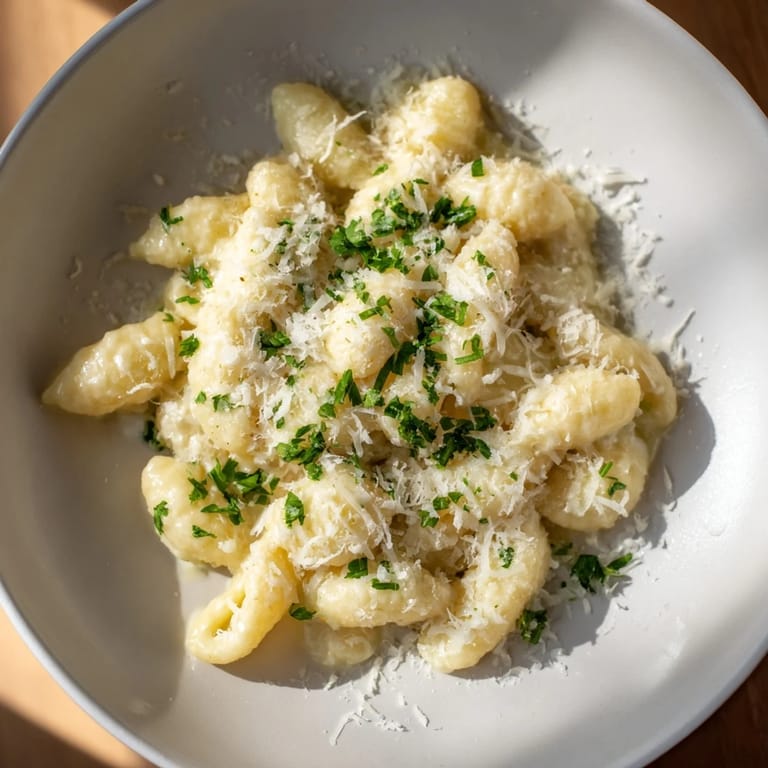 Save on Pinterest
 This pasta has become my answer to the question I ask myself at five o'clock on a busy day: what can I make that feels like real food, not survival? It's simple enough to make without thinking, but good enough that you'll actually savor it.
Recipe Questions & Answers
- → What pasta can I use instead of ditalini?
Small pasta shapes like elbow macaroni or small shells work well as substitutes, providing similar texture and cooking times.
- → How do I prevent the sauce from becoming too thick?
Reserve some pasta cooking water and add it gradually to the sauce until you reach your desired consistency.
- → Can I make this dish spicier?
Yes, adding crushed red pepper flakes during seasoning adds a mild heat. Adjust to your taste preference.
- → What can I use to lighten the creamy sauce?
Substitute heavy cream with half-and-half to reduce richness while maintaining creaminess.
- → Any tips for enhancing flavor before serving?
A squeeze of fresh lemon juice brightens the dish nicely just before serving.