 Save on Pinterest
 The first time I understood why Wiener Schnitzel mattered was watching my grandmother's hands move through the breading station in her Vienna kitchen, each motion deliberate and unhurried. She'd pound the veal so thin it was nearly translucent, then whisper that the real magic happened in the hot fat, where the exterior would shatter like golden glass while the meat stayed impossibly tender inside. That afternoon, I realized this wasn't just dinner—it was a lesson in patience and precision wrapped in a crispy, beautiful package.
I made this for my roommate during our first winter together, and the smell of clarified butter hitting the pan stopped her mid-conversation. She followed that aroma into the kitchen like a spell, and by the time the schnitzels were golden, she was already pulling out plates without being asked. Some dishes break the ice; this one melts it entirely.
Ingredients
- Veal cutlets (4 pieces, about 150 g each): The foundation of an authentic schnitzel—tender, subtle, and forgiving when pounded correctly. Buy from a butcher if possible; they'll pound it for you, but doing it yourself teaches you how thin it needs to go.
- All-purpose flour (100 g): The first layer that helps everything else stick. Don't skip it or abbreviate this step, no matter how tempting.
- Eggs (2 large) and milk (4 tbsp): Together they create the glue that holds your breadcrumbs in place, but the milk thins the eggs just enough so the coating clings without being heavy.
- Fine dry breadcrumbs (150 g): This is where the crispiness lives. Use panko if that's what you have, but fine breadcrumbs will give you the delicate, shattering texture that makes this special.
- Clarified butter or neutral oil (250 ml): The depth of flavor comes from clarified butter, but the oil gives you a higher smoke point if your stove runs hot. Either way, you need enough fat for the schnitzel to swim in.
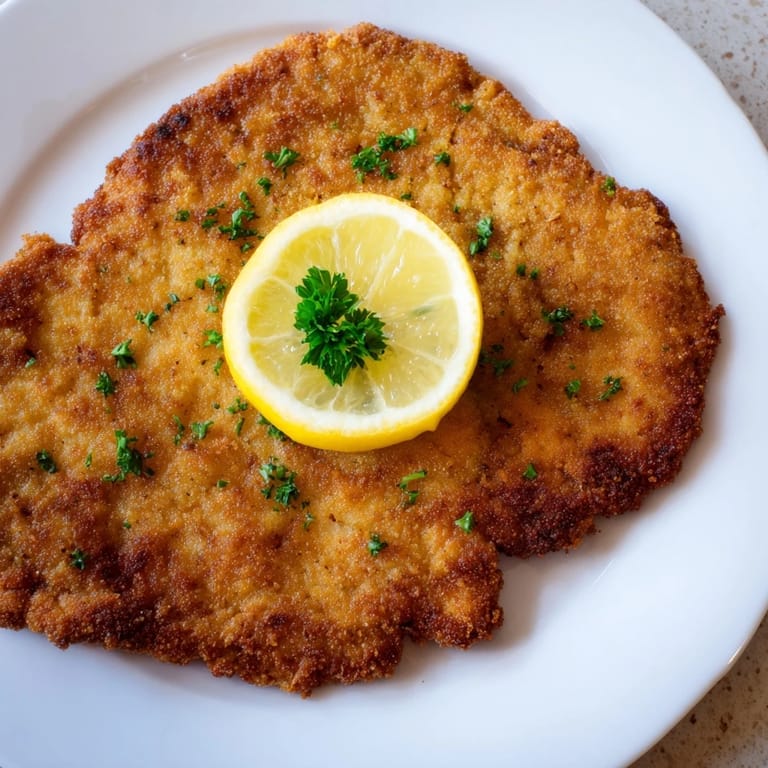
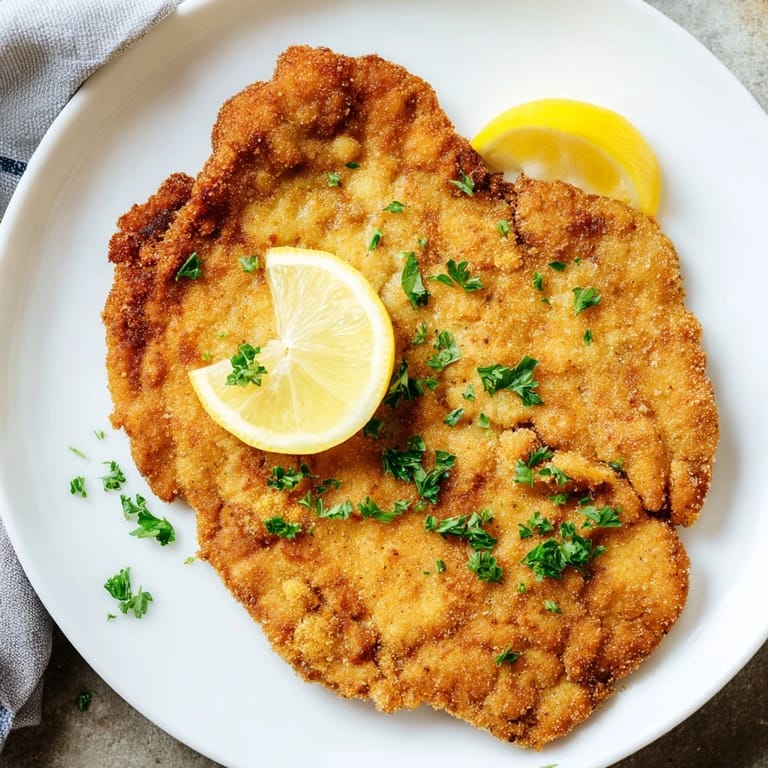
- Lemon wedges and fresh parsley: These aren't garnish—they're the bright punctuation that cuts through richness and makes every bite sing.
Tired of Takeout? 🥡
Get 10 meals you can make faster than delivery arrives. Seriously.
One email. No spam. Unsubscribe anytime.
Instructions
- Pound the veal until gossamer-thin:
- Lay each cutlet between plastic wrap and use the flat side of your mallet to pound steadily and evenly until it's about 1/4 inch thick, almost see-through. Pat it dry afterward—any moisture will fight your crust. Season both sides gently with salt and pepper.
- Build your breading station like you mean it:
- Three shallow dishes in a row: flour, beaten eggs mixed with milk, and breadcrumbs. This setup changes everything because your hands stay cleaner and you work faster when everything is within arm's reach.
- Coat each cutlet with a light, loose hand:
- Dredge in flour, shake off the excess, dip in egg, then roll gently in breadcrumbs without pressing. A loose, almost delicate coating is what fries up crispy; a packed, dense one becomes heavy and tough.
- Get your fat hot and shimmering:
- Heat the butter or oil over medium-high heat until it moves like liquid mercury across the pan. This is non-negotiable—cold fat makes soggy schnitzels. Drop a breadcrumb in; it should sizzle immediately and turn golden within seconds.
- Fry until the crust cracks with sound:
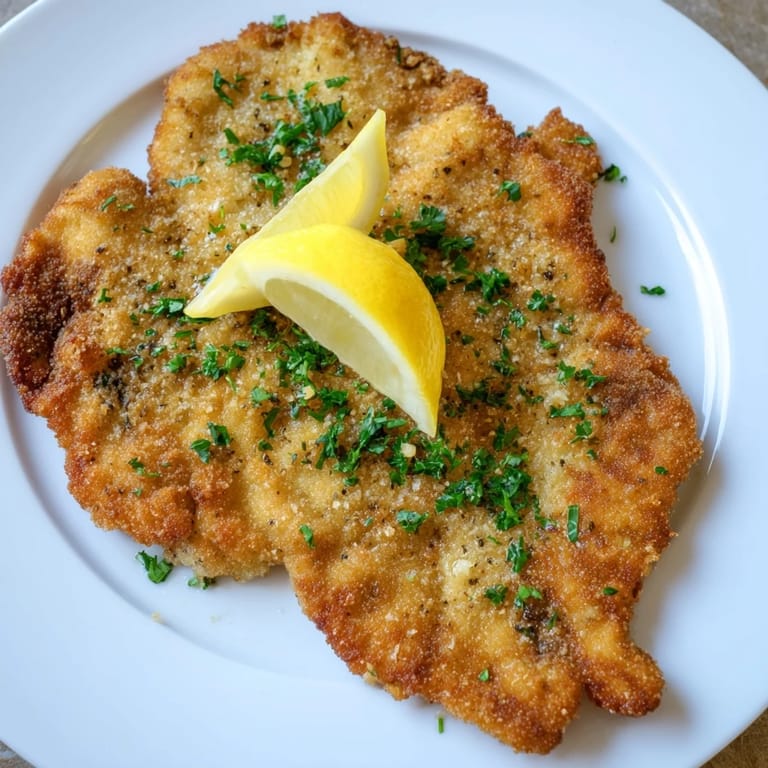
- Fry one or two cutlets at a time for 2 to 3 minutes per side, tilting the pan occasionally and spooning the hot fat over the top for even browning. The edges should brown faster than the center, and you'll hear a gentle crackling that tells you the crust is forming.
- Drain and serve while the crust is still loud:
- Lift each schnitzel out with a slotted spatula and rest it briefly on paper towels. Serve immediately with lemon wedges and a scatter of fresh parsley if you like.
 Save on Pinterest
 Years later, I realized my grandmother always cooked this schnitzel on nights when someone needed feeding, not just sustenance but comfort. The act of pounding the veal, the careful breading, the unhurried frying—it was how she said I love you without speaking.
Why Clarified Butter Changes Everything
The difference between schnitzel made with oil and schnitzel made with real clarified butter is the difference between a good dinner and a transcendent one. Clarified butter fries faster, browns more evenly, and leaves behind a richness that plain oil simply can't touch. If you've never made clarified butter, it's worth learning—slowly melt butter over low heat, let the milk solids sink to the bottom, then pour off the golden liquid into a clean jar. It keeps for weeks and elevates everything it touches.
The Company Matters
Schnitzel isn't a dish you eat alone, at least not in the traditional sense. Serve it with a cool potato salad dressed simply with vinegar, or a crisp cucumber salad with a touch of dill. Some families swear by lingonberry jam alongside it—that sweet-tart jolt against the rich, golden meat. Whatever you choose as a side, make sure it's something light and refreshing that won't compete with the schnitzel's golden, delicate beauty.
- A simple green salad with lemon vinaigrette cuts through the richness perfectly and adds color to the plate.
- Warm boiled potatoes with parsley and butter are traditional and allow the schnitzel to be the star.
- If you're feeling playful, a dollop of sour cream mixed with fresh dill works beautifully and feels surprisingly modern.
When Things Go Wrong and How to Fix Them
If your crust isn't crisping, your fat wasn't hot enough—next time, wait for the shimmer and trust your senses. If the meat tastes tough, you either pounded it unevenly or cooked it too long; this is fast cooking, and 2 to 3 minutes per side is all you need. If your breadcrumbs are browning but the meat inside feels rubbery, the pan was too hot; medium-high is the sweet spot, not blazing high heat.
 Save on Pinterest
 Every time I make this schnitzel, I'm transported back to that Vienna kitchen, but I'm also here, now, creating my own moments around this golden, crispy dish. It's food that carries memory forward and builds new ones with every person you cook it for.
Recipe Questions & Answers
- → What type of meat is used for authentic Wiener Schnitzel?
Veal cutlets are traditionally used, pounded thin to ensure tenderness and even cooking.
- → How do I achieve a crispy crust on schnitzel?
Lightly coat the meat in flour, dip in an egg and milk wash, then cover with fine dry breadcrumbs without pressing them in. Fry in hot clarified butter or neutral oil evenly on both sides.
- → Can I substitute clarified butter for frying?
If clarified butter is unavailable, use a neutral oil with a high smoke point to maintain crispiness and prevent burning.
- → Why is it important not to overcrowd the pan?
Overcrowding lowers the oil temperature causing soggy crusts. Fry in batches to keep the fat shimmering and schnitzels crispy.
- → What garnishes traditionally accompany Wiener Schnitzel?
Lemon wedges and chopped fresh parsley are classic accompaniments that add freshness and brightness to the dish.