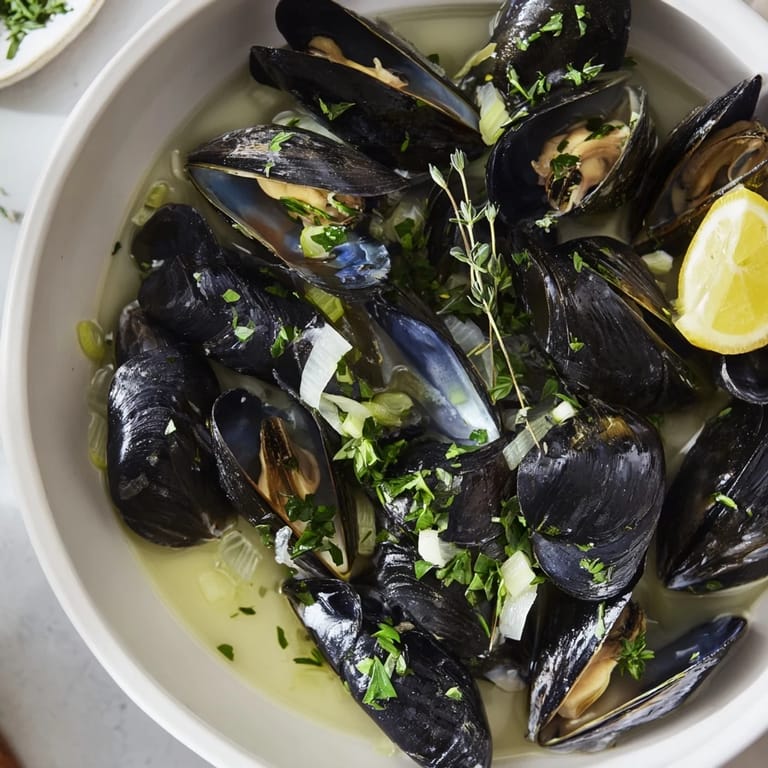
 Save on Pinterest
 The first time I truly understood moules marinière was on a gray Brussels afternoon when a friend's mother pulled a steaming pot from the stove, and the kitchen filled with this intoxicating perfume of white wine, garlic, and the sea. She didn't fuss or measure precisely; she just moved through the motions with the ease of someone who'd made this dish a hundred times. I watched the mussels open like tiny treasures, each one releasing its brininess into the golden broth, and I realized this wasn't restaurant food or anything fancy—it was simply honest cooking that tasted like Belgium itself.
I made this for my partner one winter when we were both tired and wanted something that felt special without spending hours cooking. The aroma alone did half the work—by the time the mussels opened, we were already seated at the table like we were somewhere in Antwerp, not our cramped city kitchen. There's something about sharing a pot of moules that dissolves formality; you're both leaning in, fishing out shells, trading bites of broth-soaked bread, and somehow it becomes the most intimate dinner without any pretense.
Ingredients
- Fresh live mussels (2 kg): These are your star—buy them the day you plan to cook and store them in the coldest part of your fridge in a bowl so they can breathe. When you scrub them, you're cleaning away sand and barnacles; when you debeard them, you're removing the fibrous tuft they use to cling to rocks, which takes just a quick tug.
- Shallots (2 medium): Sweeter and more elegant than onions, they dissolve into the broth and add a whisper of sweetness that balances the briny mussels beautifully.
- Garlic (2 cloves): Mince it finely so it releases its aromatic oils into the hot oil and becomes almost candied by the time the wine goes in.
- Leek and celery: These form an aromatic base, the way French cooking teaches—the whites and pale greens give subtle depth without overpowering the delicate mussel flavor.
- Fresh flat-leaf parsley: Add it at the very end so it stays bright and fresh, a green contrast to the burnished broth.
- Thyme and bay leaf: Just a whisper of these herbs—you want to taste the mussels and wine, not an herb garden.
- Dry white wine (300 ml): A crisp, unoaked wine is best; it becomes the broth's backbone, so taste it before you cook and make sure you'd drink it.
- Olive oil (2 tbsp): Good olive oil matters here since it's one of the few fats; it carries flavor and helps soften the aromatics.
- Sea salt and freshly ground black pepper: Taste as you go—mussels are naturally salty, so you may need less than you'd expect.
Tired of Takeout? 🥡
Get 10 meals you can make faster than delivery arrives. Seriously.
One email. No spam. Unsubscribe anytime.
Instructions
- Prepare your mussels:
- Rinse them under cold running water, scrubbing away any sand or barnacles with a small brush or your fingers. Discard any with broken shells or those that don't close when you tap them—these are already dead and won't be safe to eat. You'll feel a little like you're sorting treasure, separating the good from the questionable.
- Build your aromatic base:
- Heat olive oil in a large pot over medium heat until it shimmers slightly. Add your chopped shallots, garlic, leek, and celery, stirring occasionally, until they soften and become translucent around the edges—this takes about 3 to 4 minutes. The kitchen will smell incredible, and this is the moment you know you're on the right track.
- Add herbs and wine:
- Toss in the thyme sprigs and bay leaf, then pour in your white wine all at once. The pot will hiss and steam, and you'll watch the wine reduce slightly as it comes to a gentle simmer. This is where the magic ingredient—the broth—begins to form.
- Steam the mussels:
- Add all your cleaned mussels to the pot, cover it tightly with a lid, and increase the heat to high. Let them steam for 5 to 7 minutes, shaking the pot occasionally so everything cooks evenly. You'll hear them opening, little clicks and pops, and it's thrilling every single time.
- Finish with parsley:
- Remove the pot from heat and stir in your chopped parsley. Taste the broth and adjust seasoning with black pepper and a pinch of salt if needed, remembering that the mussels themselves are briny. Discard any mussels that stubbornly refused to open—they were never meant to be eaten.
- Serve immediately:
- Divide mussels and broth into deep bowls, making sure each person gets plenty of that liquid gold. Serve with lemon wedges on the side and thick slices of crusty bread for soaking up every last drop.
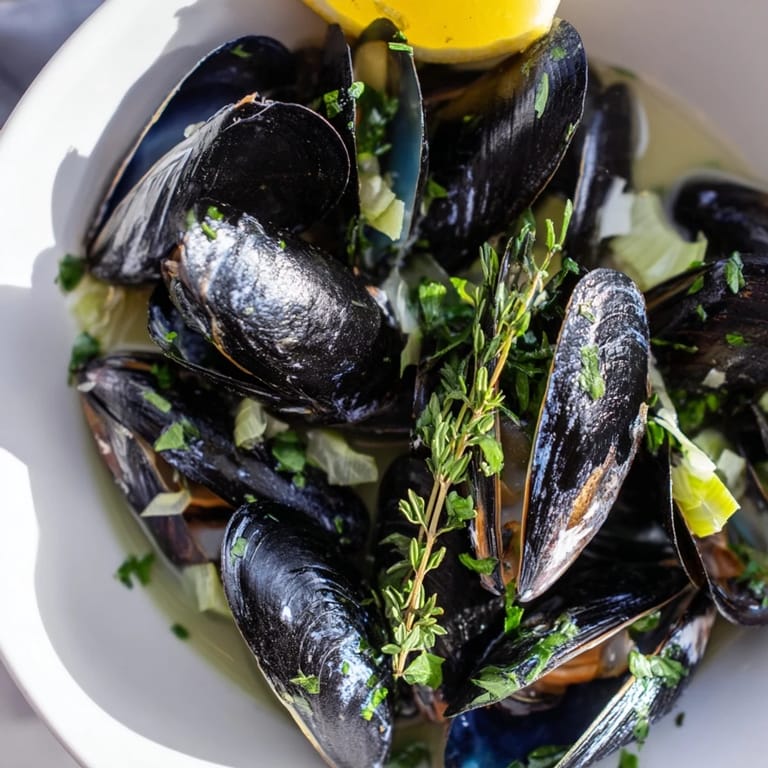 Save on Pinterest
 The moment that really sold me on this dish happened when my mother visited and we made moules together. She's not a seafood person, but she tried one mussel with the broth and fell quiet in a way that meant something shifted in her. We finished that pot without saying much, just passing bread back and forth and occasionally making eye contact across the bowl like we'd discovered something together.
The Belgian Connection
Moules marinière is to Belgium what pasta is to Italy—humble, honest, and somehow elevated beyond its simple ingredients. You'll find it on menus from casual beer halls to fine dining spots, always prepared the same essential way because there's no improving on perfection. The dish is often served with Belgian fries (frites) and a dollop of creamy mayonnaise, a pairing that sounds unlikely until you taste it together, and then it becomes obvious.
Variations and Additions
The classic version is pure and unadulterated, but I've learned there are gentle ways to enhance it without losing the soul of the dish. A splash of cream swirled in at the end adds richness, though purists might shake their heads. A knob of butter whisked into the hot broth gives it a silky finish that feels indulgent.
Serving and Pairing
This dish demands company and good bread—there's no way around it. The broth is too precious to waste, and you'll want something substantial to soak it up. Serve it in deep, wide bowls so everyone can navigate the shells easily, and always provide lemon wedges because that bright acidity is the final grace note.
- Pair with a crisp white wine—the same one you used for cooking, or a Belgian witbier for a true local experience.
- Crusty bread, grilled or toasted with garlic, becomes a luxury when dipped in that golden broth.
- Belgian fries on the side with mayonnaise is the traditional route, though a simple green salad works beautifully too.
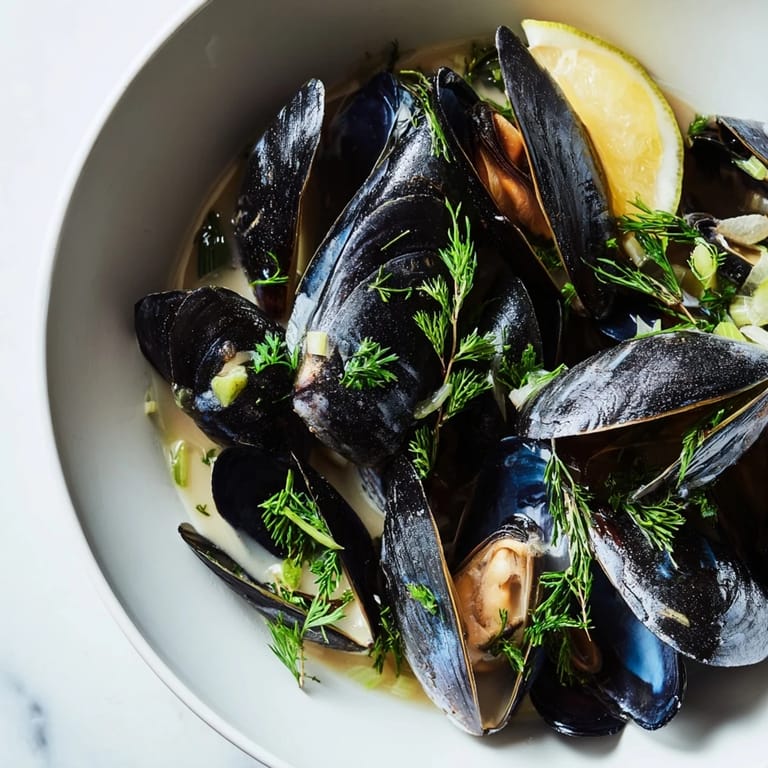 Save on Pinterest
 There's something almost ceremonial about moules marinière, the way it brings people together and makes an ordinary evening feel special. Make this when you want to cook something that tastes like you've been doing it your whole life.
Recipe Questions & Answers
- → How do I clean fresh mussels properly?
Rinse under cold running water, scrub shells to remove debris, and discard any mussels that are cracked or do not close when tapped.
- → What white wine works best for steaming mussels?
Use a dry white wine such as Sauvignon Blanc or Pinot Grigio to add a crisp, aromatic flavor to the broth.
- → Can I substitute the herbs used in this dish?
Thyme and bay leaf provide a classic aroma, but fresh rosemary or tarragon can be used as alternatives to vary the flavor.
- → How long should mussels be steamed?
Steam mussels for 5 to 7 minutes until they open fully; discard any that remain closed after cooking.
- → What sides complement this seafood dish?
Crusty bread or Belgian fries make great accompaniments, perfect for soaking up the flavorful broth.