 Save on Pinterest
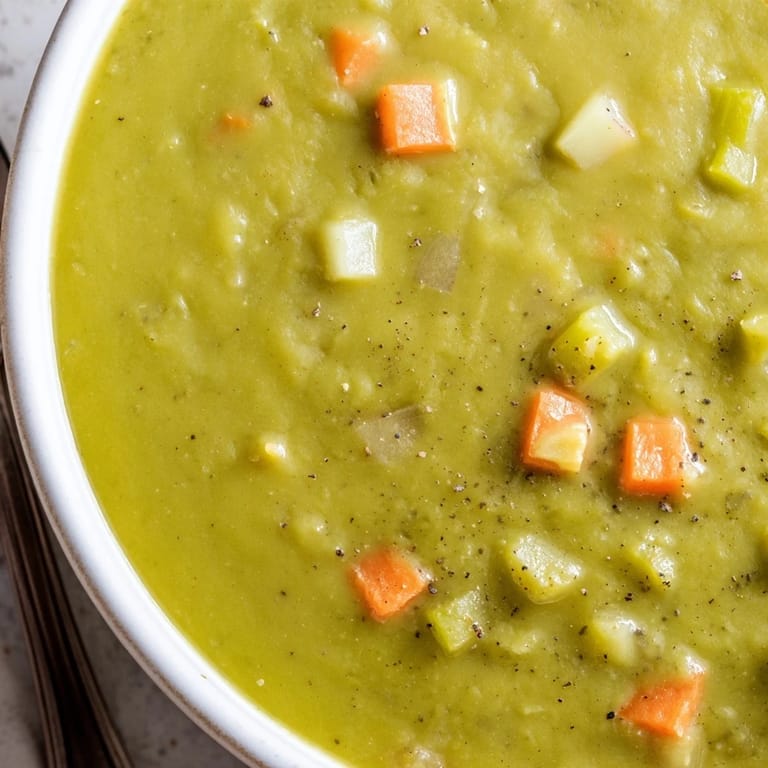
 The steam was already fogging up my kitchen windows when I finally remembered the bay leaf. It was one of those gray January afternoons where the sun gave up around noon, and my apartment smelled like what I imagine comfort must have smelled like in the old country. My neighbor had knocked on my door earlier with a bag of split peas she'd bought in bulk, insisting I take them off her hands. I'd never made split pea soup before, honestly I associated it with cafeteria food and bad childhood memories, but something about the way the afternoon light was hitting my countertops made me want to try.
My sister came over unexpectedly that evening, trailed by snow and complaining about her commute. She stood in the doorway sniffing the air like a detective, then dropped her bag on the floor and asked what I was making. We ate it standing up at the counter, burning our tongues slightly, not even bothering with bowls. She texted me the next morning asking for the recipe, which is basically her highest endorsement.
Ingredients
- 2 cups dried split green peas, rinsed: These little guys are the backbone of the whole operation and they expand like crazy when they cook
- 1 large onion, diced: Don't rush this part, the sweetness builds the flavor foundation
- 2 carrots, peeled and diced: They add natural sweetness and that classic soup color
- 2 celery stalks, diced: Essential for that aromatic base that makes soup taste professional
- 2 garlic cloves, minced: Fresh is worth it here, the jarred stuff never quite melts into soup the same way
- 1 medium potato, peeled and diced: This is my secret for extra creaminess without actually adding cream
- 1 bay leaf: Don't forget to fish it out later, ask me how I know
- 1 teaspoon dried thyme: Fresh works too if you have it, use about a tablespoon
- 6 cups vegetable broth: Homemade is ideal but a good quality boxed broth works perfectly fine
- 1 tablespoon olive oil: Just enough to get those vegetables started
- 1 cup diced smoked ham or 1 ham bone (optional): The traditional version but it's honestly delicious without
- 1/2 teaspoon black pepper: Freshly ground makes a noticeable difference
- Salt, to taste: Wait until the end to adjust, broth brands vary wildly in saltiness
Tired of Takeout? 🥡
Get 10 meals you can make faster than delivery arrives. Seriously.
One email. No spam. Unsubscribe anytime.
Instructions
- Build your flavor foundation:
- Heat the olive oil in your largest soup pot over medium heat, then add the onion, carrots, and celery. Let them soften for about 5 minutes until they're fragrant and starting to turn translucent.
- Wake up the garlic:
- Stir in the minced garlic and cook for just 1 minute until you can really smell it. Watch closely because burnt garlic turns bitter and ruins the whole pot.
- Bring everything together:
- Add the split peas, diced potato, bay leaf, thyme, and all that broth. If you're going the traditional route, toss in the ham or ham bone now.
- Let it work its magic:
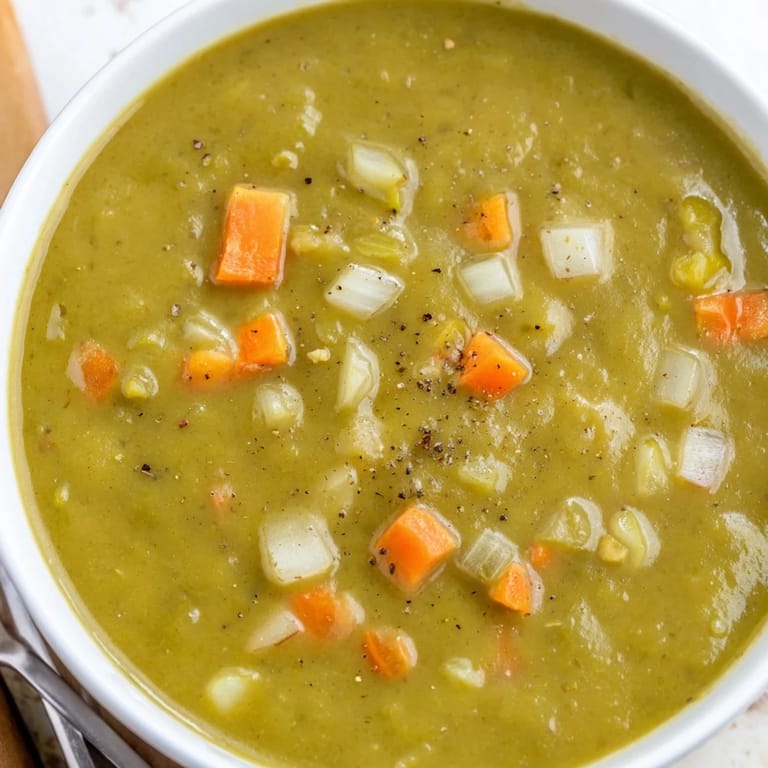
- Bring the pot to a boil, then turn it down to low. Cover it up and let it simmer for an hour, stirring occasionally and checking that it's not sticking. The peas should be completely soft and the soup should look thickened.
- The finishing touches:
- Fish out the bay leaf and ham bone if you used one. Stir the diced ham back in if you went that route. For a smoother texture, blend just part of the soup with an immersion blender.
- Make it yours:
- Taste it now and add salt and pepper as needed. Sometimes it wants more acid, sometimes more salt, trust your palate here.
 Save on Pinterest
 Last winter I made a double batch during a snowstorm and ate it for three days straight. By day three I'd started adding hot sauce on top, which honestly kind of changed everything. Sometimes the best discoveries happen when you're working with what you have.
Making It Your Own
I've learned that split pea soup is incredibly forgiving. You can add chopped kale during the last ten minutes for some green, or stir in a handful of spinach right before serving. Sometimes I throw in a parsnip with the other root vegetables for extra sweetness. The soup never seems to mind these little deviations.
The Texture Question
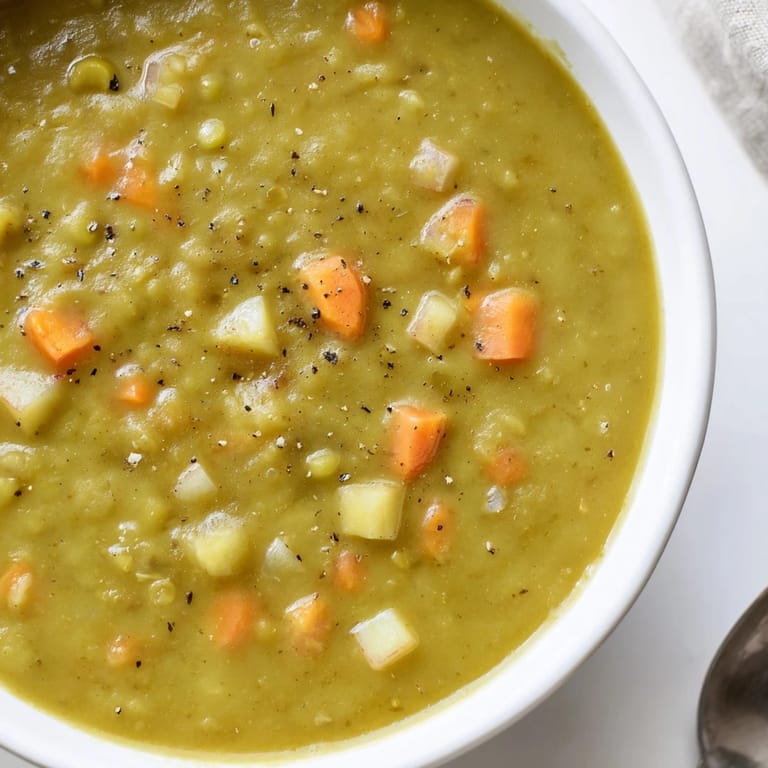
Some people like it completely smooth, others want to know they're eating peas. I've found that blending about half the soup gives you the best of both worlds, that velvety base with enough texture to make it interesting. If you accidentally over-blend it, don't worry, just call it elegant and serve it in nice bowls.
Serving It Up
A hunk of crusty bread is non-negotiable in my house, something you can drag through the soup. A simple green salad with vinaigrette cuts through the richness nicely. Sometimes I make cornbread if I'm feeling particularly ambitious, which turns the whole thing into a proper meal.
- Croutons on top add a lovely contrast if you have stale bread to use up
- A drizzle of good olive oil right before serving makes everything taste restaurant-quality
- A squeeze of lemon juice brightens the whole bowl in surprising ways
 Save on Pinterest
 There's something profoundly satisfying about turning a bag of dried peas into something that feeds you for days. Simple food doesn't have to mean simple flavor.
Recipe Questions & Answers
- → Do split peas need to be soaked before cooking?
No, split peas do not require soaking. Unlike dried beans, they cook relatively quickly and break down naturally during simmering, creating the soup's characteristic thick, creamy texture.
- → Can I make this soup in a slow cooker?
Yes. Combine all ingredients in your slow cooker and cook on low for 6-8 hours or on high for 3-4 hours until the peas are completely tender and the soup has thickened.
- → How long does split pea soup last in the refrigerator?
Properly stored in an airtight container, this soup keeps well for 4-5 days in the refrigerator. The flavors continue to develop, often tasting even better on the second or third day.
- → Can I freeze split pea soup?
Absolutely. This soup freezes exceptionally well for up to 3 months. Cool completely before transferring to freezer-safe containers, leaving some space for expansion as liquids expand when frozen.
- → What gives split pea soup its smoky flavor without ham?
For vegetarian versions, smoked paprika or liquid smoke adds that characteristic smoky depth. Alternatively, a small amount of soy sauce or miso paste provides umami richness that complements the earthy peas.
- → Why is my soup too thick?
Split peas naturally break down and thicken significantly as they cook. Simply add more broth or water, ½ cup at a time, until you reach your desired consistency. This is especially helpful when reheating leftovers.