 Save on Pinterest
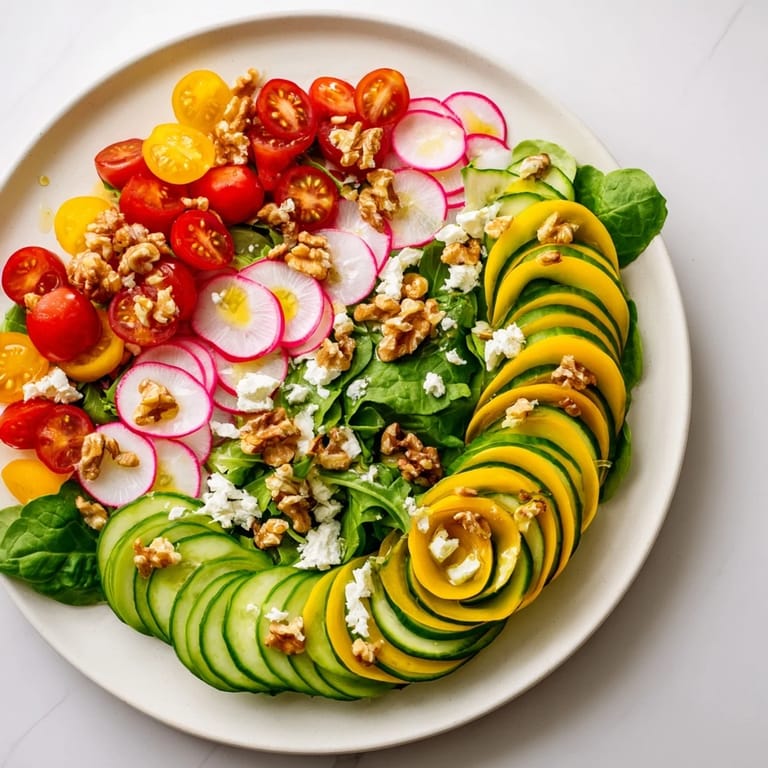
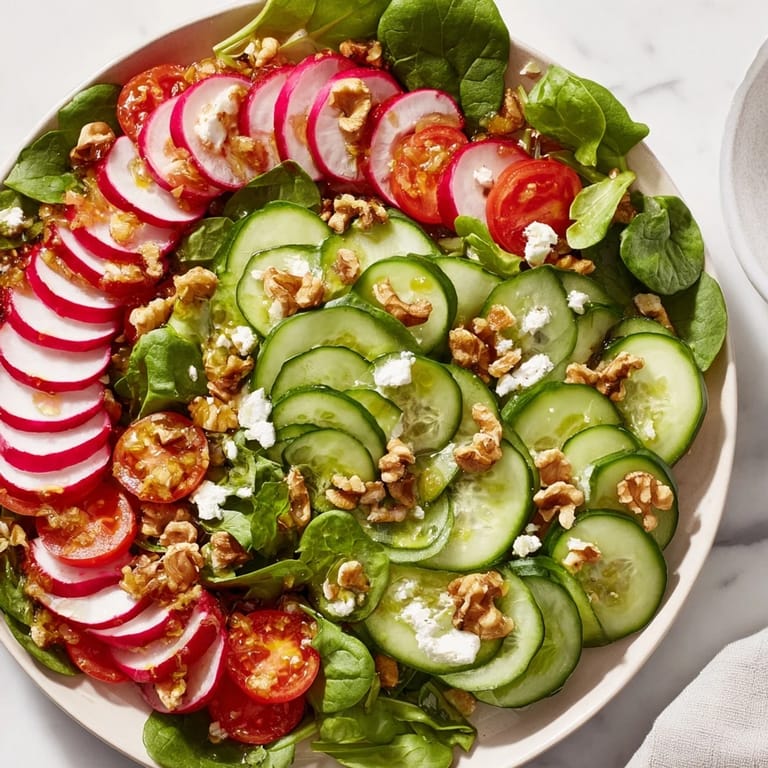
 I discovered this salad by accident while staring at a spiral notebook doodle during lunch, suddenly struck by how the golden ratio appears everywhere—even in how we naturally arrange things on a plate. What started as a mathematical curiosity became something genuinely beautiful to eat, a salad where every spiral section offers a different flavor note, building in intensity as you work outward from the gentle spinach core. My friends thought I'd lost it when I started measuring vegetables with fractions, but the moment they saw it on the table, they understood.
I served this at a potluck where everyone was exhausted from a long week, and watching people's faces light up when they saw the spiral arrangement felt like I'd given them permission to slow down and appreciate something carefully made. Someone asked if it was too pretty to eat, and that's when I knew it had crossed from recipe into experience.
Ingredients
- Baby spinach leaves: The delicate foundation that starts your spiral with a mild, fresh base.
- Arugula: Introduces a peppery note as the second ring, building complexity.
- Cherry tomatoes, halved: Their sweetness and color become the visual and flavor anchor of the third section.
- Cucumber, thinly sliced: Cool and crisp, it adds textural relief without overpowering the spiral.
- Radishes, thinly sliced: A sharp bite that wakes up your palate as you spiral outward.
- Red onion, finely sliced: Use a mandoline if you have one—those paper-thin slices make all the difference in how they nestle into the design.
- Avocado, sliced: Its creamy richness feels luxurious scattered through the spiral.
- Blueberries: Unexpected sweetness tucked into unexpected places, like little flavor surprises.
- Toasted walnuts, chopped: Toast them yourself if possible; the aroma alone makes this feel special.
- Crumbled feta cheese: The salty finish that ties everything together.
- Extra-virgin olive oil: Quality matters here since it's tasted directly; don't skip the good stuff.
- Lemon juice: Fresh squeezed brightens everything without making it taste sour.
- Honey: Just enough to balance the acid and add a whisper of sweetness.
- Dijon mustard: An emulsifier that makes the dressing coat every leaf evenly.
Tired of Takeout? 🥡
Get 10 meals you can make faster than delivery arrives. Seriously.
One email. No spam. Unsubscribe anytime.
Instructions
- Start with your foundation:
- Arrange spinach leaves in a gentle crescent on your round platter, laying them flat like they're catching light. This is your spiral's quiet beginning, so take a moment to make it feel intentional.
- Build the second ring:
- Fan the arugula over the spinach so the leaves slightly overlap, expanding outward. You're essentially creating a pinwheel, each layer bigger than the last.
- Layer in the vegetables:
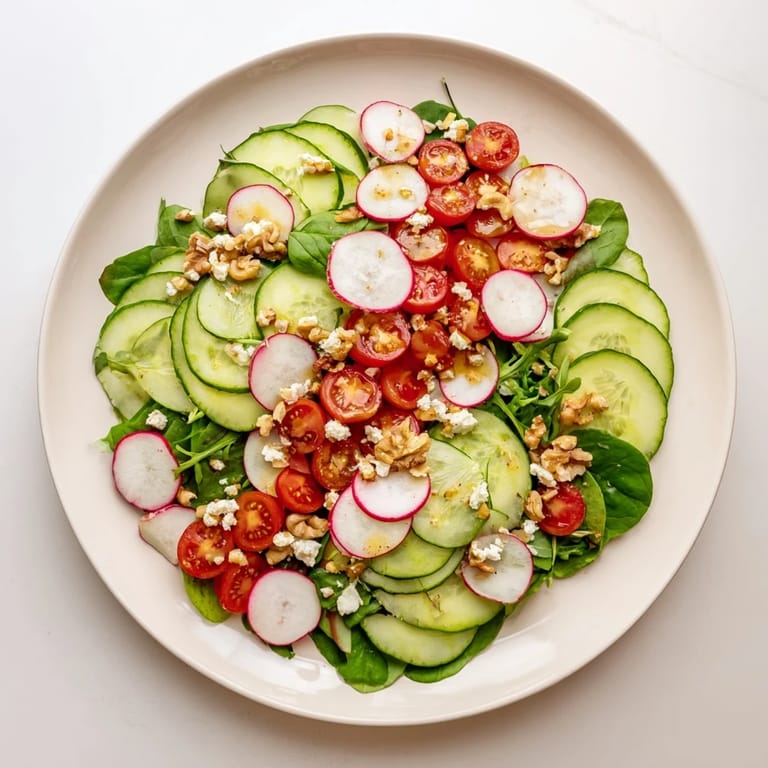
- Continue with cherry tomato halves, then cucumber slices, then radishes, each in its own expanding arc. The key is consistency—imagine you're drawing a spiral with your hands, and let that guide your spacing.
- Add the accent ring:
- Red onion slices go near the outer edge, thin enough to feel delicate but present enough to be noticed.
- Tuck in the luxuries:
- Nestle avocado slices and blueberries into gaps throughout the spiral, thinking about color balance as you go. They should look like they belong, not scattered randomly.
- Crown it with richness:
- Sprinkle walnuts and feta over everything, letting some pile slightly so it doesn't look too uniform. Imperfection here actually looks better.
- Make your dressing:
- In a small bowl, whisk oil, lemon juice, honey, and mustard until it emulsifies and thickens slightly. Taste it and adjust the salt and pepper until it sings.
- Finish with intention:
- Drizzle the dressing right before serving in a thin stream, letting it pool slightly in different sections so each bite has its own flavor profile. This is the moment it all comes together.
 Save on Pinterest
 This salad reminded me that food doesn't have to choose between being beautiful and being delicious; sometimes the care you put into arranging something is its own kind of flavor. When my nephew asked why I took so long to make a salad, I realized I wasn't making food—I was making a moment.
The Mathematics of Flavor
The Fibonacci sequence isn't just a visual principle; it's also how flavor builds naturally when you arrange ingredients this way. Each ring introduces something new, layering taste sensations in a way that feels mathematical but tastes intuitive. You're not just eating salad; you're experiencing it in order, each section a deliberate escalation from mild to bold.
Adapting This Salad to Your Pantry
The beauty of this recipe is that the spiral method works with almost anything you have on hand. Substitute goat cheese for feta, add chickpeas or grilled chicken for protein, swap blueberries for pomegranate seeds—the structure remains the same, and the magic still happens. I've made winter versions with roasted beets and sunflower seeds, and summer versions loaded with stone fruits and pine nuts, and every single one looked like edible art.
Serving and Storage Secrets
This salad is best served immediately, before the delicate leaves start releasing moisture and the arrangement softens. If you're making it for a party, you can prep all the components in advance and assemble everything just before your guests arrive—it takes five minutes once you've done the knife work. Keep the dressing separate until the last moment, and remember that this salad is as much about presentation as taste, so serve it on a platter large enough to show off the spiral.
- Prep all vegetables up to two hours ahead and store them separately in containers.
- Make the dressing up to a day in advance and keep it in a small jar.
- Assemble the spiral five minutes before serving for maximum visual impact and crunch.
 Save on Pinterest
 This salad taught me that cooking can be play, that rules like the golden ratio can be a framework for creativity rather than a cage. Serve it whenever you want to remind people that simple ingredients deserve beautiful presentation.
Recipe Questions & Answers
- → What is the inspiration behind the salad's arrangement?
The salad’s arrangement follows the golden spiral inspired by the Fibonacci sequence, creating an expanding fan of ingredients that balance visual appeal and flavor.
- → How should the dressing be prepared and applied?
Whisk olive oil, lemon juice, honey, Dijon mustard, salt, and pepper until emulsified, then drizzle evenly over the salad just before serving.
- → Can any ingredients be substituted for dietary preferences?
Yes, goat cheese can replace feta, and protein additions like grilled chicken or chickpeas can be added for extra substance.
- → What textures and flavors are highlighted in this salad?
The salad balances crispness from fresh produce, creaminess from avocado and feta, sweetness from blueberries and honey, plus crunch from toasted walnuts.
- → How long does it take to prepare the salad?
Preparation takes about 20 minutes, with no cooking time needed, making it a quick and fresh option.