 Save on Pinterest
 I still remember the December afternoon when my grandmother pulled a gingerbread house frame from her kitchen, transforming an ordinary holiday table into something magical. The aroma of molasses and cinnamon filled the air as she carefully assembled each panel, sharing stories of Christmases past. That moment taught me that a gingerbread house isn't just a dessert—it's a centerpiece that brings people together, a sweet border around treats that promises warmth and tradition.
I'll never forget watching my children's faces light up when they saw the gingerbread house frame surrounded by cookies and treats. They immediately wanted to help decorate, and what started as a project became a cherished memory of laughter, sticky fingers, and the simple joy of creating something edible together.
Ingredients
- All-purpose flour (300 g): The foundation of your gingerbread dough—it creates structure so your panels stay sturdy and don't collapse when assembled. I learned to measure by weight rather than volume for better consistency.
- Brown sugar (100 g): This brings depth and molasses undertones that white sugar simply can't match. It's what makes your gingerbread taste like childhood.
- Unsalted butter, softened (100 g): Always soften it at room temperature before creaming—this traps tiny air bubbles that make your dough tender and easier to work with. Cold butter makes the dough tough.
- Molasses or dark honey (100 g): This is the soul of gingerbread. Molasses gives that rich, almost smoky warmth that makes people ask what the secret ingredient is.
- Large egg (1): This binds everything together and adds just enough moisture to prevent cracking during baking. Room temperature eggs mix in more smoothly.
- Ground ginger (1 tsp): Fresh and bright, it wakes up your palate. Don't skip it or use stale ginger—the flavor difference is noticeable.
- Ground cinnamon (1 tsp): This adds warmth and spice that feels like a hug in a cookie. It's the backbone of holiday baking.
- Ground cloves (½ tsp): A small amount goes a long way—it adds sophistication and complexity. Too much, and it becomes medicinal, so measure carefully.
- Baking soda (½ tsp): This helps the dough spread just slightly during baking and deepens the brown color. It also neutralizes the acidity of molasses.
- Salt (¼ tsp): It doesn't make things taste salty—it amplifies every spice and makes the flavors sing.
- Egg white (1): For royal icing, use the freshest eggs you have. This is what holds your house together structurally, so it needs to be strong.
- Powdered sugar, sifted (200 g): Sifting removes lumps and makes your icing smooth and spreadable. Never skip this step.
- Lemon juice (½ tsp): This brightens the icing and prevents it from becoming cloyingly sweet. It's a whisper of flavor, not a shout.
- White chocolate, melted (50 g): This acts as edible glue for your candies and adds a luxurious finishing touch. Temper it gently so it stays silky.
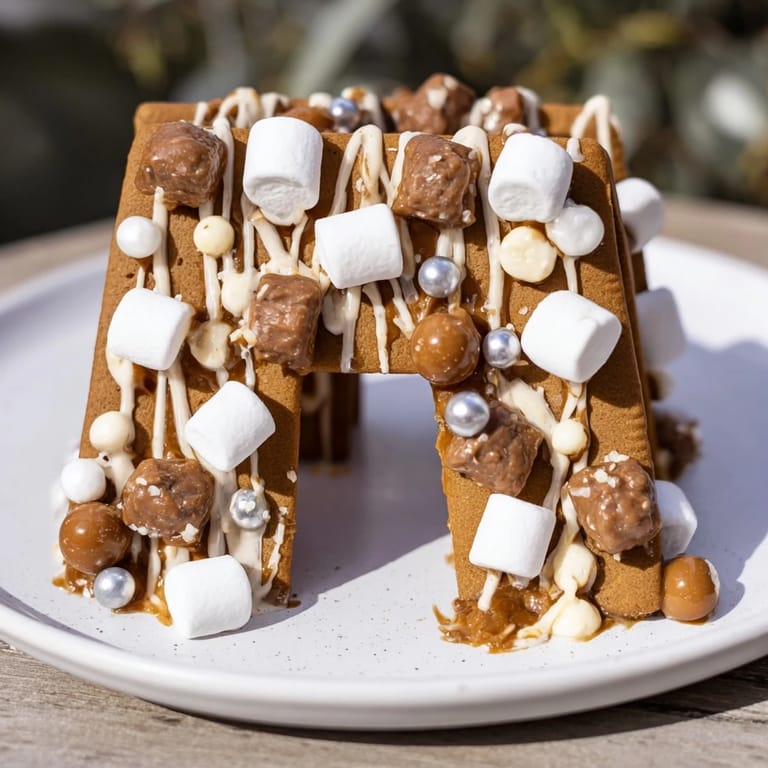
- Assorted candies (white and brown): Choose a mix of textures and colors—chocolate buttons, white sprinkles, mini marshmallows. They transform your frame from plain to festival.
- Edible glitter or silver pearls (optional): A light dusting at the very end catches the light and makes your creation shimmer like fresh snow.
Tired of Takeout? 🥡
Get 10 meals you can make faster than delivery arrives. Seriously.
One email. No spam. Unsubscribe anytime.
Instructions
- Cream Your Butter and Sugar Together:
- In a large bowl, beat softened butter with brown sugar until it's light, fluffy, and pale—this takes about 3 minutes with an electric mixer. This is where you're building air into the dough, which will make your baked panels tender. You'll see the mixture transform from dense to cloud-like.
- Bring in the Moisture:
- Add the egg and molasses to your creamed mixture, beating until well combined. The dough will look slightly separated at first, but keep mixing—it will come together into something smooth and glossy. This is the most aromatic step, and your kitchen will smell like a holiday bakery.
- Combine Your Dry Ingredients:
- In a separate bowl, whisk together flour, ginger, cinnamon, cloves, baking soda, and salt. This distributes the spices evenly so no bite is overwhelmingly gingery or cinnamon-heavy. Whisking incorporates air and prevents lumps.
- Bring It All Together:
- Gradually add your dry ingredients to the wet mixture, stirring gently with a wooden spoon or mixer on low speed. Mix until just combined—overmixing develops gluten, which makes your panels tough and prone to cracking. The dough should be smooth and cohesive.
- Chill Your Dough:
- Wrap the dough in plastic wrap and refrigerate for at least 30 minutes. I often chill mine overnight. Cold dough is forgiving—it won't spread excessively in the oven and will hold sharp edges when you cut your house panels.
- Prepare Your Workspace:
- Preheat your oven to 180°C (350°F) and line a baking sheet with parchment paper. Lightly flour your work surface. Cold dough can be slightly crumbly, so don't worry if it seems stubborn at first—a light touch and patience work better than force.
- Roll and Cut Your House Panels:
- On a floured surface, roll out your chilled dough to 5 mm thickness. This thickness is key—too thin and your panels become fragile, too thick and they won't bake through. Using a template or knife, carefully cut out your house shapes: front, back, two sides, and two roof panels, each roughly 10–12 cm per side. Transfer pieces to your prepared baking sheet.
- Bake with Patience:
- Bake for 10–12 minutes until the edges are firm but the centers are still slightly soft—they'll continue to set as they cool. You're looking for the edges to turn a deeper brown while the middle remains pale. Don't overbake or your panels will be too brittle to assemble.
- Cool Completely:
- Transfer your baked pieces to a wire rack and let them cool completely before assembling. Warm gingerbread is fragile and will crack. This patience step is non-negotiable—I've learned this the hard way.
- Make Your Royal Icing:
- In a clean bowl, beat the egg white to soft peaks using an electric mixer. Gradually add your sifted powdered sugar and lemon juice, beating continuously until the icing is thick, glossy, and holds stiff peaks. This is your architectural adhesive, so it needs to be strong enough to hold weight.
- Assemble Your Frame:
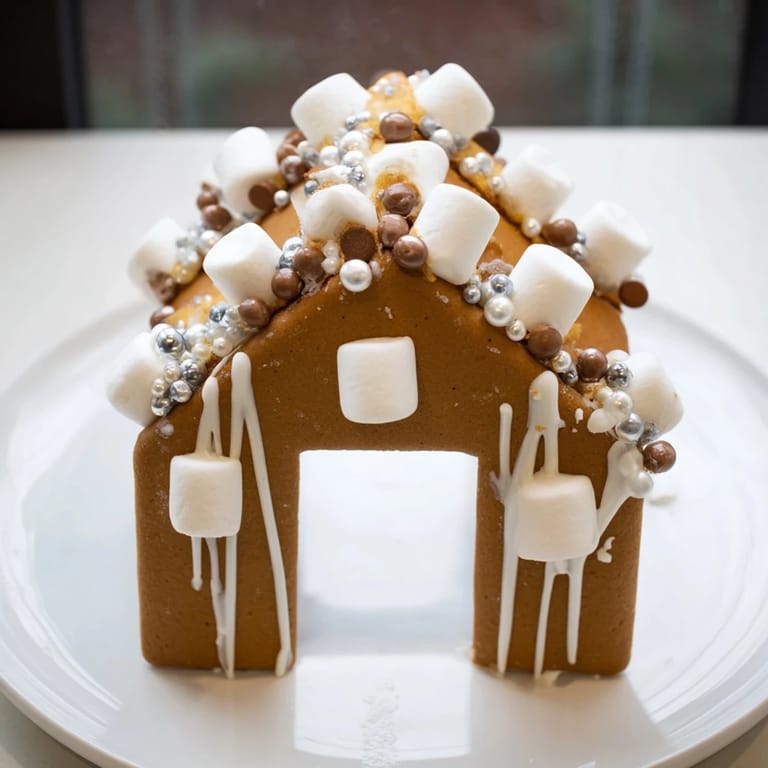
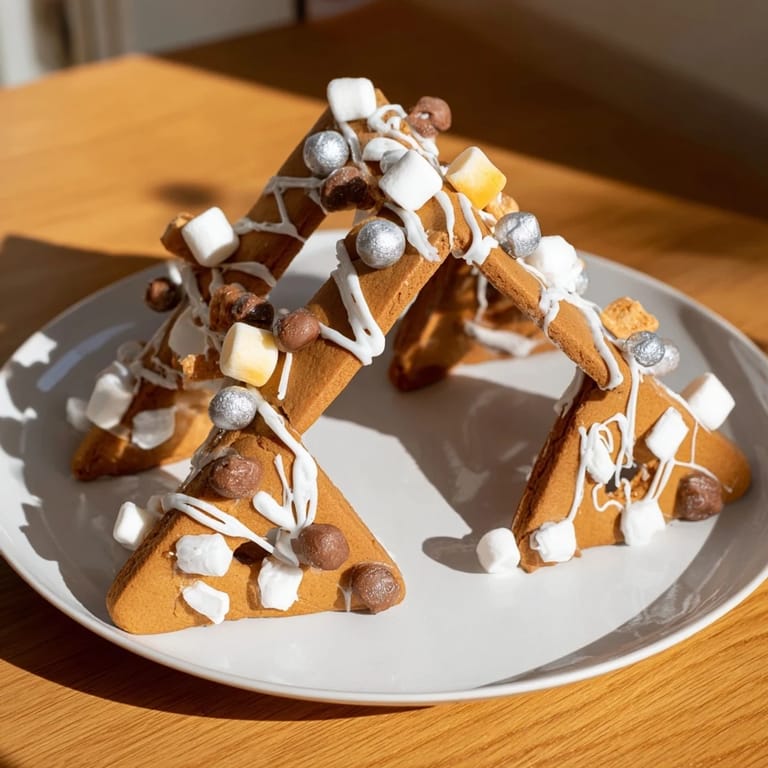
- Pipe a generous line of royal icing along the edges of one panel. Carefully attach another panel, holding it at a right angle until the icing sets. This is meditative work—take your time. Once two walls are set, add the sides, then secure the roof pieces. Let the entire structure dry fully, at least 30 minutes, before decorating.
- Decorate with Joy:
- Once your frame is sturdy, pipe royal icing around the edges and surfaces, then arrange your candies, sprinkles, and marshmallows in a pleasing pattern. Drizzle melted white chocolate for snowy accents. A final dusting of edible glitter transforms it into something truly magical.
- Complete Your Platter:
- Place your gingerbread house frame on a serving platter or cake stand, then arrange additional cookies, nuts, or holiday treats in a festive border around it. This is the final touch—your frame now frames the feast.
 Save on Pinterest
 There was a moment last Christmas when a guest asked if the gingerbread frame was store-bought—the pride on my face when I admitted I made it was worth every minute of careful assembly. That's when I realized this recipe isn't just about creating a beautiful centerpiece; it's about the quiet confidence that comes from making something intricate with your own hands.
The Science Behind the Structure
Gingerbread is more forgiving than you might think because molasses and brown sugar contain moisture that helps the dough stay pliable. The spices aren't just for flavor—ginger, cinnamon, and cloves all contain compounds that enhance browning and add natural antimicrobial properties, which is why gingerbread keeps so well. Understanding that you're building edible architecture helps you appreciate why each ingredient matters. The baking soda reacts with molasses to help the dough rise slightly, creating a structure that's sturdy but not dense. This is why measuring is important—too much baking soda and your panels become cakey and weak.
Customizing Your Gingerbread Vision
Your gingerbread house frame is a blank canvas for your personal style. If you prefer a deeper, almost chocolate-forward flavor, add 1 tablespoon of unsweetened cocoa powder to your dry ingredients. For a spicier version that adults will love, increase the ginger to 1.5 teaspoons and add a pinch of nutmeg. Some years, I swap half the molasses for black treacle for an even richer flavor. Your decorations can follow any theme—stick with classic white and brown for timeless elegance, or go bold with red and green for festive cheer. The frame you build becomes a reflection of your kitchen personality.
Make-Ahead Strategies and Storage
This recipe is wonderfully forgiving for advance preparation, which is exactly what you need during the holiday rush. Prepare the dough up to 3 days ahead and store it wrapped in plastic in the refrigerator—it actually improves as flavors meld. You can bake the panels a week in advance and store them in an airtight container at room temperature, separated by parchment paper so they don't stick together. Assemble your frame up to 2 days before serving, and decorate it the morning of your event for maximum freshness and sparkle. Once complete, your gingerbread house frame will remain beautiful for up to 5 days if kept in a cool, dry place away from humidity. The house becomes more than just edible—it becomes a lasting centerpiece.
- Wrap finished panels in plastic wrap and label them with masking tape so you remember which is which during assembly.
- Keep royal icing covered with a damp cloth while decorating so it doesn't dry out and become too stiff to pipe.
- If your frame begins to lean slightly, carefully prop it with small pieces of rolled fondant or candy underneath until it stabilizes.
 Save on Pinterest
 Building a gingerbread house frame transforms your holiday table into a moment of magic. It's an edible work of art that nourishes both the body and the spirit.
Recipe Questions & Answers
- → What spices contribute to the flavor of the gingerbread?
Ground ginger, cinnamon, and cloves create the warm, festive aroma and taste typical of gingerbread flavors.
- → How do I ensure the house frame pieces stay firm?
Baking the panels until edges are firm and allowing the dough to chill before rolling helps maintain sturdy shapes during assembly.
- → What is the role of royal icing in construction?
Royal icing acts as a strong edible adhesive that holds the panels together securely while drying to maintain the frame’s stability.
- → Can the decoration be customized?
Yes, melted white chocolate, assorted candies, sprinkles, and edible glitter can be adapted according to personal preference for a unique look.
- → Are there tips for advanced preparation?
Baking panels a day ahead and storing them airtight improves firmness and eases assembly on the day of use.
- → What are good beverage pairings?
Mulled wine or hot chocolate complement the warm spices and sweet elements, enhancing the festive experience.