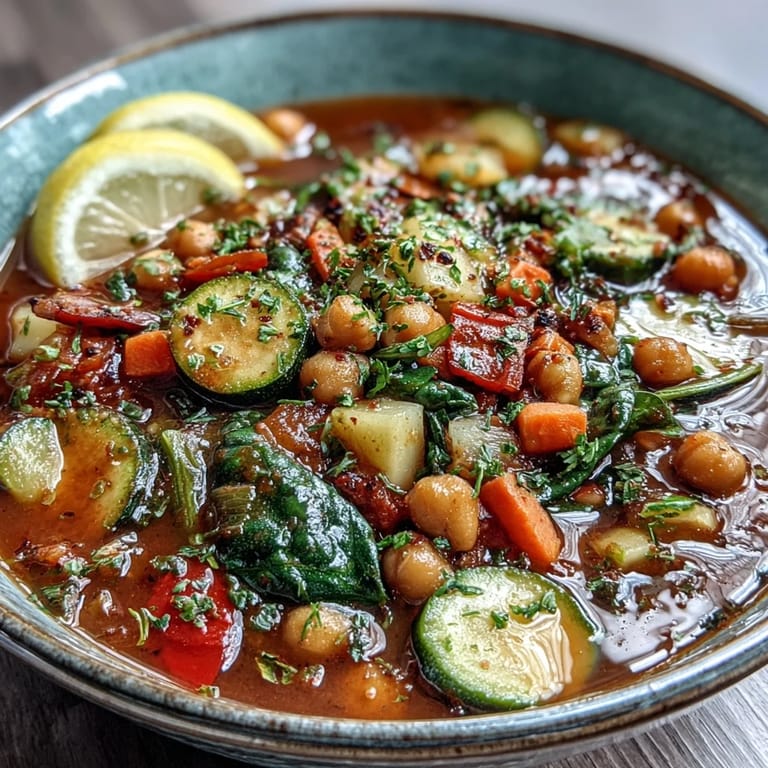
 Save on Pinterest
 There's something about the smell of cumin hitting hot olive oil that makes everything feel possible in the kitchen. I discovered this chickpea stew on a gray afternoon when I had nothing but pantry staples and a vague craving for something that would stick with me, and what emerged was pure comfort in a bowl. The vibrant vegetables practically sang together, and I realized I'd stumbled onto something that felt both nourishing and genuinely delicious, not like a health food compromise but like something I'd actually want to eat again and again.
I made this for a friend who'd just decided to eat more plant-based meals, and watching their surprised expression when they tasted how rich and satisfying it was made me laugh. They'd expected something sparse and virtuous, but instead got a stew so warming and genuine that they asked for the recipe before finishing their bowl. That moment sealed it for me—this wasn't diet food, it was just good food that happened to be good for you.
Ingredients
- Cooked chickpeas: Use canned if you're short on time, but rinse them well to cut the sodium and that slightly metallic taste that canned goods can leave.
- Onion, garlic, carrots, and celery: This aromatic base builds flavor depth the way it has for centuries—don't skip the slow sauté, it matters.
- Red bell pepper: Adds natural sweetness that balances the earthiness of the spices without any added sugar.
- Zucchini: Stays tender-crisp if you add it partway through cooking, keeping the stew from becoming mushy.
- Fresh spinach: Wilts in at the end to add iron and brightness without cooking into an unrecognizable mass.
- Diced tomatoes: The acidity brightens everything and keeps the stew from tasting flat or one-dimensional.
- Vegetable broth: Low-sodium lets you control the salt and taste what the vegetables and spices are actually doing.
- Olive oil: Use something you'd actually taste in a salad—cheap oil tastes cheap even when heated.
- Cumin, smoked paprika, turmeric, and coriander: Each spice plays a different role, and together they create something warm and layered that feels Mediterranean without trying too hard.
- Bay leaf: Removes easily at the end and adds a subtle herbal note that grounds the whole dish.
Tired of Takeout? 🥡
Get 10 meals you can make faster than delivery arrives. Seriously.
One email. No spam. Unsubscribe anytime.
Instructions
- Build the flavor foundation:
- Heat your olive oil and let the diced onion soften and turn translucent—this takes about three minutes and it's not wasted time, it's flavor happening. You'll know it's ready when the raw sharp smell mellows into something sweeter.
- Add the aromatics and vegetables:
- Stir in your garlic, carrots, celery, and red bell pepper, cooking for another five minutes until everything starts to soften and release its fragrance. This is when your kitchen starts smelling like actual food, not just ingredients.
- Toast the spices:
- Add all your spices and let them cook for just one minute in the hot oil—this wakes them up and prevents them from tasting raw or dusty in the finished stew. You'll smell the difference immediately.
- Bring everything together:
- Add your chickpeas, tomatoes, broth, and bay leaf, then bring the whole pot to a boil before turning the heat down low. The simmer that follows is where the magic happens, so don't rush it.
- Let it simmer:
- Give it twenty minutes at a gentle bubble, stirring occasionally, letting all those flavors marry and deepen. You can literally taste it getting better as time passes.
- Add the delicate vegetables:
- Stir in your zucchini and let it cook for seven minutes until just tender—too long and it becomes mushy, so pay attention. This is when you know the stew is almost finished.
- Finish with greens:
- Stir in the fresh spinach and let it wilt for two minutes, then fish out that bay leaf. Taste everything now and adjust the salt and pepper to what your instincts tell you.
- Serve and brighten:
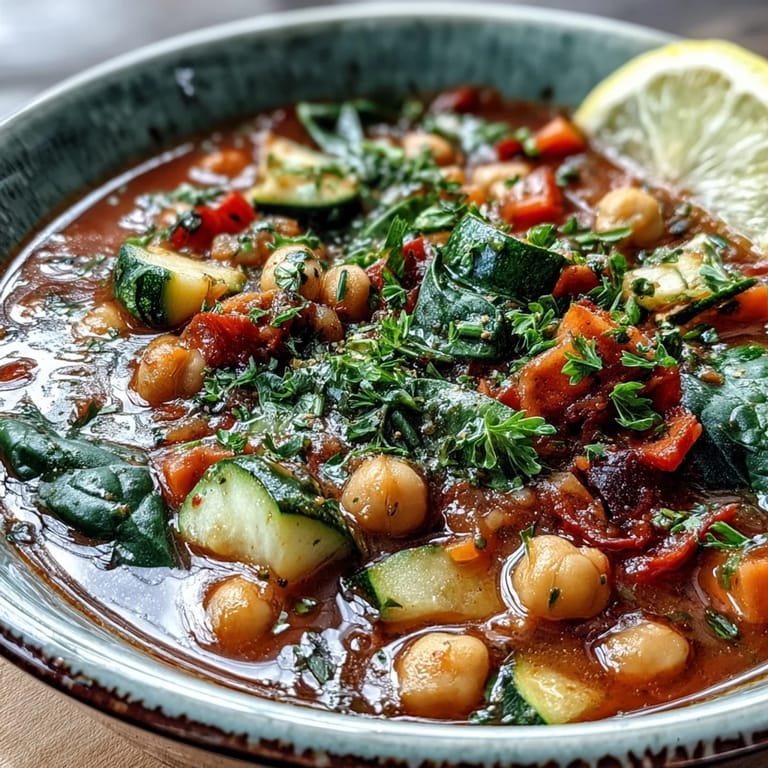
- Ladle it into bowls while it's steaming hot, top with fresh parsley if you have it, and squeeze lemon juice over the top. That acidic finish makes the whole bowl feel alive.
 Save on Pinterest
 This stew became the dish I made when I wanted to do something kind for myself on a Tuesday night, no occasion needed. There's something about sitting down with a warm bowl that feels like proof that you're taking care of yourself, not punishing yourself.
Why This Stew Works
The fiber content is genuinely impressive, and unlike foods that try to shove fiber down your throat, this one tastes so good that you forget you're eating something nutritionally dense. The combination of different vegetables means you're getting a spectrum of vitamins and minerals, and the chickpeas provide protein that actually keeps you satisfied. What makes it really work is that it doesn't taste healthy—it tastes hearty and warm and delicious, which means you'll actually want to make it again.
How to Adapt This
The beauty of this stew is that it's genuinely flexible—I've made it with kale when spinach wasn't around, added eggplant in late summer, swapped in green beans when carrots felt boring. The core of onion, garlic, those warm spices, and good broth stays the same, but everything else can shift with the season or whatever's in your kitchen. If you want more depth, a pinch of chili flakes adds subtle heat without overpowering anything, and some people like to stir in a splash of balsamic vinegar at the very end for extra richness.
Serving Ideas and Pairings
This stew is honestly perfect on its own, but if you want to make it a heartier meal, serve it alongside whole grain bread for soaking up every last drop of broth. Brown rice stirred right into the bowl also works beautifully, as does a simple green salad on the side to add freshness and contrast. If you're thinking about what to drink with it, a crisp dry white wine lets the spices shine, or herbal tea if you prefer something non-alcoholic.
- Don't skip the fresh parsley garnish—it's not just decoration, it adds a bright herbal note that makes everything taste fresher.
- Squeeze of lemon is optional but genuinely elevates the whole bowl, so try to have one on hand.
- Leftovers taste even better the next day as the flavors settle and deepen, making this a perfect meal prep recipe.
 Save on Pinterest
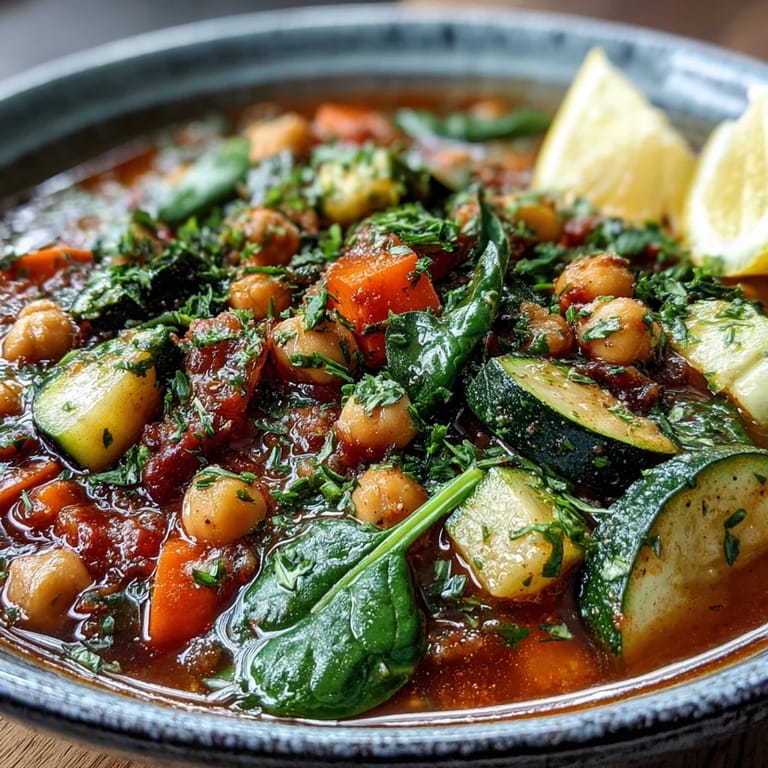
 This stew has become my quiet victory lap, the thing I make when I want to prove to myself that eating well doesn't have to be complicated or joyless. It's food that loves you back.
Recipe Questions & Answers
- → How long does this chickpea stew keep in the refrigerator?
The stew stores beautifully in an airtight container for 4-5 days. The flavors actually deepen and improve after a day, making it perfect for meal prep. Allow it to cool completely before refrigerating and reheat gently on the stovetop, adding a splash of broth if needed.
- → Can I use dried chickpeas instead of canned?
Absolutely. Soak 1 cup dried chickpeas overnight, then cook them until tender before adding to the stew. This will extend your preparation time but yields excellent texture and flavor. You'll need about 3 cups of cooked chickpeas equivalent.
- → What vegetables work well as substitutions?
Feel free to customize based on season or preference. Sweet potatoes, butternut squash, eggplant, or green beans all complement the Mediterranean flavor profile. Leafy greens like kale or Swiss chard can replace spinach, though they may need slightly longer cooking time.
- → Is this stew freezer-friendly?
Yes, it freezes exceptionally well for up to 3 months. Cool completely, then portion into freezer-safe containers leaving some space for expansion. Thaw overnight in the refrigerator and reheat gently. Note that zucchini may become slightly softer after freezing, but flavor remains excellent.
- → How can I make this stew more protein-rich?
Consider adding a cup of lentils during the simmering stage, or stir in some white beans with the chickpeas. Serving with a dollop of Greek yogurt or sprinkling nutritional yeast on top also boosts protein content while complementing the Mediterranean flavors.
- → What bread pairs best with this stew?
Crusty whole-grain sourdough, warm pita, or rustic olive bread are ideal for soaking up the flavorful broth. For a complete meal, serve over brown rice, quinoa, or with a side of roasted potatoes.