 Save on Pinterest
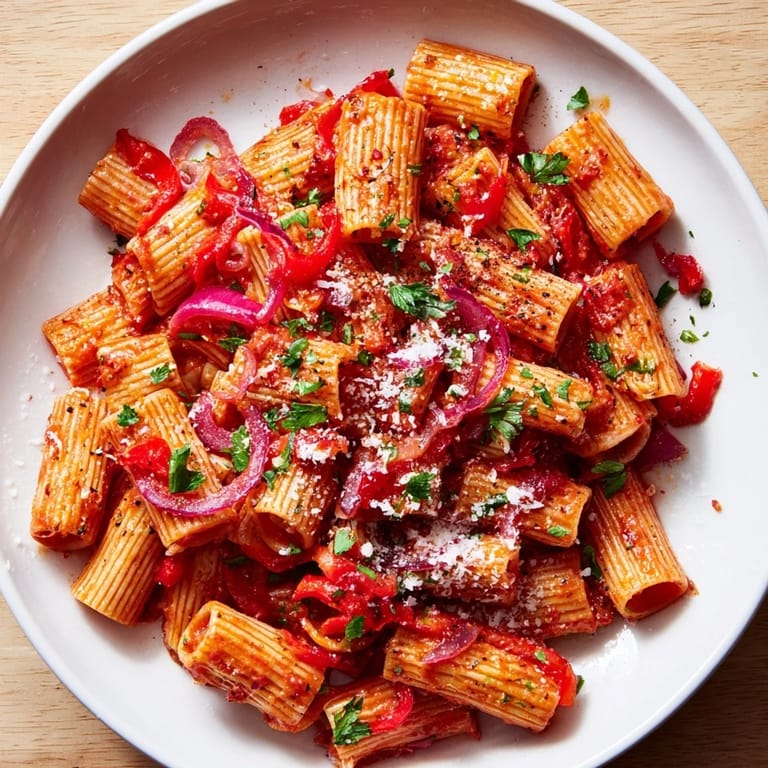
 There's something about the way red pepper flakes hit the back of your throat that makes you sit up straighter at the dinner table. I discovered this pasta one chaotic weeknight when I'd promised friends dinner but had nothing except a can of tomatoes and a box of penne gathering dust. The kitchen filled with this incredible aroma—spicy, garlicky, alive—and within thirty minutes, four people were around my small table passing around extra Parmesan like it was gold. It became the dish I make when I want to feel both impressive and genuinely satisfied, no fussing required.
My neighbor Marco tasted this while leaning against my kitchen counter, and he stopped mid-conversation. He's Italian, critical about pasta, and I watched his face soften into this quiet nod of approval. That moment taught me that simple food made with intention speaks louder than complicated techniques ever could.
Ingredients
- Penne or rigatoni: Use 350 g (12 oz) of sturdy pasta that catches and holds the sauce in its tubes and ridges.
- Water or low-sodium vegetable broth: 1 L (4 cups) is your cooking liquid, and broth adds an extra layer of warmth if you have it.
- Red onion: One medium onion, finely chopped, brings sweetness that balances the heat beautifully.
- Garlic cloves: Use 3 cloves, minced fine, so they dissolve into the sauce and perfume everything.
- Red bell pepper: Slice it thin so it softens quickly and adds a gentle sweetness to the flames of spice.
- Canned diced tomatoes: 400 g (14 oz) becomes your sauce base, and the juice matters as much as the pieces.
- Olive oil: 2 tbsp is your foundation—use good oil, the kind you actually like tasting.
- Italian seasoning: 2 tsp of dried herbs (or mix your own oregano, basil, thyme if you're feeling it).
- Crushed red pepper flakes: Start with 1½ tsp and taste as you go—this is where courage meets caution.
- Smoked paprika: 1 tsp adds a whisper of smokiness that nobody can quite identify but everyone loves.
- Salt: 1 tsp to start, though you'll adjust at the end when everything's together.
- Freshly ground black pepper: ½ tsp of the real stuff, not the pre-ground shadows in tins.
- Parmesan cheese: 40 g (⅓ cup) grated fresh, plus extra for the table because people always want more.
- Fresh parsley or basil: 2 tbsp chopped just before serving keeps everything bright and alive.
- Lemon zest: From half a lemon, optional but I never skip it—it lifts everything skyward.
Tired of Takeout? 🥡
Get 10 meals you can make faster than delivery arrives. Seriously.
One email. No spam. Unsubscribe anytime.
Instructions
- Warm your foundation:
- Heat the olive oil in a large deep skillet or Dutch oven over medium heat. Watch it shimmer, then add the chopped red onion and let it soften for 2-3 minutes, stirring occasionally until it turns translucent and the kitchen starts smelling like dinner.
- Build the aromatics:
- Stir in the minced garlic and sliced red bell pepper, cooking for another 2 minutes until the smell hits you fully and everything's fragrant and glistening. Don't let the garlic brown—you want it soft and sweet, not bitter.
- Bring it all together:
- Add the diced tomatoes with all their juice, the dry pasta, your water or broth, Italian seasoning, red pepper flakes, smoked paprika, salt, and black pepper. Stir everything together so the pasta is submerged and all the flavors can mingle from the start.
- Let it simmer:
- Bring the whole pot to a boil, then turn the heat down to medium-low and let it bubble away uncovered for 12-14 minutes. Stir frequently so nothing sticks to the bottom, and watch how the pasta softens and the liquid gradually tightens into a saucy consistency. The pasta should be tender and most of the liquid absorbed, not soup-like.
- Finish with warmth:
- Remove from heat and stir in the grated Parmesan and lemon zest if you're using it. Taste and adjust the salt, pepper, or red pepper flakes to match your confidence level with spice.
- Serve and celebrate:
- Pour it into bowls or onto plates while everything's steaming hot, and scatter fresh parsley or basil across the top. Pass extra Parmesan to everyone at the table.
 Save on Pinterest
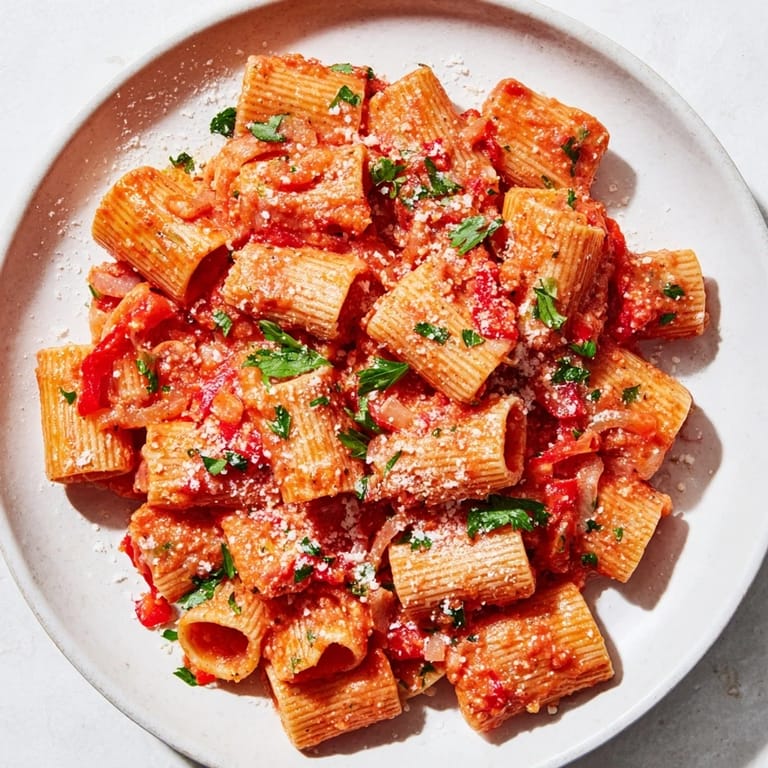
 This dish has become what I make for friends who show up tired or stressed, because there's something almost meditative about the act of stirring, about the spice opening up your chest, about eating something you made from scratch in the time it takes to order delivery. It feels like a small rebellion against the rush, and people always leave differently than they arrived.
Why One Pot Changes Everything
The genius of cooking pasta this way is that it does double duty: the pasta itself becomes the thickener, slowly releasing starch into the liquid and turning it into sauce. You're not managing multiple pans or draining and rinsing and worrying about sticky starches—everything stays in one vessel, building flavor with every minute. It's a lesson in efficiency that doesn't sacrifice a single ounce of taste.
The Heat Question
People always ask how spicy this really is, and the honest answer is: as spicy as you want it to be. The 1½ teaspoons of red pepper flakes is noticeable but not aggressive, the kind of heat that wakes you up rather than shuts you down. The smoked paprika adds warmth without bite, and the tomato sweetness dances around the flames, keeping everything balanced. If you love sweating a little, add more flakes or finish with a tiny pinch on top of each bowl.
Variations and Beyond
This recipe is a foundation, not a rulebook. I've thrown in sliced mushrooms, tossed in white beans, stirred through cooked sausage at the end, scattered torn mozzarella into hot bowls. The core of onion, garlic, tomato, and heat stays the same, but what you add around it can change with the season, with what's in your fridge, with how hungry you are. Some nights I finish it with a crack of good aged balsamic, other times just the lemon and parsley. It's the kind of dish that forgives adventure.
- For protein, add sliced cooked chicken sausage or sautéed shrimp in the last minute of cooking so it just warms through.
- For creaminess without dairy, stir in a splash of coconut milk or a handful of cashew cream right before serving.
- For earthiness, add a big handful of fresh spinach or kale in the final minute and let it wilt down into everything.
 Save on Pinterest
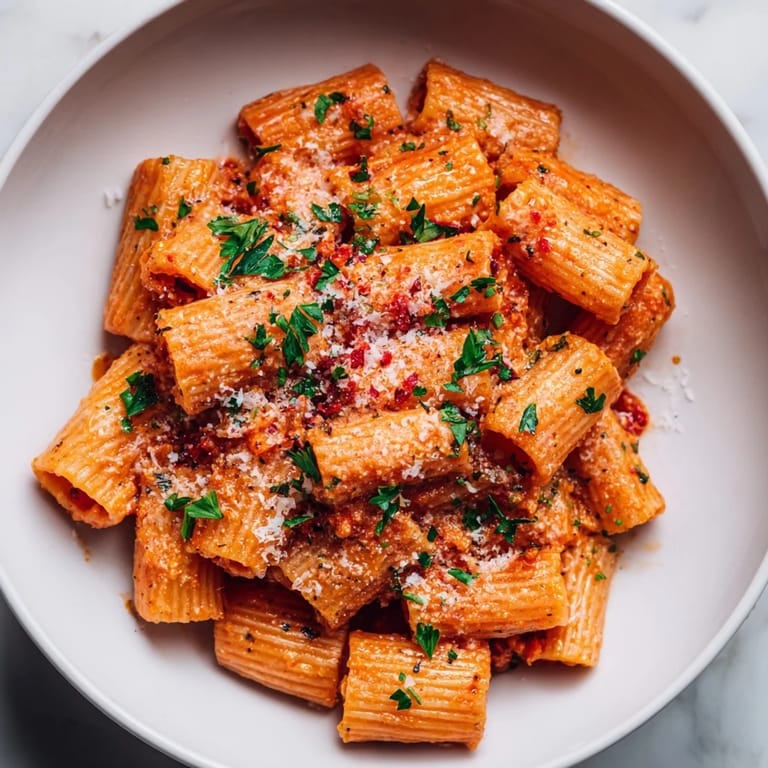
 This is the pasta I return to again and again because it asks almost nothing of me except attention, and gives back so much more than its simple ingredient list suggests. It's become the dish that proves to people that good food doesn't need complexity or hours—just intention and heat.
Recipe Questions & Answers
- → What pasta types work best for this dish?
Penne or rigatoni are ideal as their tube shapes hold the sauce well, but other short pasta like fusilli or farfalle can also be used.
- → How can the spice level be adjusted?
Modify the amount of crushed red pepper flakes to suit your heat preference, reducing for milder and increasing for more kick.
- → Can this preparation be made vegan?
Yes, substitute Parmesan with nutritional yeast or vegan cheese alternatives to keep the dish plant-based.
- → What herbs enhance the flavor here?
Italian seasoning and fresh parsley or basil add aromatic layers that complement the spicy and smoky notes.
- → Is it possible to add protein to this dish?
Adding cooked chicken sausage or sautéed shrimp after cooking introduces extra protein and variation to this meal.
- → How is the one-pot method beneficial?
Cooking all ingredients in one pot saves time, infuses flavors deeply, and reduces cleanup.