 Save on Pinterest
 There's something about the smell of ginger hitting a hot pan that instantly transports me back to a lazy Saturday afternoon when my neighbor brought over containers of her family's homemade stir-fry. I watched her move through her kitchen with such ease, and I realized I'd been overthinking Asian cooking my whole life. This sesame ginger rice bowl became my answer to those afternoons—a way to recreate that warmth and comfort without needing someone else's recipe or years of experience.
I made this for the first time when my partner came home exhausted from a brutal work week, and honestly, I was testing whether I could pull off something that tasted restaurant-quality without the restaurant stress. The moment he took that first bite and closed his eyes, I knew I'd cracked something. Now it's what gets requested when someone needs reminding that food can be both nourishing and joyful.
Ingredients
- Boneless, skinless chicken breast or thighs: Thighs are honestly more forgiving and stay juicier, but breasts work beautifully if you cut them into consistent bite-sized pieces so they cook evenly.
- Soy sauce: Low sodium is worth seeking out so you control the saltiness rather than letting the sauce decide for you.
- Toasted sesame oil: This is non-negotiable—regular sesame oil tastes like nothing, but toasted sesame oil is where all the character lives.
- Rice vinegar: It's more delicate than white vinegar and lets the other flavors breathe instead of shouting over them.
- Fresh ginger: Grate it yourself right before you use it if you can; the difference between fresh and ground ginger is the difference between a song and a memory of a song.
- Jasmine or short-grain white rice: Jasmine has this subtle floral quality that feels fancy without trying too hard.
- Fresh vegetables: Keep your cuts similar in size so everything cooks at the same pace and your bowl feels intentional rather than chaotic.
- Sesame seeds and fresh cilantro: These are your final note—they wake everything up and make it feel like someone actually cared about plating.
Tired of Takeout? 🥡
Get 10 meals you can make faster than delivery arrives. Seriously.
One email. No spam. Unsubscribe anytime.
Instructions
- Make the sauce and marinate the chicken:
- Whisk together soy sauce, sesame oil, rice vinegar, honey, ginger, garlic, and sriracha in a bowl until it's glossy and aromatic. Divide it in half—one half coats your chicken pieces for 15 minutes while the other half waits patiently on the counter to become your finishing drizzle.
- Cook your rice:
- Rinse the rice under cold water until the water runs clear, which takes longer than you'd think but matters more than you'd expect. In a saucepan, combine the rice with water, bring it to a boil, then cover and reduce the heat to low for 12 to 15 minutes until every grain is tender and the water has disappeared.
- Sear the chicken:
- Get a large non-stick skillet or wok hot over medium-high heat, then add your marinated chicken pieces (discard the used marinade). Let them sit undisturbed for a moment before stirring, which gives them a chance to develop color instead of steaming in their own juices.
- Quickly cook the vegetables:
- In the same hot pan, toss in your carrot, bell pepper, and peas for just 2 to 3 minutes, stirring constantly so they stay crisp instead of turning into mush. You want them to have a little resistance when you bite down.
- Assemble your bowls:
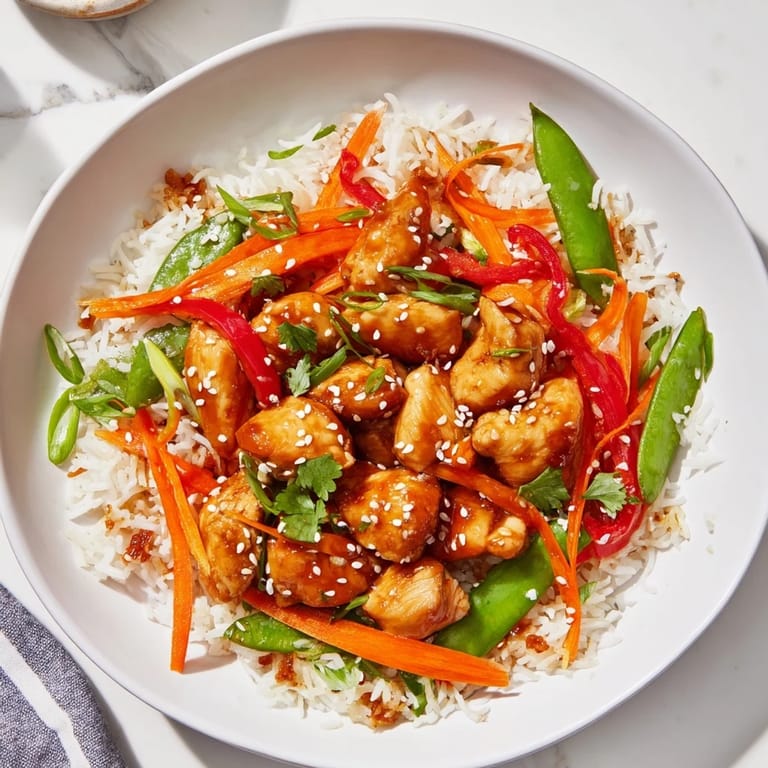
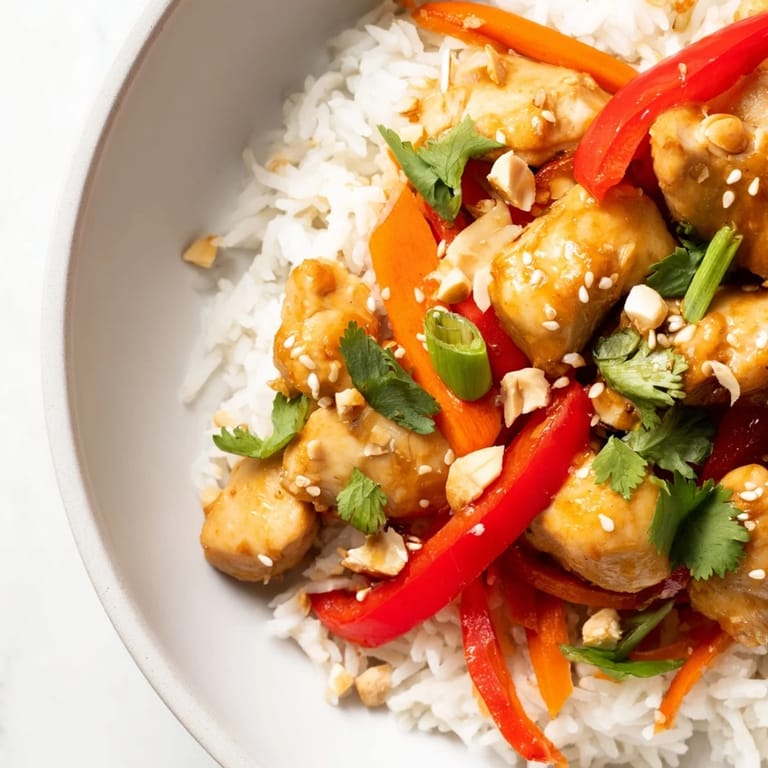
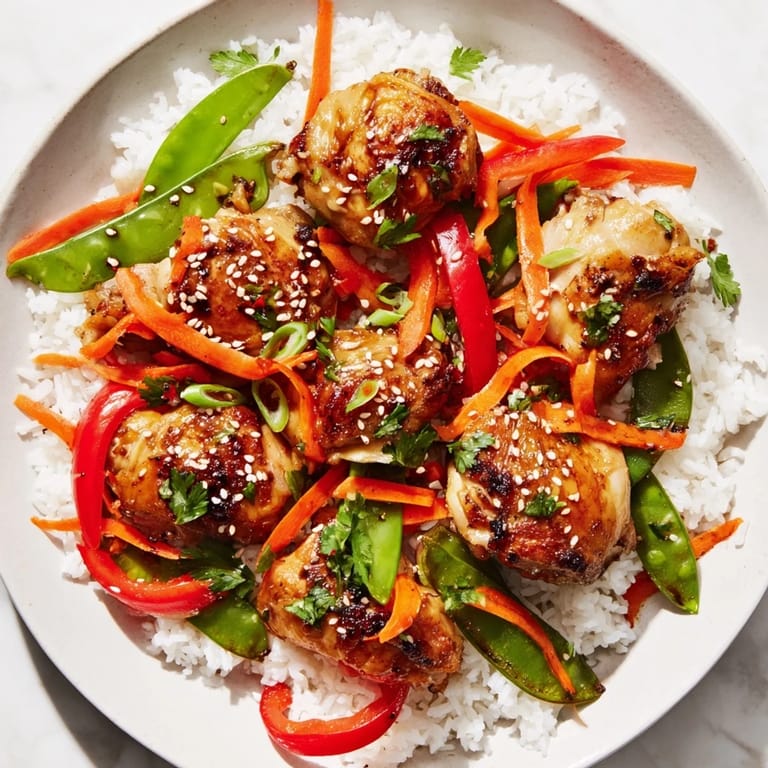
- Divide the fluffy rice among four bowls, then crown each portion with chicken and vegetables, arranging them so there's actual thought to how it looks.
- Finish with love:
- Drizzle that reserved sauce over everything, then scatter sesame seeds, cilantro, spring onions, and a lime wedge on top so each bowl feels like a small celebration.
 Save on Pinterest
 There was a moment last month when my six-year-old nephew watched me make this and asked why I was taking so long to cut things small. I explained that when everything is bite-sized and arranged thoughtfully, people slow down and actually taste what they're eating instead of just eating to be full. He nodded like that made perfect sense, and I realized that's what cooking for others really means.
Why the Sauce Matters So Much
The balance in this sauce—the salt from soy, the nuttiness of sesame oil, the brightness of rice vinegar, and the warmth of ginger and garlic—is what elevates this from just rice and chicken into something that feels intentional. I learned this by making versions without respecting that balance, and every single time, the bowl felt flat and forgettable. The sauce is what gives everything permission to shine.
Prep Work Is Your Secret Weapon
On nights when I've prepped vegetables earlier in the day, the actual cooking feels like meditation instead of chaos. Having everything cut, the sauce mixed, and the rice measured before I start cooking means I can be present instead of panicked. It's a small shift, but it changes how the food tastes because it changes the energy in the kitchen while I'm making it.
Ways to Make It Yours
This bowl is a canvas that respects what you add to it. I've made it with edamame instead of peas on nights when I needed more substance, added thin avocado slices when I wanted something creamy, and once tried it with crispy shallots on top because I had them sitting around. Each variation felt like the bowl was evolving rather than being messed with, which is the mark of a truly flexible recipe.
- For vegetarian versions, use firm tofu or tempeh marinated in that same sauce—they'll absorb the flavor just as beautifully as chicken does.
- A handful of sliced scallions, fresh mint, or even a drizzle of sriracha on individual bowls lets people customize their heat level.
- Leftover rice bowls stay excellent cold the next day, which makes them perfect for meal prep if you're thinking ahead.
 Save on Pinterest
 This bowl has become the recipe I make when I want to prove to myself that good food doesn't require complexity or pretension. It just requires attention and a few ingredients that actually matter.
Recipe Questions & Answers
- → What type of rice works best?
Jasmine or short-grain white rice is ideal for its fluffy texture and ability to absorb flavors.
- → Can the chicken be substituted?
Yes, firm tofu or tempeh are excellent plant-based alternatives that complement the sesame-ginger sauce.
- → How can I adjust the spice level?
Modify the amount of sriracha or chili garlic sauce in the marinade to suit your preference.
- → What is the best method for cooking the chicken?
Stir-frying over medium-high heat until golden ensures the chicken stays tender and flavorful.
- → Are there any allergen considerations?
This dish contains soy and sesame. Use tamari for a gluten-free option and check store-bought sauces for wheat or other allergens.
- → How to keep the vegetables crisp?
Quick stir-frying the vegetables for 2-3 minutes preserves their natural crunch and fresh taste.