 Save on Pinterest
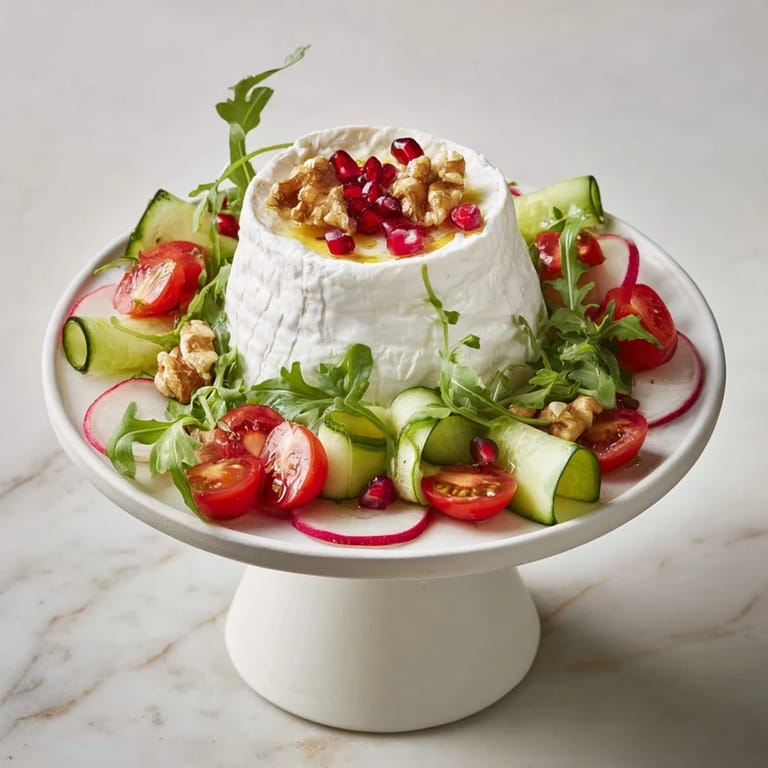
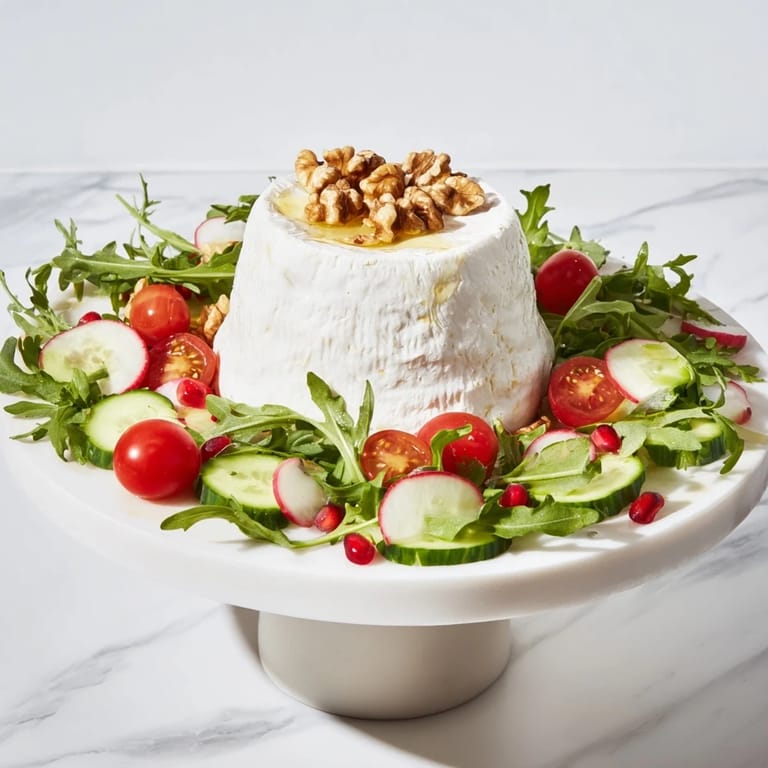
 I discovered this salad at a friend's dinner party where the host had arranged vegetables in this stunning radial pattern, all pointing toward a beautiful cheese wheel in the center. It was such a simple idea, yet it transformed what could have been an ordinary cheese board into something that stopped conversation the moment it hit the table. I went home that night thinking about how presentation can make people taste food differently, and I've been playing with the concept ever since. The artistry of it stuck with me more than the flavors, though those are absolutely worth remembering too.
I made this for a small gathering last spring when someone asked what I was bringing, and I almost didn't because it felt too simple. But watching people hesitate before cutting into it, genuinely unsure if they were supposed to eat something that beautiful, reminded me that food doesn't always need to be complicated to matter. One guest actually asked for the recipe before tasting anything, which felt like the highest compliment.
Ingredients
- Baby arugula: Use the smallest, most tender leaves you can find, as they'll hold their shape better when arranged and won't wilt as quickly under the dressing.
- Cherry tomatoes: Halving them lets the cut faces catch the light and adds visual dimension to the pattern.
- Cucumber: Slice as thinly as you can manage; thin slices bend slightly, which helps them follow the radiating lines you're creating.
- Watermelon radish: The pink and white rings are doing half the visual work here, so don't skip it even if you can't find it at every market.
- Pomegranate seeds: These are your jewels—scatter them last so they stay on top and catch light.
- Toasted walnuts: Toast your own if possible; the smell fills the kitchen and the texture is noticeably better than pre-toasted nuts.
- Extra-virgin olive oil: This is tasted directly, so choose one you genuinely like drinking from a spoon.
- White balsamic vinegar: It's milder and sweeter than regular balsamic, which keeps the dressing from overpowering the delicate vegetables.
- Honey: Just a teaspoon bridges the acidity and adds subtle sweetness that makes people wonder what you did.
- Dijon mustard: An emulsifier that helps the dressing coat ingredients, plus a tiny hit of complexity.
- Artisanal cheese wheel: Choose something soft and spreadable that guests can actually cut into; harder cheeses look dramatic but don't eat as beautifully.
Tired of Takeout? 🥡
Get 10 meals you can make faster than delivery arrives. Seriously.
One email. No spam. Unsubscribe anytime.
Instructions
- Set your centerpiece:
- Place the cheese wheel on a small plate or wooden pedestal positioned slightly off-center on your largest serving board—this gives you room to radiate outward and lets the arrangement feel intentional rather than crowded.
- Create your first arc:
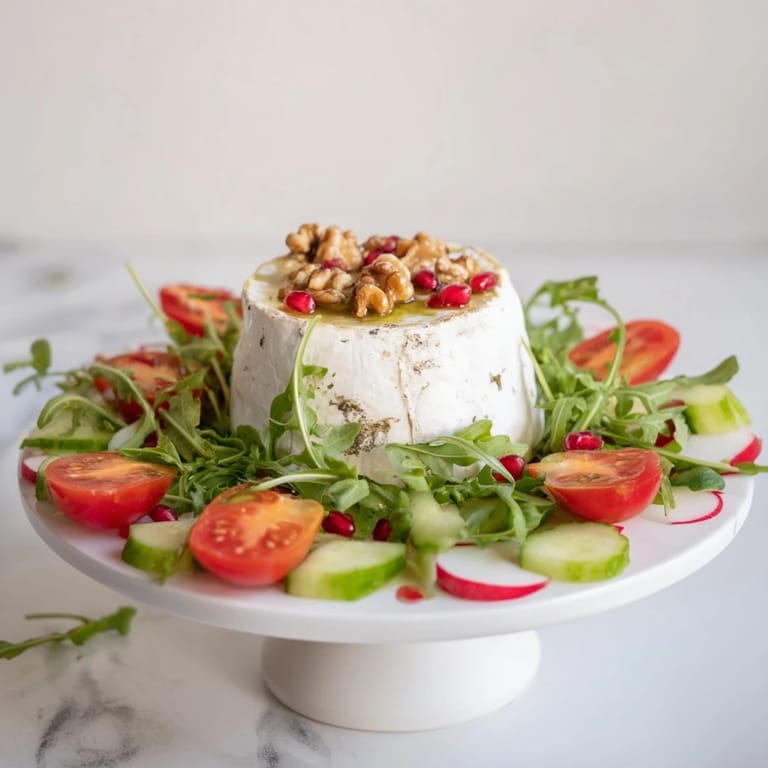
- Lay down the arugula in a sweeping line radiating outward from the cheese, like you're drawing with your hands. Don't make it perfectly straight; the slight variation makes it look less staged.
- Layer with precision:
- Arrange cherry tomatoes in concentric lines, angling each piece so the cut face points toward the cheese wheel. Follow with cucumber and watermelon radish slices in the same directional pattern, letting them overlap slightly as they fan outward.
- Scatter your accents:
- Drop pomegranate seeds and walnuts along the pattern, placing them to fill any gaps and add pockets of color and texture. Step back and look at it from above before you go further.
- Make the dressing:
- Whisk together olive oil, white balsamic, honey, and Dijon mustard in a small bowl until slightly emulsified. Season with salt and pepper, tasting as you go.
- Dress lightly:
- Drizzle the dressing very gently over the vegetables, avoiding the cheese itself so it stays pristine. A light hand here makes the difference between elegant and soggy.
- Serve with intention:
- Present the platter whole so people see the full effect, then encourage them to cut into the cheese and use it as a base, adding vegetables as they go. This is how it's meant to be eaten.
 Save on Pinterest
 The moment that sold me on this dish happened when my sister brought her partner to dinner and he stood there studying the platter for a full minute before asking whether it was okay to eat it. There's something about creating something beautiful that people hesitate to disturb, and then watching that hesitation turn into joy when they realize they get to break it apart and enjoy it. That's the real magic of this recipe.
Playing With Cheese Varieties
The original inspiration used a soft-ripened cheese, but I've learned that the cheese you choose dramatically shifts the entire experience. A tangy Humboldt Fog brings minerality and looks stunning with its ash line visible from across the table. Camembert feels more approachable and buttery, while a blue cheese transforms this into something sharper and more assertive. I once tried a local chèvre and the mild tanginess let all the bright vegetables shine without competing.
Seasonal Variations That Work
Summer is when this truly sparkles because cherry tomatoes are at their peak and you can find good radishes everywhere. But I've made winter versions with shaved beets, thinly sliced apple, pomegranate (which comes into season then anyway), and toasted hazelnuts instead of walnuts. Spring opens up possibilities with peas, spring onions, and fresh herbs scattered between the radiating lines. The pattern works with whatever produces beauty in your market right now.
The Dressing That Makes It Sing
This is where patience pays off because the dressing seems too simple until you taste it and realize the honey and mustard create a subtle sweetness and depth that makes every ingredient taste more like itself. I've started making extra dressing on the side so people can drizzle more on their plate if they want it, because inevitably someone decides they prefer it dressed more heavily. The white balsamic is non-negotiable; it's mellower than regular balsamic and won't turn the vegetables dark and tired-looking.
- Whisk the dressing right before serving so the emulsion is fresh and the flavors haven't started separating.
- If you make it ahead, shake it vigorously right before drizzling because it will have settled.
- Consider offering it on the side so guests can control how much they want rather than having a pre-dressed salad.
 Save on Pinterest
 What started as me copying a friend's idea has become one of my favorite things to make because it breaks the unspoken rule that beautiful food is complicated. This proves that you can be impressive and relaxed at the same time.
Recipe Questions & Answers
- → What type of cheese works best for the centerpiece?
Soft artisanal cheeses like Saint-Marcellin, Brie, Camembert, or Humboldt Fog offer creamy texture and mild flavors ideal for the arrangement.
- → How should the salad ingredients be arranged?
Arrange arugula, cherry tomatoes, cucumber, and radish slices in sweeping arcs or rows radiating outward from the cheese wheel for a dramatic visual effect.
- → Can I add protein to this dish?
Yes, thinly sliced prosciutto or smoked salmon can be paired with the salad for additional savory notes and protein.
- → What dressing complements this salad?
A light dressing made from extra-virgin olive oil, white balsamic vinegar, honey, and Dijon mustard enhances the fresh flavors without overpowering the cheese.
- → Are there any suggested garnishes?
Edible flowers add a colorful, elegant touch that enhances the salad’s visual appeal.
- → What wine pairs well with this arrangement?
Chilled Sauvignon Blanc or dry rosé wines complement the fresh and mild flavors beautifully.