 Save on Pinterest
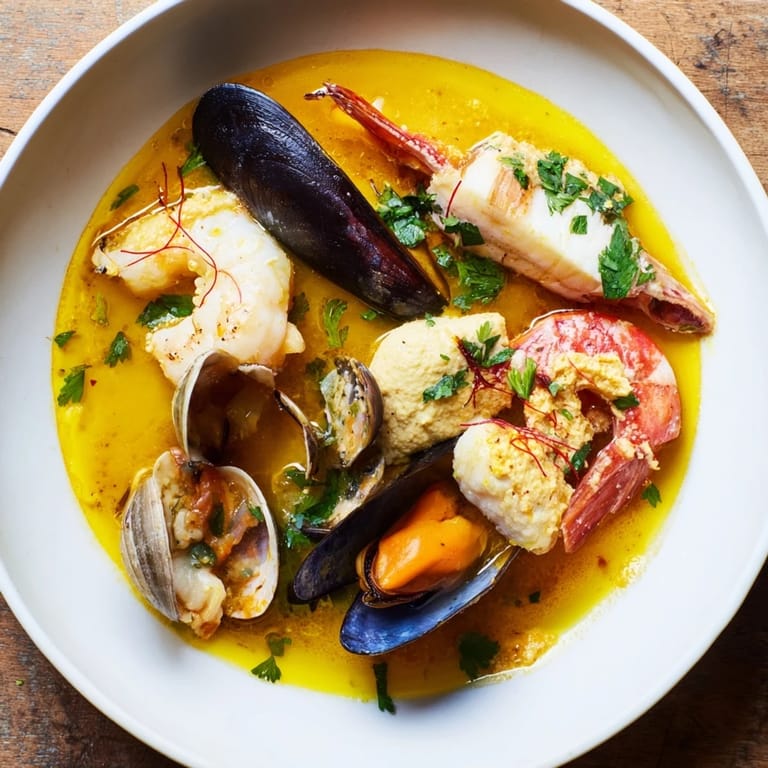
 The first time I tasted real bouillabaisse, I was sitting at a cramped bistro table in Marseille, wedged between a chatty local and the open kitchen, watching steam rise from a terracotta bowl. The aroma hit me before anything else—saffron cutting through briny seafood, fennel whispering underneath, a kiss of orange zest threading through it all. My companion noticed me closing my eyes and smiled, saying nothing, because there was nothing to say. Later, when I finally learned to make it, I realized that bowl wasn't fancy or precious, just deeply honest—a stew born from fishermen bringing home whatever the day provided, transformed by patience and a few sacred ingredients into something that tastes like the Mediterranean itself.
I made this for a dinner party on a rainy October evening when everyone needed something warm and alive on their tongues. One guest, who claimed not to like fish, came back for seconds without realizing what she was eating—that's when I knew I'd gotten it right. The rouille, that garlicky, saffron-touched mayonnaise, was her undoing, spread thick on toasted bread and stirred into the broth until the whole bowl turned golden and dangerous.
Ingredients
- Firm white fish fillets (monkfish, sea bass): These hold their shape and don't dissolve into the broth; they're your backbone, reliable and substantial.
- Oily fish fillets (red mullet): They add richness and depth that firm fish alone can never achieve—don't skip this layer of flavor.
- Mussels and shrimp: Mussels bring brininess and drama, shrimp add sweetness; together they're the conversation starters in every spoonful.
- Olive oil: Use your good bottle here, not the cheapest one; it'll shine through in the rouille and finishing drizzle.
- Fennel bulbs: Their anise sweetness becomes muted and sophisticated when cooked long, building a flavor base that's distinctly Provençal.
- Orange zest: Just a whisper, but it lifts everything, adding brightness that keeps the stew from feeling heavy.
- Saffron threads: The soul of this dish; buy it whole, not powdered, and let it bloom in warm water before adding—this is where the golden color and haunting perfume come from.
- Fish stock or water: Stock is ideal, but water works fine; the vegetables and seafood will build the flavor base anyway.
- For the rouille: Garlic, chili, saffron, egg yolk, and mustard emulsify into something silkier than regular aioli, with an edge of heat and spice that transforms every bite.
Tired of Takeout? 🥡
Get 10 meals you can make faster than delivery arrives. Seriously.
One email. No spam. Unsubscribe anytime.
Instructions
- Build the Aromatic Base:
- Heat your olive oil over medium heat, then add onion, leek, fennel, carrot, and garlic, letting them soften for 8 to 10 minutes without browning—you're creating a fragrant foundation, not caramelizing. When you can press a piece with the back of your spoon and it yields immediately, you're ready for the next step.
- Layer in the Seasonings:
- Stir in tomatoes, orange zest, bay leaf, thyme, parsley, saffron, fennel seeds, peppercorns, and salt and pepper, cooking for just 5 minutes so the herbs release their oils and the saffron begins its color work. The pot should smell like a seaside herb garden now.
- Deglaze and Simmer:
- Pour in white wine, letting it bubble for 2 minutes, then add your stock or water and bring everything to a gentle boil before lowering the heat. Let it simmer uncovered for 25 minutes, and during this time, walk away—the broth is building complexity that you can't rush.
- Strain to Clarity:
- Pour the broth through a fine sieve, pressing on the solids with the back of a ladle to coax out every drop of flavor, then discard what remains. What you'll have now is a clear, golden liquid, the true essence of the dish.
- Cook the Seafood:
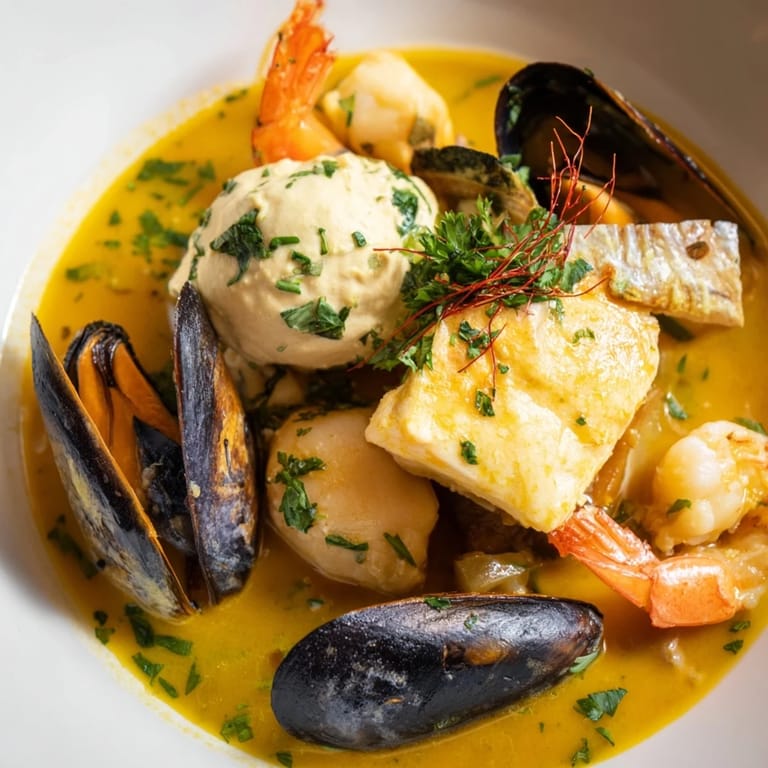
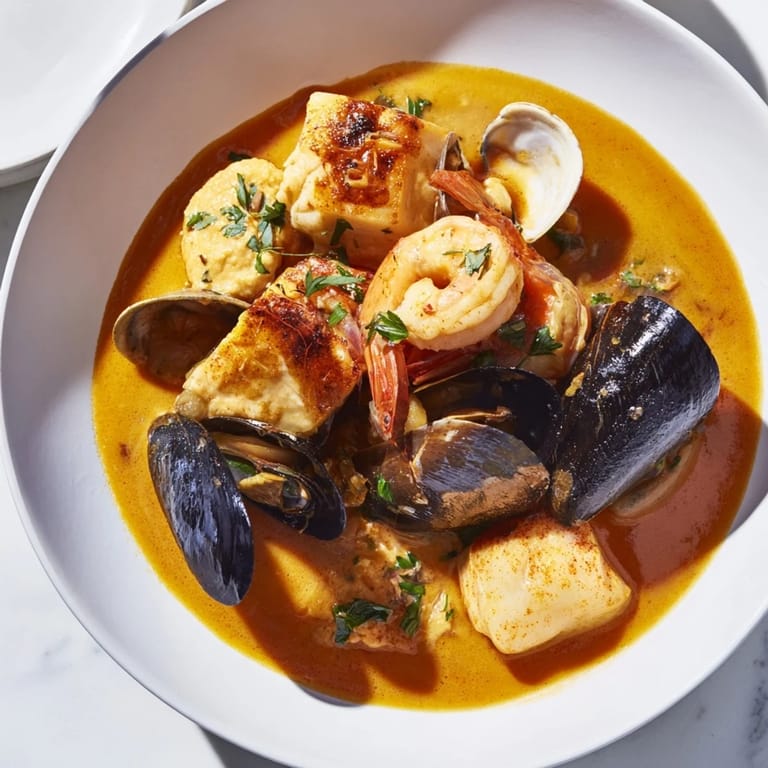
- Bring the strained broth back to a gentle simmer, add your firm white fish first and give it 5 minutes, then introduce the oily fish, mussels, shrimp, and scallops all at once. Cook for another 5 to 6 minutes, watching for the mussels to open like small gifts; any that refuse should be discarded.
- Make the Rouille:
- In a bowl, whisk together egg yolk, minced garlic, chili, saffron with its soaking water, and mustard until combined, then drizzle in your olive oil very slowly, whisking constantly as if you're making mayonnaise. The sauce will thicken and turn a stunning golden orange, luxurious and spoonable.
- Serve with Ceremony:
- Ladle the stew into warm bowls, scatter fresh parsley across the top, and place a spoonful of rouille on the side with toasted, oil-brushed baguette slices. Let each person stir in their rouille—it's more intimate that way.
 Save on Pinterest
 I'll never forget the moment a friend took her first spoonful, eyes widening as the flavors arranged themselves on her tongue—saffron, fennel, the brininess of mussels, that creamy rouille melting into everything. She looked up and said, 'This tastes like a place,' and that's when I understood that bouillabaisse isn't really a recipe at all; it's a memory of the sea on a plate.
Why Fennel Is Your Secret Weapon
Fennel shows up twice here—as sliced bulbs in the broth and as seeds in the spice mix—and that's intentional. The bulb softens into the base, becoming almost invisible but leaving behind its sweet anise ghost, while the seeds stay whole, harder, releasing their essence slowly into the simmering liquid. Together they create a subtle licorice undertone that makes people pause and say, 'What is that flavor?' without being able to name it—and that unnamed quality is what makes bouillabaisse feel mysterious and old.
The Rouille: More Than Just a Topping
Most people think rouille is just a fancy mayonnaise to spread on bread, but it's actually the bridge between the broth and your palate. That saffron threading through it, the garlic punch, the heat from the chili—they all prepare your mouth for the seafood, making every subsequent spoonful taste richer, more alive. I've watched people who claim they don't like anchovies or strong flavors suddenly become fans once they taste rouille-enriched bouillabaisse. The creamy, spiced oil transforms the entire experience into something more than seafood stew; it becomes a conversation.
Making It Your Own
The true spirit of bouillabaisse is flexibility within tradition—you use what the sea (or your fishmonger) provides that day. I've made it with halibut instead of monkfish, added scallops when I found beautiful ones, skipped the shrimp once and the stew was still glorious. The structure is what matters: a aromatic base, the golden broth built on fish and time, the contrast of tender seafood, and that rouille waiting to transform everything. Here are the things that should never change, and the things that absolutely can:
- Always use both firm and oily fish for depth; never use only one type.
- The saffron and orange zest are non-negotiable—they're the fingerprint of Provence.
- Any firm white fish and any oily fish work; what matters is freshness and texture, not the specific names.
 Save on Pinterest
 Bouillabaisse is the kind of dish that teaches you something every time you make it—about patience, about flavor, about how a few good ingredients treated with respect become something transcendent. Serve it to people you care about, and watch their faces change.
Recipe Questions & Answers
- → What types of fish work best in this dish?
Firm white fish such as monkfish or sea bass and oily fish like red mullet offer the ideal combination for texture and flavor balance.
- → How is the broth made flavorful?
The broth is simmered with aromatic vegetables, saffron, herbs like thyme and bay leaf, and enriched with white wine and fish stock to develop depth.
- → What is rouille and how is it prepared?
Rouille is a garlicky, saffron-infused sauce made by whisking egg yolk, chili, mustard, and olive oil to a creamy consistency, perfect for enhancing the stew.
- → Can I prepare the stew ahead of time?
The broth can be prepared in advance and refrigerated; however, seafood should be added fresh before serving to maintain texture and flavor.
- → What is the best way to serve this dish?
Serve the stew hot with toasted baguette slices brushed with olive oil and a generous spoonful of rouille for an authentic touch.
- → Are there common allergens in this dish?
It contains fish, shellfish, egg in rouille, and wheat in the bread; substitutions can be made for gluten-free needs.