 Save on Pinterest
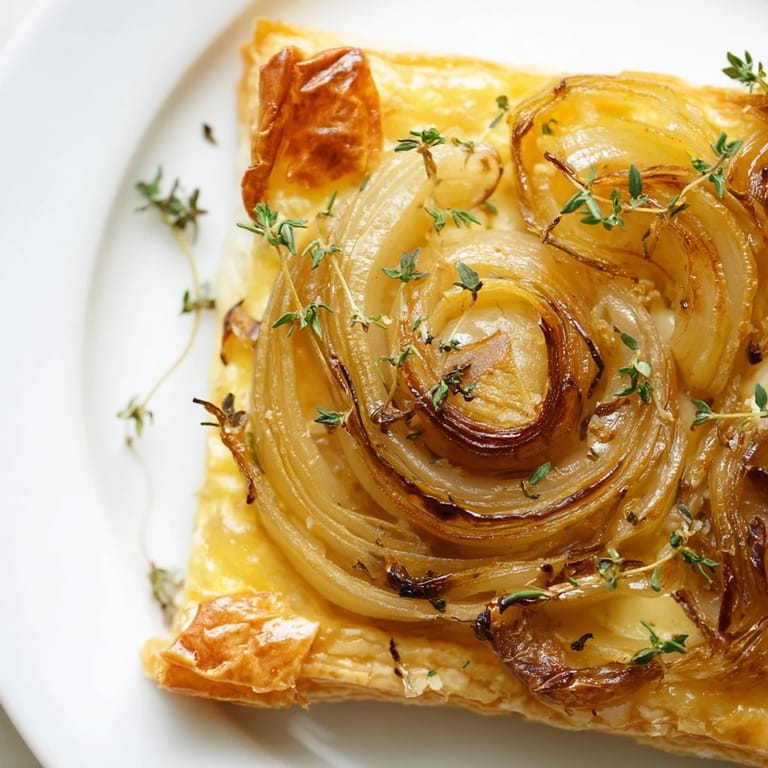
 There's something mesmerizing about watching onions transform in a hot pan—golden strands catching the light, sweetness deepening with each stir. I stumbled onto this tart one autumn evening when I had half a dozen onions rolling around in my crisper and absolutely nothing else to work with. The puff pastry came from the freezer, a wedge of Gruyère from the back of the fridge, and somehow these scraps became the most elegant thing I'd made in months. My partner walked in mid-caramelize and asked what smelled so incredible; I didn't even have a name for it yet.
I made this for a small gathering in November, and everyone kept asking for the recipe—even the person who usually skipped savory tarts. There was something about how the mustard quietly hummed underneath the sweetness, how the cheese caught and browned on the edges. One guest went back for thirds and just sat there shaking her head, like she couldn't believe something so simple could taste so complete.
Ingredients
- 1 sheet frozen puff pastry (about 250 g), thawed: The convenience here is real—no laminating butter by hand—but let it sit at room temperature for a few minutes so it's tender enough to roll without cracking.
- 3 large yellow onions, thinly sliced: Yellow onions are sweeter than red ones, and thinness matters because thin slices caramelize evenly without any raw bite hiding in the middle.
- 2 tbsp unsalted butter and 1 tbsp olive oil: The butter brings richness, the oil keeps things from burning; together they create a gentler heat for the long, slow cook.
- 1 tsp sugar: This feels counterintuitive in a savory dish, but it speeds up caramelization and pulls out the onions' natural sweetness without making anything taste sugary.
- 1/2 cup crème fraîche or sour cream: The tang cuts through richness and keeps the whole thing from feeling heavy; if you only have regular sour cream, that works beautifully too.
- 1 tsp Dijon mustard: Just a teaspoon, but it adds backbone and complexity that makes people taste depth they can't quite name.
- 1/2 cup grated Gruyère cheese: This cheese melts into creamy threads and browns at the edges—swap it for Emmental or sharp cheddar if that's what you have, and the tart will still sing.
- 1 tsp fresh thyme (or 1/2 tsp dried): Fresh herbs scatter at the end, but if you only have dried, mix it into the crème fraîche so the flavor blooms throughout.
Tired of Takeout? 🥡
Get 10 meals you can make faster than delivery arrives. Seriously.
One email. No spam. Unsubscribe anytime.
Instructions
- Heat your oven and prep your stage:
- Get the oven to 400°F (200°C) and line a baking sheet with parchment—this is your mise en place moment, and it matters because once those onions are caramelized, you want to move quickly.
- Begin the long, glorious caramelize:
- Melt butter with olive oil in a large skillet over medium heat, add your sliced onions with the sugar, salt, and pepper. Stir often—not constantly, but don't abandon them—for about 25 to 30 minutes until they're deep golden and smell almost sweet enough to be dessert.
- Ready your pastry:
- While the onions work their magic, roll out your thawed puff pastry on a lightly floured surface to about 12 inches square or round, then transfer it gently to your parchment-lined sheet.
- Build your base:
- Whisk crème fraîche with Dijon mustard in a small bowl, then spread it evenly across the pastry, leaving a 1-inch border all around so you have something to fold later.
- Layer with intention:
- Scatter half the Gruyère over the crème, then pile on those caramelized onions, sprinkle with fresh thyme, and finish with the remaining cheese—this three-layer approach means every bite gets all the flavors.
- Create rustic edges:
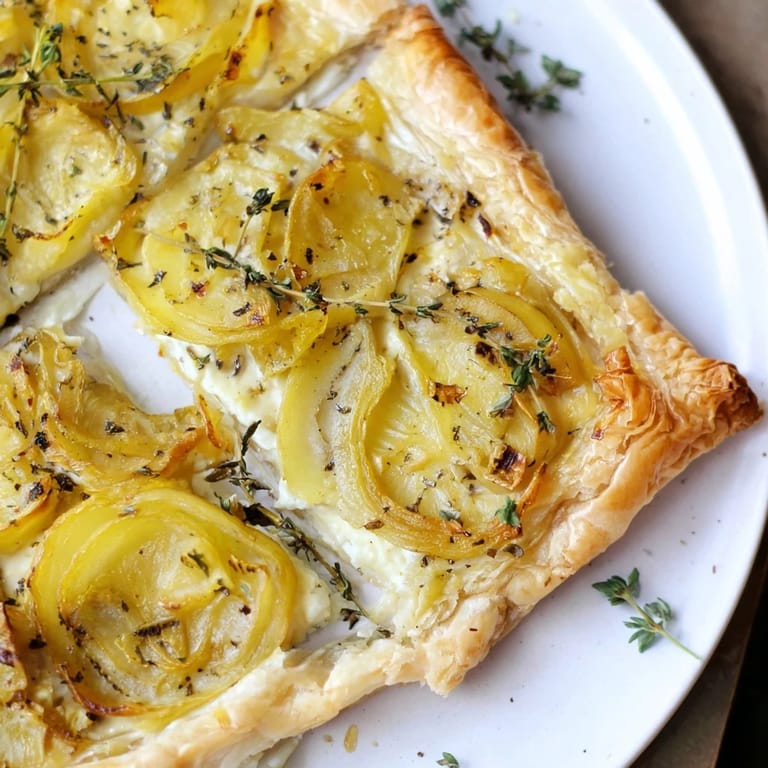
- Gently fold that 1-inch pastry border up and over the filling, letting it ruffle naturally; this is what makes it look rustic rather than fussy.
- Bake to golden glory:
- Into the oven for 20 to 25 minutes until the pastry is golden brown and crisp, and the cheese is bubbling slightly at the edges.
- Rest and serve:
- Let it cool for just a few minutes so the filling sets slightly, then slice and serve warm or at room temperature—either way, it's perfect.
 Save on Pinterest
 There was a moment during that November dinner when everyone went quiet for a beat—not awkward quiet, but the kind that happens when people are genuinely savoring something. That's when I knew this tart had become more than just a recipe, more than onions and cheese on pastry. It had become the kind of dish you make again, the kind people remember.
The Art of Patience with Onions
Caramelizing onions feels like meditation if you let it. There's a rhythm to it—stir, wait, stir, wait—and you learn to read the color rather than watch the clock. The first 10 minutes they'll release their water and get soft and almost translucent. Around minute 15, they start turning pale gold, and you might think they're done, but that's just the beginning. The real magic happens in those final minutes when they go from golden to deep mahogany, when the smell shifts from oniony to sweet and almost nutty. I used to rush this part and end up with undercaramelized onions that were just soft and sweet rather than complex and rich. Now I know that the wait is where the flavor lives.
Why This Works as a Main or Appetizer
The beauty of this tart is its flexibility. Serve it warm straight from the oven with a simple green salad and it becomes a light dinner that feels complete. Cut it into smaller pieces and pass it around as an appetizer, and people reach for seconds without thinking. The crème fraîche keeps it tender rather than heavy, the thyme keeps it sophisticated, and the caramelized onions keep it interesting enough that you're not just eating pastry with cheese.
Wine Pairing and Final Touches
A crisp white wine like Sauvignon Blanc is perfect here—the acidity bounces off the richness of the cheese and crème fraîche, and it won't compete with the delicate sweetness of the onions. Fresh chives at the end add a whisper of sharpness that keeps everything balanced. If you have balsamic vinegar in your kitchen, try adding a splash to the onions in their last few minutes on the heat for an extra layer of depth, though this is optional and depends on your mood that day.
- A small handful of fresh chives scattered over the top just before serving adds visual brightness and a subtle onion sharpness that plays beautifully against the sweetness.
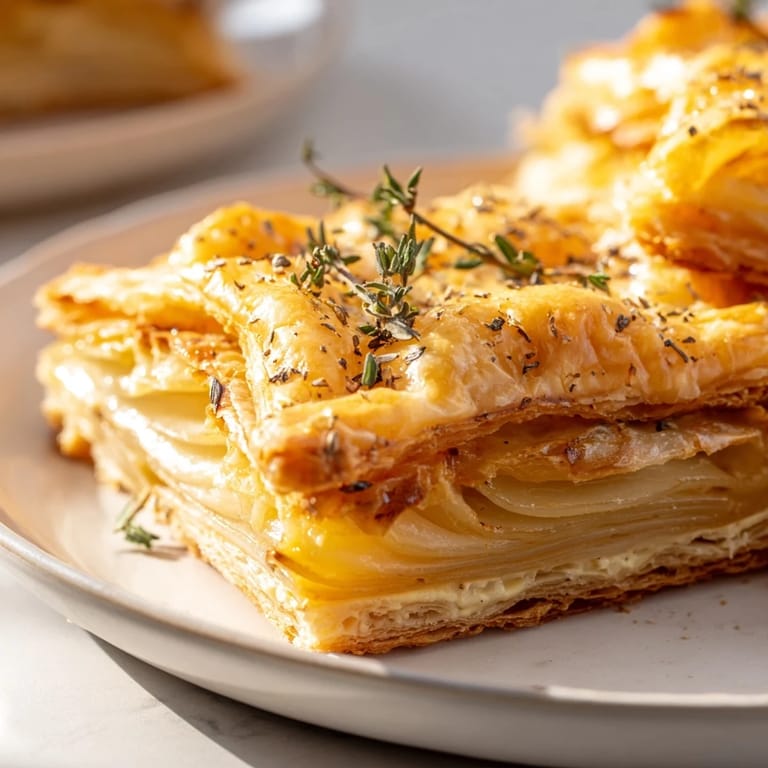
- Serve this warm or at room temperature—it's honestly better if you let it cool for 10 minutes so the flavors settle and the pastry stays crisp.
- Leftover tart keeps for a day or two wrapped loosely in foil, and reheats gently in a 300°F oven just until warm again.
 Save on Pinterest
 This tart taught me that the simplest ingredients in the right order become something memorable. It's the kind of recipe that sits in your head after one good meal and asks to be made again.
Recipe Questions & Answers
- → How do you caramelize onions perfectly?
Cook sliced onions slowly over medium heat with butter and olive oil, stirring frequently until they turn deep golden and sweet, usually about 25-30 minutes.
- → Can I use different cheese types?
Yes, Gruyère can be substituted with Emmental or sharp cheddar for a different flavor profile.
- → What is the best pastry for this tart?
Frozen puff pastry works well, providing a flaky and crisp crust after baking.
- → How can I add more depth to the flavor?
Adding a splash of balsamic vinegar during the last 5 minutes of caramelizing onions enhances the sweetness and complexity.
- → How should this tart be served?
Serve warm or at room temperature, making it versatile as a light meal or an elegant appetizer.