 Save on Pinterest
 The first time I truly understood French cooking wasn't from a cookbook—it was watching my neighbor's kitchen fill with that unmistakable aroma of wine, bacon, and thyme simmering together for hours. She'd invited me over on a gray autumn afternoon, and as I stood in her doorway with a bottle of wine, she handed me a wooden spoon and said, "This is coq au vin. It tastes like patience." That dish changed how I cooked. Now, whenever I need to slow down and remember that the best flavors come from time and care, I reach for this French classic.
I made this for my partner after a terrible week at work, and I remember him walking into the kitchen mid-braise, stopping dead and just inhaling. He didn't say anything for a moment—just stood there breathing in. Sometimes a dish does more than fill a belly; it says, "I'm thinking of you." That's what coq au vin does.
Ingredients
- 1 whole chicken, cut into 8 pieces: Use a good quality bird if you can—the flavor of the chicken itself matters when everything else is this simple.
- 150 g smoked bacon or pancetta, diced: Thick-cut bacon gives you better texture than thin slices; save the rendered fat because it's liquid gold for sautéing.
- 200 g pearl onions, peeled: Yes, peeling these is tedious, but frozen pearl onions work beautifully if you're short on patience.
- 250 g cremini or button mushrooms, quartered: Don't wash them under running water; just wipe with a damp cloth to preserve their earthy flavor.
- 2 medium carrots, sliced: Cut them on the bias so they cook evenly and look elegant in the bowl.
- 2 garlic cloves, minced: Fresh is crucial here; don't even think about jarred garlic.
- 750 ml dry red wine: Burgundy or Pinot Noir are traditional, but honestly, drink whatever you'd enjoy—if you wouldn't sip it, don't cook with it.
- 250 ml chicken stock: Homemade is best, but good quality store-bought won't ruin you.
- 2 tbsp tomato paste: This adds depth without making the sauce acidic; it's the secret whisper in the background.
- 2 tbsp all-purpose flour: This thickens everything just enough without making it heavy or gluey.
- 2 tbsp olive oil and 2 tbsp unsalted butter: The combo of both gives you the best browning and richest taste.
- 2 bay leaves and 4 sprigs fresh thyme: These anchor the whole flavor profile; don't skip them and definitely don't substitute dried thyme.
- Salt and freshly ground black pepper: Taste as you go; this dish rewards seasoning attention.
Tired of Takeout? 🥡
Get 10 meals you can make faster than delivery arrives. Seriously.
One email. No spam. Unsubscribe anytime.
Instructions
- Prepare and season your chicken:
- Pat each piece completely dry—moisture is the enemy of a good crust. Season generously with salt and pepper, getting into all the nooks and crevices where flavor can hide.
- Render the bacon until crispy:
- Heat 1 tbsp olive oil in your Dutch oven over medium heat and cook the bacon until it's deeply golden and smells like breakfast. This isn't just flavor; it's the foundation everything else builds on.
- Brown the chicken in batches:
- Use the bacon fat still in the pot and work in batches so you're not crowding the pan. The chicken needs space to breathe, and you want that deep golden color on every surface. This takes patience but it matters.
- Build flavor with aromatics:
- Toss in the carrots, pearl onions, and minced garlic, stirring until they're lightly golden and the kitchen smells intoxicating. This is when cooking starts to feel like magic.
- Add the thickening base:
- Stir in tomato paste and flour, cooking for exactly one minute. You're not looking for browning here; you just want to cook out the raw flour taste.
- Bring everything together:
- Return the chicken and bacon to the pot, pour in the wine and stock, and add bay leaves and thyme. Scrape up every browned bit from the bottom—that's concentrated flavor you can't buy.
- Braise low and slow:
- Bring to a simmer, cover, and let it cook on low heat for 1.5 hours until the chicken is tender enough to shred with a wooden spoon. The house will smell incredible.
- Sauté the mushrooms separately:
- While the chicken braises, heat 1 tbsp butter and 1 tbsp olive oil in a skillet over medium-high heat and cook the mushrooms until they're deep brown and smell earthy and concentrated. Don't stir them constantly; let them sit and develop color.
- Finish with intensity:
- Remove the lid from the pot for the last 15 minutes to let the sauce reduce and intensify. Stir in the sautéed mushrooms, taste, and adjust salt and pepper until it feels right.
- Serve with care:
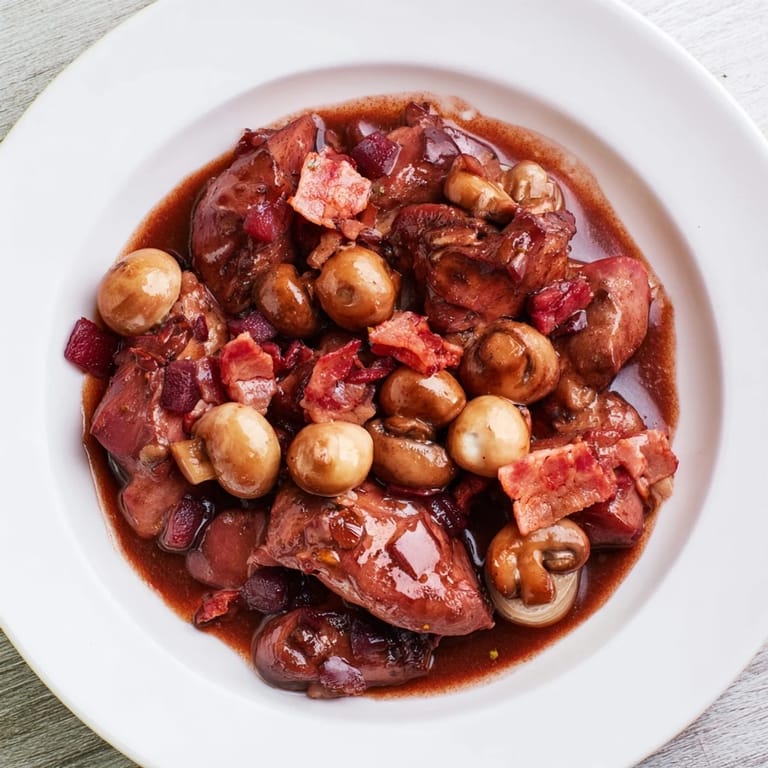
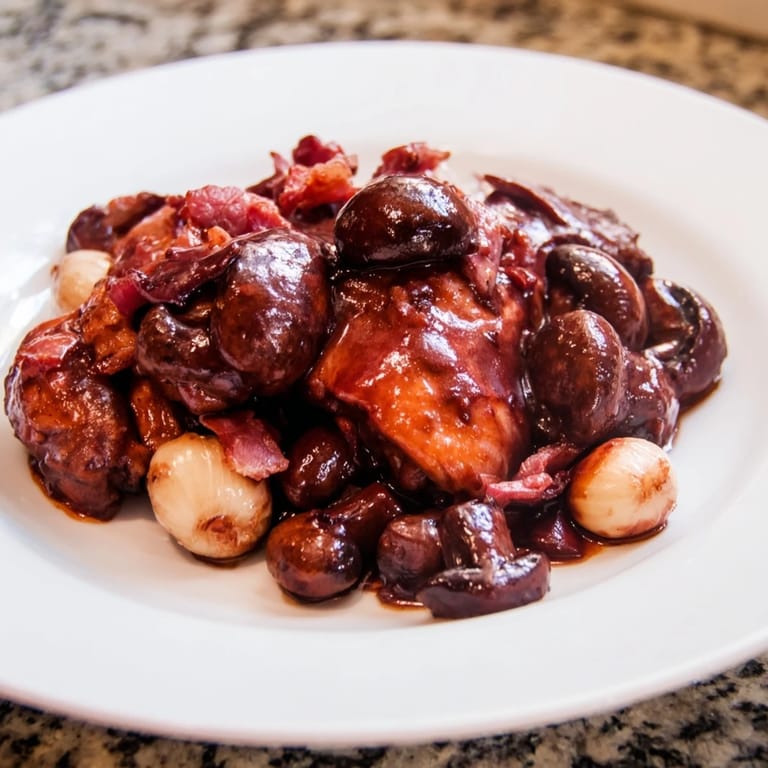
- Remove the bay leaves and thyme sprigs, and ladle everything into deep bowls while it's still steaming hot.
 Save on Pinterest
 There's a moment, usually somewhere around the 45-minute mark, when you lift that lid and the smell hits you like memory—like stepping into someone else's kitchen and recognizing home. That's when you know you're doing it right. This dish teaches you that good cooking isn't complicated; it's just about respecting time and heat and good ingredients.
Why Red Wine Matters Here
I learned early that using cheap wine leads to harsh, tannic flavors that no amount of simmering can soften. The wine doesn't just season the dish; it becomes the sauce. A wine you'd actually drink tastes completely different from one you wouldn't—it has fruit and complexity that lingers beautifully after cooking. When the wine hits the hot pot, you'll see it bubble and steam; that's the alcohol cooking off and the real flavors concentrating. This is when the transformation truly begins, when you shift from just putting ingredients together to actually cooking.
The Art of Proper Browning
Every surface that touches heat first gets that golden-brown caramelization, which releases hundreds of flavor compounds that simple boiling could never achieve. I used to rush this step, eager to get to the wine and simmering, but I realized I was literally skipping the part that makes the dish taste French instead of just... stewed. The Maillard reaction—that browning—is non-negotiable. When the chicken hits the hot oil, you'll hear it sizzle; resist the urge to move it around. Let each side sit for 3 to 4 minutes before flipping. Patience here compounds into flavor later.
Making It Your Own
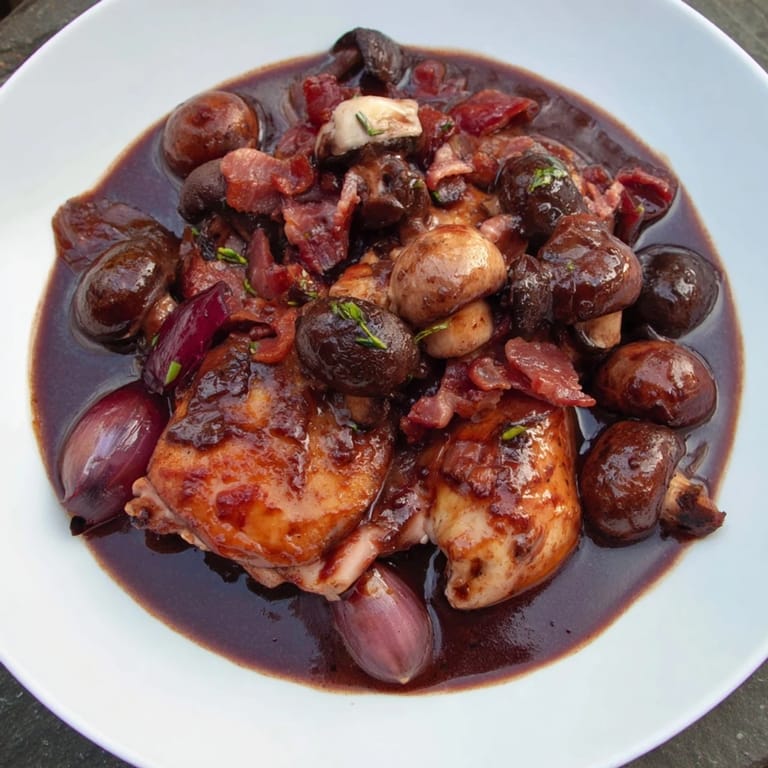
The beauty of coq au vin is that it's forgiving enough to adapt once you understand the core technique. Some people add a splash of brandy when sautéing the mushrooms for extra richness, and I always appreciate that choice. Chicken thighs work wonderfully if you prefer dark meat—they're actually less likely to dry out during the long braise. You can serve it with crusty French bread to soak up every drop, over mashed potatoes for comfort, or with buttered egg noodles for elegance.
- Make it gluten-free by swapping the flour for cornstarch or a gluten-free blend, using the same amount.
- A day ahead tastes even better—the flavors meld overnight and the sauce deepens.
- Freeze leftovers in portions and reheat gently; this dish actually improves with time.
 Save on Pinterest
 This is the kind of dish that teaches you patience tastes better than speed. Make it when you have time to breathe, when you can listen to it simmer and adjust as it cooks. That's where the real magic happens.
Recipe Questions & Answers
- → What wine pairs best with this dish?
Use a dry red wine like Burgundy or Pinot Noir to complement the deep flavors without overpowering the chicken.
- → Can I substitute chicken parts?
Chicken thighs or drumsticks work well, offering tender meat that holds up during slow braising.
- → How do I prevent the sauce from being too thin?
Reduce the sauce uncovered during the last 15 minutes and use flour to gently thicken the braising liquid.
- → Are pearl onions necessary?
Pearl onions add sweetness and texture, but small chopped onions can substitute if unavailable.
- → What side dishes complement this preparation?
Serve alongside crusty bread, buttered noodles, or creamy mashed potatoes to soak up the flavorful sauce.
- → Can this be prepared in advance?
The flavors develop further if made ahead and gently reheated before serving.