 Save on Pinterest
 I remember the first time I assembled a fireside platter like this one. It was a cold November evening, and instead of fussing over a complicated dinner, I grabbed what I loved most from the kitchen—rich aged cheeses, dark chocolate, and the promise of warm cocoa—and piled it all onto an old wooden board. My friends arrived, saw that rustic spread, and suddenly we weren't just eating; we were lingering, laughing, letting the evening unfold slowly. That's when I realized: sometimes the most memorable meals aren't cooked at all. They're gathered.
I'll never forget serving this to my neighbor one snowy afternoon. She'd had a rough week, and I simply set this board in front of her with a warm mug of cocoa. Watching her face change as she tasted the blue cheese next to the dark chocolate—that surprised delight—reminded me that comfort food isn't really about being fancy. It's about saying, 'I see you. Let's slow down together.'
Ingredients
- Aged cheddar, 200 g, cut into large irregular chunks: The sharpness matters here. Younger cheddar gets lost next to the chocolate, but well-aged varieties develop a crystalline crunch and deeper flavor that stands up beautifully to the sweetness. I learned this the hard way, and now I always ask the cheesemonger for their oldest option.
- Aged gouda, 150 g, broken into wedges: Gouda has this natural sweetness and caramel note that feels like it was designed to live on the same platter as chocolate. Breaking it by hand instead of slicing it gives you those irregular edges that catch the light and invite picking.
- Blue cheese, 150 g, crumbled or chunked: The wild card. Its peppery, funky edge is exactly what prevents this from becoming a one-note sweet experience. Trust it, even if you're nervous about it.
- Dark chocolate, 120 g at 70% cocoa or higher, broken into pieces: The percentage matters. Below 70%, it tastes more like candy. At 70% and above, you get actual chocolate flavor—bitter, sophisticated, a real player on this board.
- Chocolate-covered almonds, 100 g: These give you texture and a moment of crunch that contrasts with the melting chocolate. Buy the best quality you can find; cheap versions taste waxy.
- Chocolate-dipped dried figs, 80 g: If you can't find these, dip your own dried figs in melted chocolate. The figs' natural jammy quality becomes something transcendent when wrapped in chocolate. Worth the extra five minutes.
- Chocolate truffles, 60 g: Your secret indulgence. These say, 'I went a little fancy for you.'
- Small baguette, sliced: Fresh is better, but day-old bread is actually perfect here because it doesn't compete for attention. The slices become vehicles for cheese and chocolate pairing.
- Roasted walnuts or pecans, 80 g: The nuttiness bridges the gap between cheese and chocolate. Toast them yourself if you have time; the effort pays off in flavor.
- Pear and apple, sliced: Their gentle sweetness and slight acidity refresh the palate between bites. Slice just before serving so they don't brown.
- Honey, 2 tbsp: For drizzling. The floral notes add another layer of sophistication.
- Whole milk, 500 ml: Don't use skim; you need the fat for a cocoa that feels like a warm hug.
- Dark chocolate, 100 g, chopped: Same rule as before: 70% or higher. This is going to be your cocoa's soul.
- Unsweetened cocoa powder, 1 tbsp: This deepens the chocolate flavor and adds a slight bitterness that balances the sweetness from the sugar and platter.
- Sugar, 1 tbsp: Taste as you go. Some days you want more, some days less. This recipe is forgiving if you listen to what you want.
- Pinch of salt: This tiny amount makes the chocolate sing. Never skip it.
- Vanilla extract, 1/2 tsp: The final note that ties everything together, like a soft blanket.
- Whipped cream, optional: If you use it, make it fresh and unsweetened. The cocoa is rich enough.
- Shaved chocolate, optional: A finishing touch that makes it feel like you tried.
Tired of Takeout? 🥡
Get 10 meals you can make faster than delivery arrives. Seriously.
One email. No spam. Unsubscribe anytime.
Instructions
- Gather your best board and let yourself be creative:
- Find a large wooden board or platter—something with character. This isn't about perfection or symmetry. You're building a landscape that invites people in. Think of negative space and clusters, not even distribution.
- Arrange the cheese like you're telling a story:
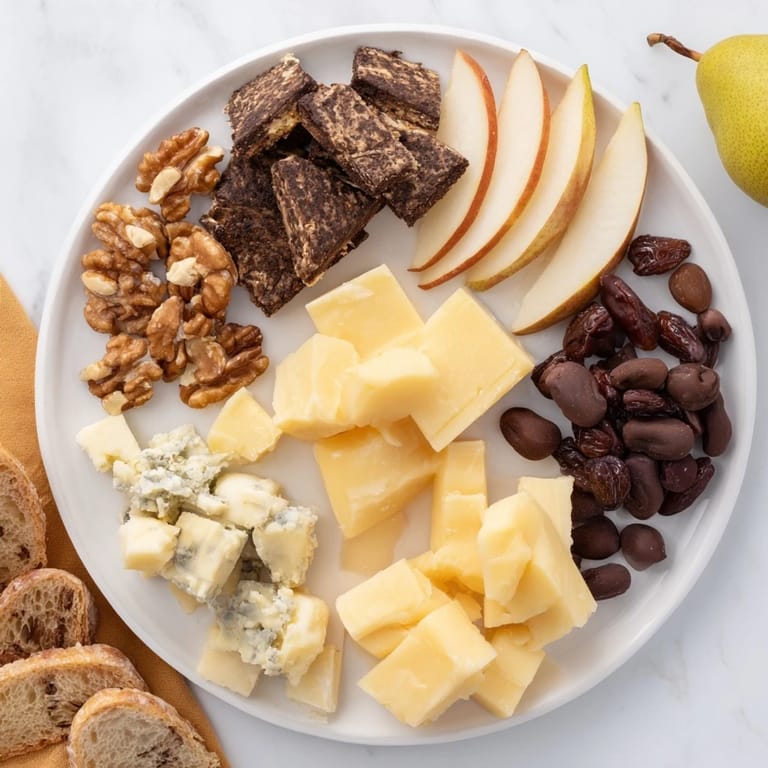
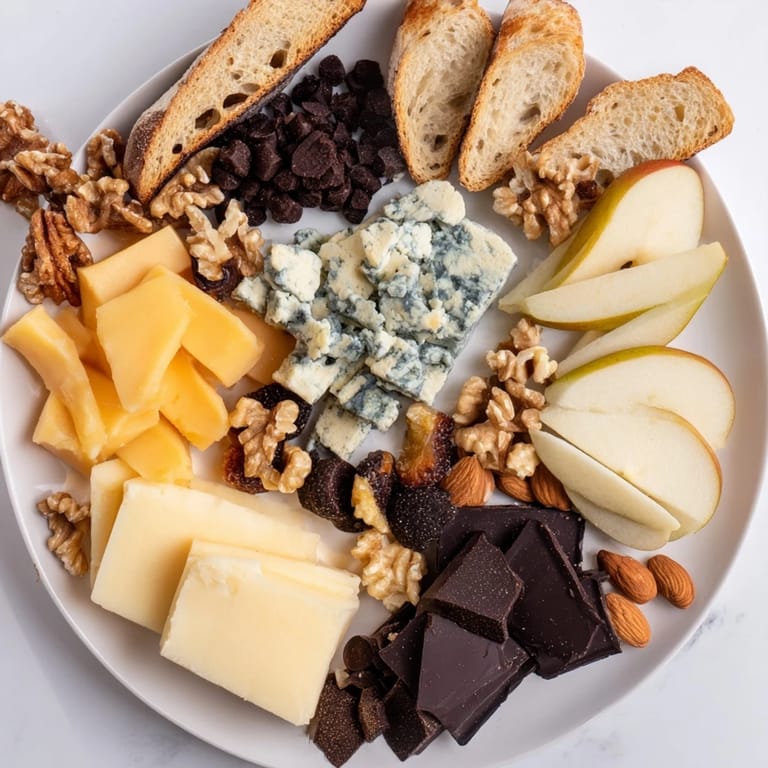
- Start by placing your three cheeses on the board, keeping the pieces chunky and irregular. The cheddar in one corner, the gouda claiming another space, and the blue cheese somewhere bold and unapologetic. Leave room to breathe between them. Run your hand over the board—if it feels too crowded, it is.
- Let the chocolate pieces find their home:
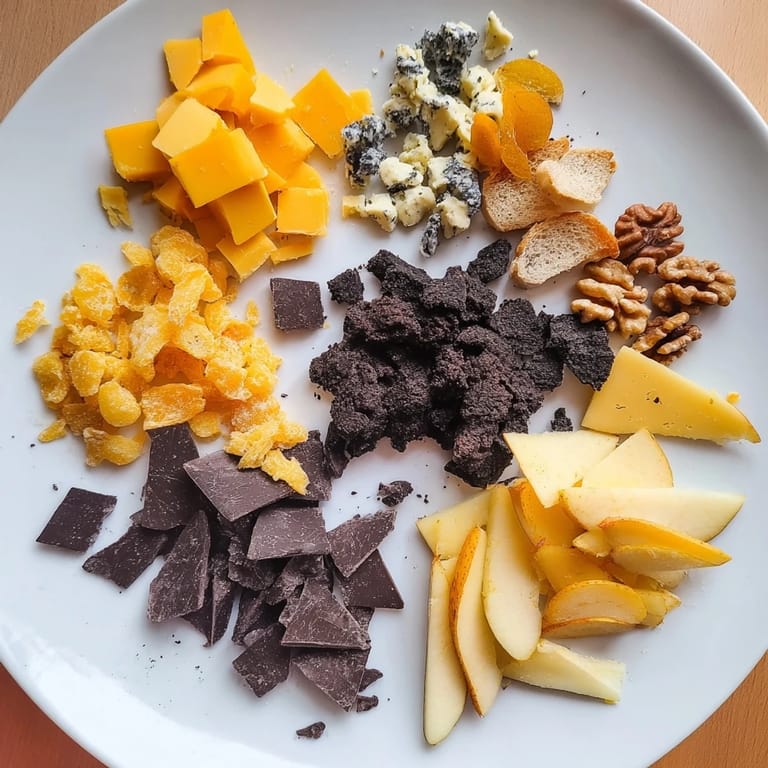
- Break your dark chocolate into uneven shards and scatter them. Add the chocolate-covered almonds, chocolate-dipped figs, and truffles in little clusters, as if they're discoveries rather than intentional placements. This is where the visual magic happens—the dark chocolate against the golden cheese, the truffle next to the walnut.
- Complete the landscape with texture and color:
- Arrange your baguette slices leaning casually, add the roasted nuts in a small cluster, fan out your fruit slices. Honey goes in a small bowl on the board, just waiting. Step back. If there are empty spaces that feel intentional, you've done it right.
- Heat your milk with intention:
- Pour 500 ml of whole milk into a saucepan and set it over medium heat. Watch it. This isn't a task to multitask through. You're waiting for steam to rise from the surface and tiny bubbles to form around the edges—that moment just before it boils. This takes about 5–7 minutes and it matters.
- Create chocolate smoothness:
- Add your chopped dark chocolate, cocoa powder, sugar, and a pinch of salt to the hot milk. Now whisk. And keep whisking. Feel the chocolate dissolving, the cocoa blending in, the mixture becoming glossy and dark. This is where cocoa transforms from separate ingredients into something unified. About 2–3 minutes of whisking gets you there.
- Finish with grace:
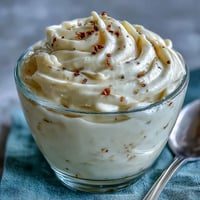
- Remove the saucepan from heat and stir in your vanilla extract. Smell it. That's the moment you know it's ready. Pour into warm mugs, top with whipped cream if you're feeling generous, shave some chocolate over the top, and serve alongside your beautiful board. The contrast of warm and cold, sweet and savory, liquid comfort and textured indulgence—that's the point.
 Save on Pinterest
 There was one evening when everything came together perfectly. The board was set, the cocoa was steaming, and someone took a piece of aged cheddar, dabbed it with honey, and topped it with a sliver of dark chocolate. We all stopped talking. That simple three-bite moment—salty, sweet, bitter, all at once—felt like tasting comfort itself. That's when I knew this wasn't just a snack platter. It was an invitation to be present.
The Art of the Cheese Board
Building a cheese board is less about following rules and more about understanding balance. You want variety in texture—creamy blue cheese next to crumbly cheddar. You want range in flavor intensity, so the milder gouda gives your palate a rest between bites of something bold. And you want visual contrast, which is why the dark chocolate looks so stunning against pale cheddar. The board becomes a edible painting, and the eater becomes the curator of their own experience, choosing what comes next. This freedom is what makes people linger.
Why Dark Chocolate Belongs in Savory Moments
I used to think chocolate belonged only in desserts, until I discovered that high-quality dark chocolate has the same umami depth as aged cheese. Both have been broken down by time into their most complex forms. Both have bitter notes that make your palate wake up. When you put them together, something unexpected happens—the flavors stop being individual ingredients and start being a conversation. The chocolate doesn't overwhelm the cheese, and the cheese doesn't hide the chocolate. Instead, they make each other taste more like themselves. It's sophisticated without trying, luxurious without pretense.
Making Cocoa Feel Like a Moment, Not a Task
Hot cocoa can feel like an afterthought, something you throw together while doing three other things. But when you slow down and make it properly—whisking until it's silky, tasting to adjust the sweetness, warming the mugs beforehand—it becomes a ritual. I learned this from my grandmother, who always said that the time you spend making something is the first gift you give. She was right. The cocoa tastes better not because the ingredients are different, but because you paid attention. And that attention is something people can taste.
- Warm your mugs before pouring in the hot cocoa—they keep the drink warm longer and feel better in your hands
- If your cocoa tastes bitter, add a touch more sugar and a drop more vanilla; if it tastes thin, that's a sign your milk temperature was off, and next time you'll know
- Leftover cocoa can be refrigerated and reheated gently, but it's never quite the same as fresh—make only what you'll drink immediately
 Save on Pinterest
 This fireside platter is a reminder that the most meaningful meals aren't about complexity. They're about bringing together things you love, taking your time, and sharing them with people who matter. That's the whole recipe.
Recipe Questions & Answers
- → What types of cheeses work best for this platter?
Aged cheddar, gouda, and blue cheese offer a balanced range of sharp, creamy, and tangy flavors ideal for this combination.
- → Can I substitute the dark chocolate with other types?
Yes, feel free to use any dark chocolate with 70% cocoa or higher, or mix in milk or white chocolate for variation.
- → How should I serve the warm cocoa for best results?
Serve the cocoa hot, optionally topped with whipped cream and shaved chocolate for added richness and presentation.
- → What nuts pair well with this platter?
Roasted walnuts, pecans, and chocolate-covered almonds complement the rich cheeses and chocolate flavors wonderfully.
- → Are there gluten-free options available?
Yes, substitute the baguette with gluten-free bread or crackers to accommodate dietary needs without sacrificing taste.
- → Can this platter be prepared ahead of time?
Cheeses and chocolates can be pre-arranged, but assemble fresh fruit and drizzle honey right before serving to maintain freshness.