 Save on Pinterest
 There's something about the smell of sautéing onions and celery that instantly transports me to my nonna's kitchen in Liguria, even though I've never actually been there. My grandmother used to make minestrone on lazy Sunday afternoons, and somehow that simple vegetable soup became the thing I crave when life feels chaotic. The beauty of it is that she never made it the same way twice—whatever was in the garden or the market that day went into the pot. I finally stopped trying to replicate her exact version and started trusting my instincts the way she did.
I made this for a friend who'd just moved into her apartment with nothing but a hot plate and determination, and watching her taste it made me realize how powerful simple food can be. She texted me the next day asking for the recipe, and now it's her go-to when she needs something that feels like home. That's when I knew minestrone had stopped being just soup—it had become a small way to say I'm thinking of you.
Ingredients
- Olive oil: Use a decent one here since it's tasted raw in the finished soup; it makes the whole thing taste more like Italy and less like a random weeknight dinner.
- Yellow onion, carrots, and celery: This trio is the foundation—some call it mirepoix, but in Italy it's the holy trinity that starts almost every soup worth making.
- Garlic: Two cloves minced fine so they dissolve into the broth and give everything a gentle warmth rather than a harsh bite.
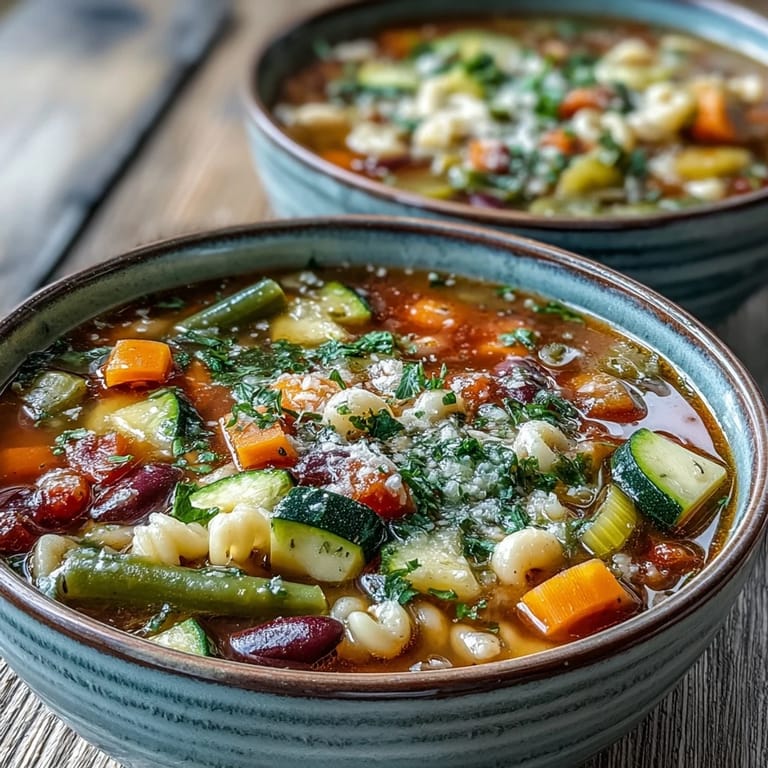
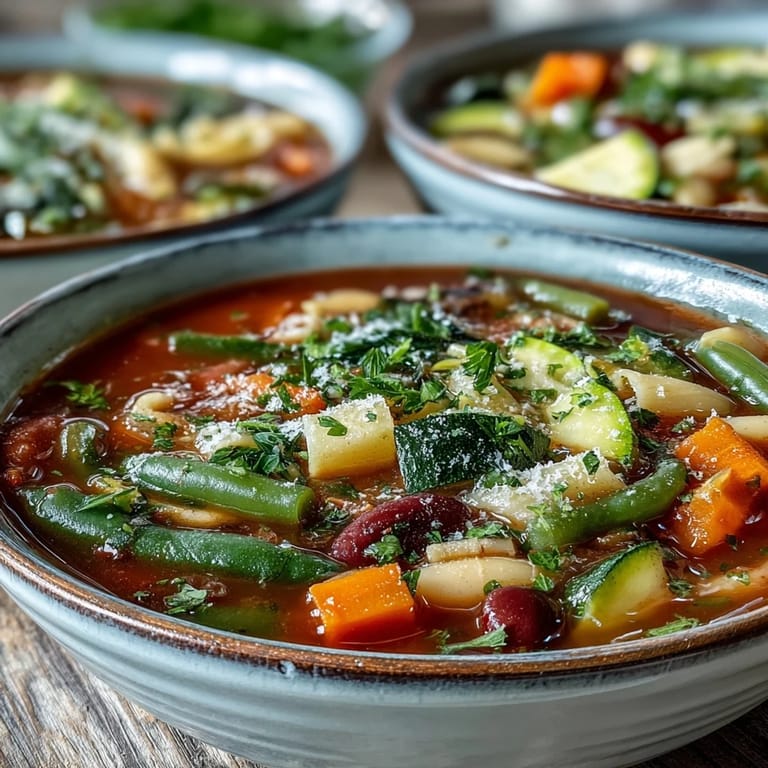
- Zucchini and potato: The potato thickens the soup slightly and adds substance; the zucchini keeps things fresh and verdant.
- Green beans: They stay slightly firm even after simmering, giving you little moments of crunch if you don't overcook them.
- Canned tomatoes: Not fresh—canned is actually better here because they've been picked at peak ripeness and they break down into the broth beautifully.
- Cannellini beans: Creamy and mild, they absorb the flavors around them and make the soup feel substantial without being heavy.
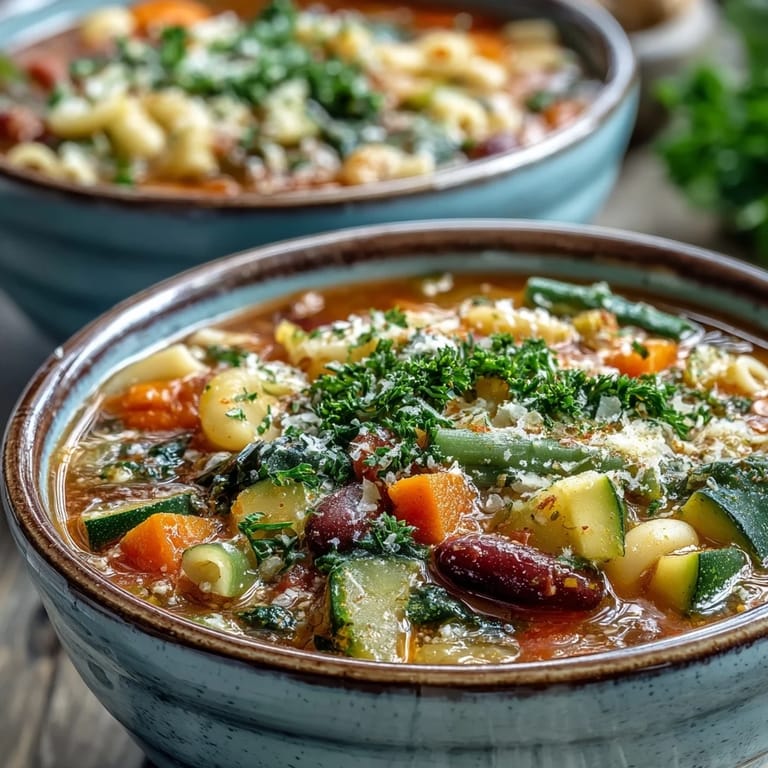
- Small pasta: Ditalini or elbow pasta work best because they cook quickly and don't overwhelm the broth like longer shapes would.
- Vegetable broth: Quality matters; a thin, sad broth will result in thin, sad soup, so taste yours first and adjust seasoning accordingly.
- Dried Italian herbs and bay leaf: The bay leaf should be removed before serving—I learned this the hard way by biting into one and immediately understanding why my grandmother always made that face.
- Spinach or kale: Add it at the very end so it stays bright green and doesn't turn into muted seaweed.
- Fresh parsley: This is not optional if you want the soup to sing; it brightens everything and tastes like the garden in a bowl.
- Parmesan cheese: Completely optional but if you use it, grate it fresh—the pre-grated stuff tastes like sawdust in comparison.
Tired of Takeout? 🥡
Get 10 meals you can make faster than delivery arrives. Seriously.
One email. No spam. Unsubscribe anytime.
Instructions
- Build your flavor base:
- Heat the olive oil in a large pot over medium heat, then add the diced onion, carrots, and celery. Let them soften for about 5 minutes, stirring occasionally—you want them tender but not brown, and the kitchen will smell incredible.
- Introduce the rest of the vegetables:
- Stir in the minced garlic, diced zucchini, potato, and green beans, cooking for another 3 minutes until the garlic becomes fragrant. This is where the soup really starts taking shape.
- Build the broth:
- Pour in the diced tomatoes, drained cannellini beans, vegetable broth, dried herbs, and bay leaf. Bring everything to a boil, then immediately reduce the heat.
- Let it simmer:
- Cover the pot and let it bubble gently for 20 minutes so the vegetables soften completely and all the flavors meld together. This is a good time to set the table or pour yourself a glass of wine.
- Add the pasta:
- Stir in your small pasta and simmer uncovered for 8 to 10 minutes, stirring occasionally so it doesn't stick to the bottom. Taste a piece to make sure it's tender before moving on.
- Finish with greens:
- Remove the bay leaf, then add your spinach or kale and let it wilt for just 2 minutes—any longer and it loses its brightness. Season generously with salt and pepper.
- Serve with love:
- Ladle into bowls, scatter fresh parsley over each one, and offer grated Parmesan on the side for people to add as much as they want. A hunk of crusty bread is non-negotiable.
 Save on Pinterest
 Years ago, I made this soup for a potluck and someone asked if I'd bought it from an Italian restaurant because they couldn't believe I'd made it at home. That compliment meant more to me than any fancy dessert ever could, because it proved that simple, honest cooking done with attention somehow tastes like love. Now whenever someone tastes my minestrone, I see the moment they realize soup can be this good.
Why This Soup Works Every Single Time
Minestrone is forgiving in a way that other dishes aren't—it doesn't care if your vegetables are cut into perfect pieces or if you added a handful extra of something. The broth acts as a unifying force, bringing together whatever you've thrown in and making it taste intentional rather than haphazard. I've made it with winter root vegetables, summer zucchini, spring peas, and autumn kale, and every version feels authentic and seasonal.
Customizing Your Minestrone
The ingredient list is a suggestion, not a law—this is exactly the kind of soup where your instincts should matter more than measurements. If you have half a head of cabbage, shred it and toss it in. If you find fresh basil at the market, rip some leaves and scatter them on top instead of parsley. If you have a Parmesan rind sitting in your cheese drawer, let it simmer in the broth the whole time and it will dissolve into something transcendent.
Storage, Reheating, and Why This Soup Gets Better
Minestrone tastes even better on the second day because all the flavors have had time to become friends with each other, so don't hesitate to make a double batch and eat it for days. Store it in an airtight container in the refrigerator for up to four days, and when you reheat it, do so gently on the stovetop rather than blasting it in the microwave. If it's gotten thick, just add a splash of broth or water to bring it back to the consistency you like.
- Freeze it without the pasta if you want it to last longer—add fresh pasta when you're reheating so it stays tender.
- Always taste and adjust the seasoning right before serving because flavors can fade or intensify depending on storage time.
- Serve it warm, never hot, with people you care about and bread that's still warm from the oven if you possibly can.
 Save on Pinterest
 This soup is a reminder that the best food doesn't require fancy techniques or impossible-to-find ingredients, just attention and kindness. Make it once and you'll understand why my grandmother made it so often.
Recipe Questions & Answers
- → What vegetables go in traditional minestrone?
Traditional minestrone features a soffritto base of onion, carrots, and celery, plus seasonal vegetables like zucchini, potatoes, green beans, and tomatoes. The beauty lies in adapting to what's fresh and available.
- → Can I make minestrone gluten-free?
Absolutely. Simply substitute the regular pasta with your favorite gluten-free variety. Rice, corn, or quinoa-based pasta work wonderfully and maintain the soup's satisfying texture.
- → How long does minestrone keep in the refrigerator?
Stored in an airtight container, minestrone keeps well for 4-5 days. The flavors continue to develop, often making leftovers even more delicious than the freshly made batch.
- → Should I cook the pasta separately?
Cooking pasta directly in the broth allows it to absorb flavor and release starch, naturally thickening the soup. Just be aware that the pasta will continue softening in leftovers.
- → Can I freeze minestrone?
Yes, though it's best to freeze without the pasta, as pasta can become mushy when frozen and reheated. Cook fresh pasta when reheating, or freeze fully assembled portions if texture isn't a concern.
- → What makes minestrone different from other vegetable soups?
Minestrone specifically includes beans and pasta, creating a more substantial meal. The combination of legumes and starch makes it a complete, protein-rich dish rather than a light starter.