 Save on Pinterest
 My neighbor brought over a roasted Brussels sprouts dish one autumn evening, and I remember being genuinely surprised—I'd written them off years ago after a soggy steamed mess from childhood. These were different: caramelized, sweet, tangy, with this honeyed mustard coating that made me reach for seconds without thinking about it. She wouldn't share the exact recipe, just winked and said the glaze was the magic. So I started experimenting in my own kitchen, and this version became the one I make whenever I want to turn skeptics into believers.
I made this for a potluck last winter and watched people actually ask for the recipe instead of just politely accepting a serving. One coworker came back three times, and I realized it wasn't just because the sprouts were good—it was because they tasted intentional, like someone cared about getting the flavors right. That's when I knew I'd cracked it.
Ingredients
- Brussels sprouts, 1 lb trimmed and halved: The fresher they are, the sweeter they become when caramelized; look for ones that feel firm and heavy for their size.
- Olive oil, 2 tbsp: Helps the sprouts brown evenly and carries all those glaze flavors into every layer.
- Honey, 2 tbsp: Brings the sweetness and helps create that caramelized crust; use the real thing, not the squeeze bottle.
- Dijon mustard, 1½ tbsp: The sophisticated backbone of the glaze, adding tang without being harsh.
- Whole-grain mustard, 1 tbsp: Those little seeds catch the heat and give you pockets of extra mustard flavor and texture.
- Garlic powder, ½ tsp: Deepens the savory notes so the glaze doesn't feel one-dimensional.
- Apple cider vinegar, 1 tbsp: Keeps everything bright and prevents the sweetness from taking over; this is the ingredient people taste but can't name.
- Salt, ½ tsp: Amplifies every other flavor; taste as you go since some mustards already carry salt.
- Black pepper, ¼ tsp: A tiny pinch adds warmth and complexity.
- Fresh parsley, 2 tbsp chopped (optional): The green finish makes them look intentional and adds a fresh herbal note that cuts through the richness.
Tired of Takeout? 🥡
Get 10 meals you can make faster than delivery arrives. Seriously.
One email. No spam. Unsubscribe anytime.
Instructions
- Get your oven ready:
- Preheat to 425°F and line a baking sheet with parchment paper. This temperature is high enough to actually caramelize the sprouts, not just roast them pale.
- Build the glaze:
- Whisk the olive oil, honey, both mustards, garlic powder, apple cider vinegar, salt, and pepper together in a large bowl until it looks smooth and glossy. The glaze should smell tangy and a little sweet, never bitter.
- Coat everything evenly:
- Toss the Brussels sprouts with the glaze until every piece glistens and no dry spots remain. This is where patience pays off—take a minute to really make sure they're covered.
- Arrange with intention:
- Spread them on the baking sheet with the flat, cut sides down; these flat surfaces will kiss the hot pan and turn golden and crispy while the rounded tops stay tender.
- Roast and flip:
- Put them in for 20–25 minutes, flipping halfway through so they brown evenly on both sides. You'll know they're done when the edges are caramelized and darkened, almost charred in spots.
- Finish and serve:
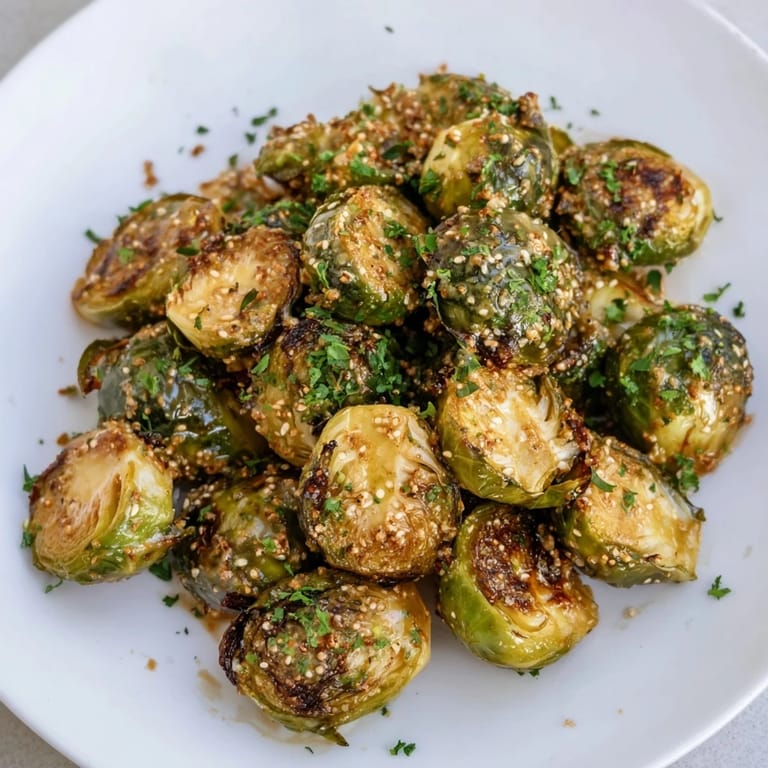
- Transfer to a serving dish, scatter parsley on top if you're using it, and eat them warm while they still have some textural contrast between the crispy outsides and tender insides.
 Save on Pinterest
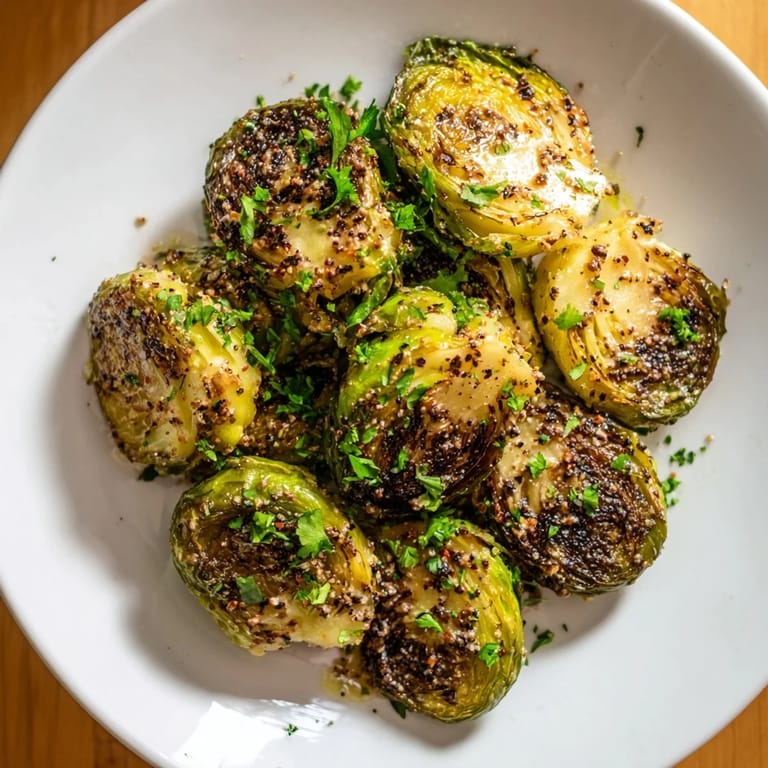
 There's a moment about three-quarters of the way through roasting when your kitchen smells like caramel and mustard and roasted vegetables all at once, and you suddenly understand why this side dish has become something people actually look forward to eating. That's when you know the chemistry is working.
The Sweet and Savory Balance
What makes this glaze work is that it never tips into being a dessert disguised as a vegetable. The honey and mustard play off each other—the sweetness of one emphasizes the tanginess of the other, and the apple cider vinegar keeps everything grounded. It's the kind of balance that makes people pause mid-bite and actually think about what they're eating, which is rare for a side dish.
Why Caramelization Matters
Roasting Brussels sprouts at high heat until they're borderline charred sounds counterintuitive if you're used to gentler cooking methods, but it's where the magic lives. The cut sides that touch the hot pan first develop a deep, sweet crust while the inside stays creamy. The glaze caramelizes along with the sprouts, coating everything in a lacquer of flavor that tastes far more complicated than the simple ingredients suggest.
Variations and Additions
Once you've made this version a few times and own the basic technique, it becomes a platform for small changes. I've added toasted nuts for crunch, swapped maple syrup in for honey to shift the flavor profile, and even scattered chili flakes over the top for friends who wanted heat. The foundation is strong enough to handle creativity.
- Toss in toasted chopped pecans or walnuts after roasting for texture and richness.
- Try maple syrup instead of honey for a deeper, less floral sweetness and a more autumn feeling.
- Add a pinch of chili flakes or smoked paprika if you want warmth or smokiness to the glaze.
 Save on Pinterest
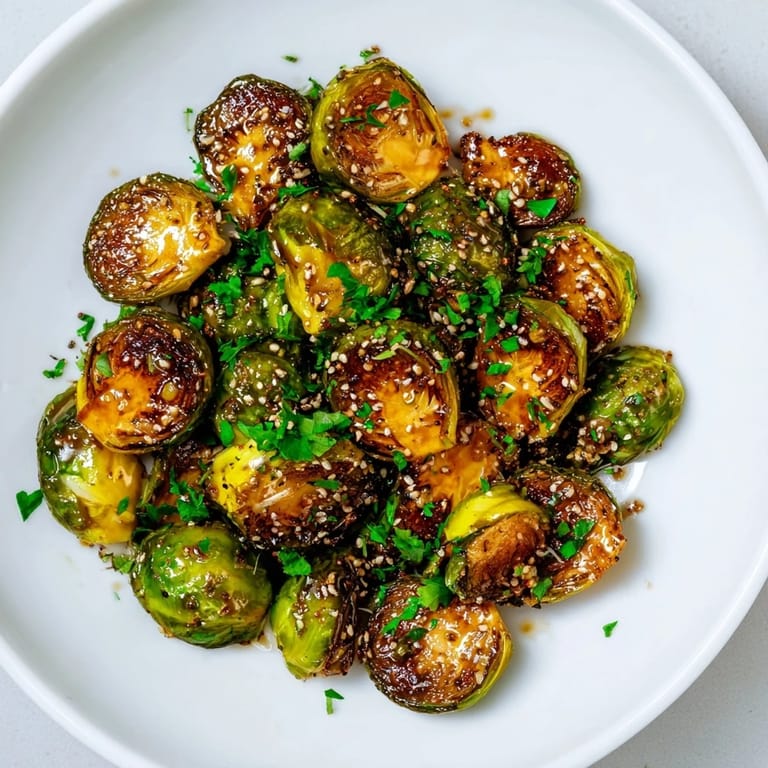
 These Brussels sprouts have become my answer to the question of what to bring to a dinner party when you want to seem effortless but actually put thought into it. Serve them warm, and watch people actually enjoy their vegetables.
Recipe Questions & Answers
- → How do I get Brussels sprouts caramelized evenly?
Cutting Brussels sprouts in half and placing them cut-side down on the baking sheet helps develop a golden, caramelized crust during roasting.
- → Can I substitute honey with a vegan alternative?
Maple syrup works well as a vegan substitute, maintaining the dish’s sweetness and glaze consistency.
- → What level of heat does the glaze have?
The glaze is mildly tangy and sweet, but adding chili flakes can introduce a gentle heat if desired.
- → Is it necessary to use both Dijon and whole-grain mustard?
Using both adds depth and texture to the glaze, but you can adjust amounts or choose one for a simpler flavor profile.
- → How can I add crunch to this dish?
Sprinkling toasted chopped pecans or walnuts just before serving adds a delightful crunch and complements the glaze.