 Save on Pinterest
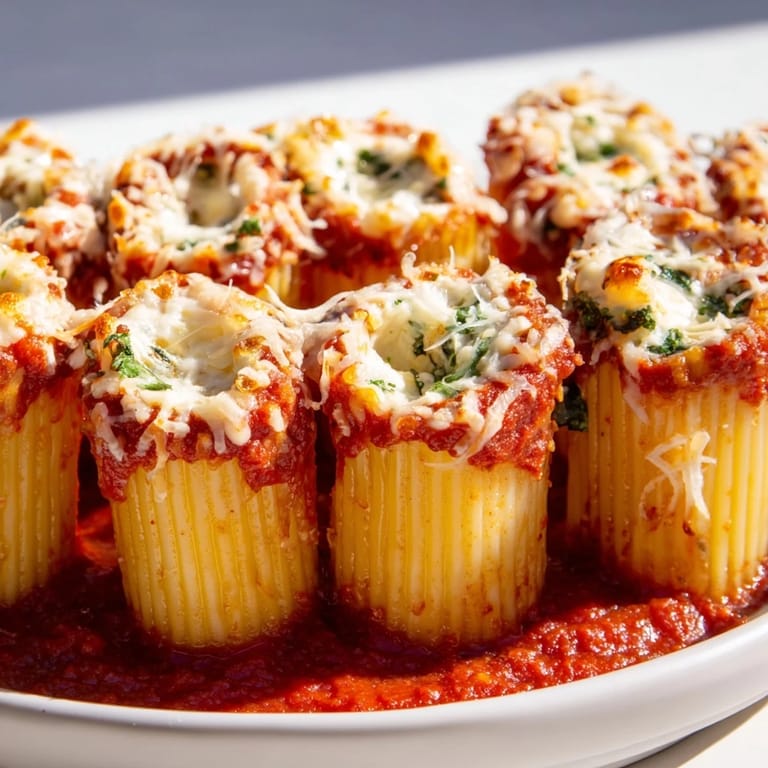
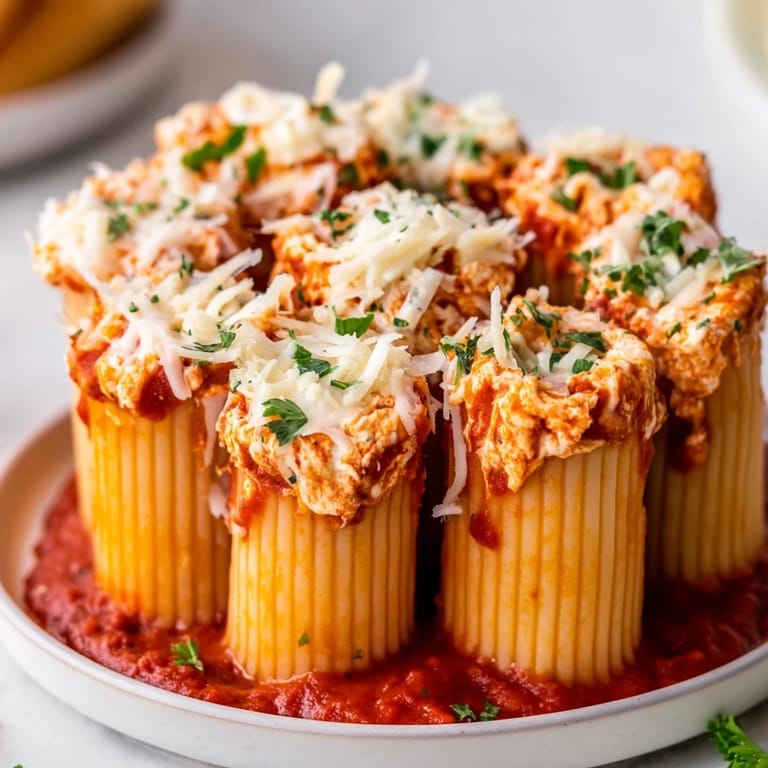
 The first time I stood a pasta tube upright on a baking sheet, I felt like I was building something architectural instead of cooking dinner. My friend Marco had mentioned this Sicilian-inspired bake years ago, describing how it looked like golden honeycomb when you peered down from above, and I'd never quite forgotten that image. One ordinary Tuesday, restless in the kitchen with a block of ricotta and some rigatoni, I decided to finally try it. Within minutes, I understood why he'd been so animated about it—there's something deeply satisfying about the precision of it, about filling each tube like you're tucking a secret inside, knowing what's coming when it all melts together in the oven.
I made this for a dinner party last spring, and watching my guests' faces when I brought it to the table was worth every minute of prep. One woman actually gasped and said it looked like something from an Italian grandmother's kitchen, which made me laugh because I'd learned it from YouTube and improvisation. What surprised me most was how the kids at the table, normally picky about baked pasta, demolished their portions—turns out when pasta is personalized like this, when each tube feels special, it matters.
Ingredients
- Rigatoni: You'll want exactly 500 g—large tubes that can hold a generous filling without tearing when you stuff them.
- Ricotta cheese: The 350 g base of your filling; it's mild and creamy, which means it won't compete with the other flavors.
- Mozzarella, grated: Use 100 g in the filling and another 150 g for topping to get that classic melty, bubbling finish.
- Parmesan cheese: A total of 50 g mixed in plus 2 tbsp on top brings depth and a slightly salty note that makes everything taste more intentional.
- Egg: One large egg binds the cheese mixture so it holds together inside each tube instead of leaking out.
- Fresh basil and parsley: 1 tbsp each adds brightness that cuts through the richness; don't skip these.
- Marinara sauce: 700 ml of your favorite store-bought or homemade; this is what surrounds and cooks the pasta.
- Salt and black pepper: Season to taste in the filling—remember the cheese itself is already salty, so go gentle.
- Olive oil: For greasing the pan and tossing the cooked pasta so it doesn't clump together.
Tired of Takeout? 🥡
Get 10 meals you can make faster than delivery arrives. Seriously.
One email. No spam. Unsubscribe anytime.
Instructions
- Set up your stage:
- Preheat your oven to 200°C (400°F) and grease a 23 cm springform pan with olive oil, then line the bottom with parchment paper so your creation slides out cleanly later. Have all your ingredients prepped and within arm's reach—this recipe moves quickly once you begin.
- Cook the rigatoni just barely:
- Boil a large pot of salted water and add the rigatoni, pulling it out 2 minutes before the package says it's done—it should bend slightly but still have backbone. Drain it gently and toss with just a whisper of olive oil to keep the tubes from sticking to one another.
- Make your filling:
- In a bowl, combine ricotta, mozzarella, Parmesan, egg, basil, parsley, salt, and pepper, stirring until the mixture is smooth and creamy without any lumps. Taste it and adjust seasoning—this is your only chance to season before everything bakes.
- Stand the tubes upright:
- Arrange the rigatoni tubes standing straight up in your prepared pan, packed snugly together so they support one another and fill the entire base. It's like a little edible garden before the magic happens.
- Fill each tube:
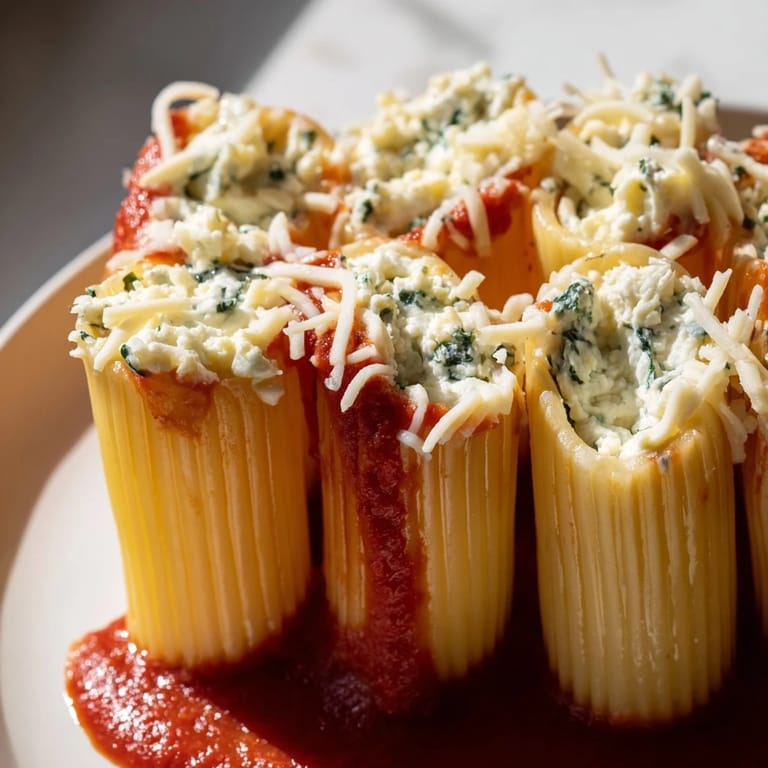
- Spoon the cheese mixture into a piping bag or a zip-top bag with the corner snipped off, then pipe the filling into each tube until full—you'll see the mixture rise slightly at the top. Work methodically so each tube gets its share.
- Pour the sauce:
- Evenly distribute the marinara sauce over the filled pasta, then tap the pan gently so the sauce finds its way between the tubes and surrounds them from all sides. The sauce will seem thin, but it will reduce and concentrate as it bakes.
- Top generously:
- Scatter shredded mozzarella and grated Parmesan across the top until you can barely see the red sauce underneath.
- Bake in two stages:
- Cover the pan loosely with foil and bake for 25 minutes, then remove the foil and bake for another 10 minutes until the cheese is bubbly and starting to turn golden at the edges. You'll know it's ready when you see a few brown spots on the very top.
- Rest before serving:
- Let the bake sit for 10 minutes so the cheese sets slightly and everything firms up enough to slice cleanly. Run a small knife around the edge of the springform and gently release it, then cut into wedges.
 Save on Pinterest
 What made me love this dish wasn't just the taste, but the moment of revelation when I sliced into it at the table and everyone saw those perfectly filled tubes arranged in their honeycomb pattern. It reminded me that sometimes the simplest idea—standing pasta upright, filling it, surrounding it with sauce—creates something that feels significant and worth celebrating.
Why the Upright Arrangement Matters
Baking the pasta tubes upright instead of laying them flat changes everything about how they cook and how they taste. The filling stays concentrated and creamy inside each tube because gravity and the sauce work together to create gentle heat rather than aggressive bubbling. The top of each tube gets kissed by the oven's dry heat while the bottom stays moist and tender—you end up with a textural contrast that flat layers never achieve.
Customizing Your Filling
The cheese mixture is your canvas, and I've played with it countless times depending on what I had in the kitchen or what mood I was in. Sautéed spinach stirred into the ricotta adds earthiness and visual interest, or you can crumble cooked Italian sausage through it for those nights when you want something richer and more substantial. Even swapping the ricotta for cottage cheese works—it's slightly tangier and adds a different kind of moisture to the filling, which some people prefer.
Serving and Pairing Ideas
This bake is substantial enough to stand alone, but I always serve it alongside something bright and acidic to cut through the richness. A simple green salad dressed with lemon vinaigrette feels right, or if you're being fancier, a Chianti wine that's a touch dry will make the whole meal feel like you're sitting at a small restaurant in Tuscany instead of your dining room.
- Tear fresh basil over the top right before serving so you get a last-minute pop of herbaceous freshness.
- Grate a tiny bit of fresh lemon zest over individual servings to brighten the richness of the cheese.
- Leftover bake keeps well in the fridge for three days and reheats beautifully, making it perfect for a quiet lunch the next day.
 Save on Pinterest
 This honeycomb pasta bake has become my go-to when I want to impress without stress, or when I want to cook something that feels both approachable and a little bit special. It reminds me that sometimes the best dishes are the ones that look more complicated than they are.
Recipe Questions & Answers
- → How do I prevent the pasta tubes from sticking?
Toss the cooked rigatoni in a bit of olive oil after draining to keep each tube separate and prevent sticking while filling and baking.
- → Can I use a different type of cheese filling?
Yes, cottage cheese can replace ricotta for a lighter texture, and adding sautéed spinach or cooked Italian sausage enhances flavor.
- → What is the best way to stuff the rigatoni tubes evenly?
Use a piping bag or a resealable plastic bag with a corner snipped off to carefully fill each tube without spilling or gaps.
- → How do I ensure the top cheese layer gets golden and bubbly?
Bake the dish covered for the first 25 minutes to heat through, then remove foil for the last 10 minutes to brown and bubble the cheese topping.
- → What sides pair well with this dish?
A simple green salad and a glass of Chianti complement the rich and creamy pasta bake nicely, balancing the meal.
- → Is it okay to use store-bought marinara sauce?
Yes, just check for any hidden allergens and choose a quality sauce for best flavor impact in the dish.