 Save on Pinterest
 I learned to make osso buco during a particularly cold February when my aunt decided to teach me her Milanese secrets in her kitchen. She showed me how those pale veal shanks transform into something almost magical when given time and a proper braise, and I was immediately hooked by the way the bone marrow enriches the sauce. The first time I pulled that pot from the oven, the kitchen smelled like a trattoria in Milan, and I knew this was a dish worth mastering. It's become my go-to when I need to impress someone or simply want to feel like I'm cooking something that matters.
I made osso buco for my then-boyfriend's parents, and his mother—who actually grew up near Milan—took one bite and nodded quietly before asking for the recipe. That nod meant everything, and I realized in that moment that some dishes are worth the effort precisely because they demand respect and time. Now whenever I braise veal shanks, I think of that dinner and how food can be a form of honest communication.
Ingredients
- Veal shanks: Cross-cut bone-in pieces about 350 g each are essential; the bone and marrow become part of the sauce's soul, so don't skip them or substitute with boneless cuts.
- All-purpose flour: Just enough to create a light golden crust that helps seal in the juices, though you can swap for gluten-free flour without sacrificing results.
- Olive oil and butter: The combination matters because butter adds flavor while oil prevents burning at higher heat; don't use just one.
- Onion, carrots, and celery: This holy trinity (soffritto) builds the foundation of the sauce, so take time to mince them evenly for consistent cooking.
- Dry white wine: A wine you'd drink makes a difference; skip anything labeled as cooking wine.
- Diced tomatoes: Canned works beautifully here because the long cooking breaks them down into the sauce.
- Stock: Beef or veal stock adds depth that water cannot; homemade is ideal but quality store-bought works perfectly fine.
- Bay leaves and thyme: These quiet aromatics prevent the sauce from tasting one-dimensional.
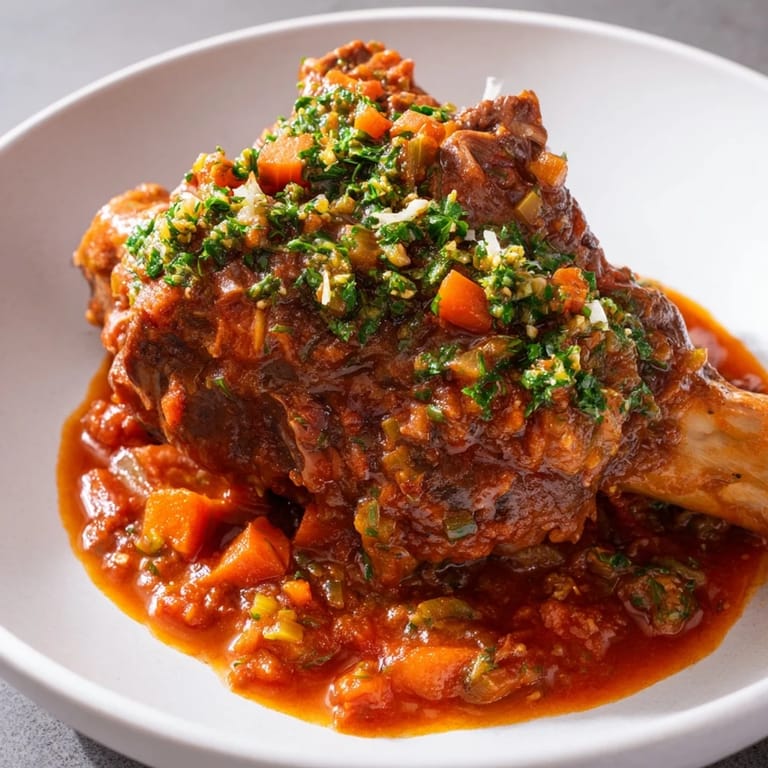
- Gremolata ingredients: The bright lemon zest and fresh parsley are the final flourish that elevates the entire dish from rustic to refined.
Tired of Takeout? 🥡
Get 10 meals you can make faster than delivery arrives. Seriously.
One email. No spam. Unsubscribe anytime.
Instructions
- Prep and Season the Veal:
- Pat the shanks completely dry with paper towels—this is crucial because moisture prevents browning. Season boldly with salt and pepper, then dredge lightly in flour, tapping off any excess so you get a thin coating, not a thick crust.
- Build a Golden Crust:
- Heat oil and butter together over medium-high heat until the butter froths. Working in batches if needed, brown each shank for 3–4 minutes per side until deeply golden, then set them aside on a plate. This browning is where flavor happens, so don't rush or crowd the pan.
- Create the Base:
- In the same pot, sauté the onion, carrots, celery, and garlic until soft and fragrant, about 6 minutes. Stir in tomato paste and cook for a minute to deepen its flavor, then pour in the wine and scrape the bottom with a wooden spoon to loosen all those caramelized bits.
- Build the Braising Liquid:
- Add the tomatoes with juice, stock, bay leaves, thyme, and half the lemon zest. Stir well so everything is combined and nothing sticks to the bottom.
- Return and Braise:
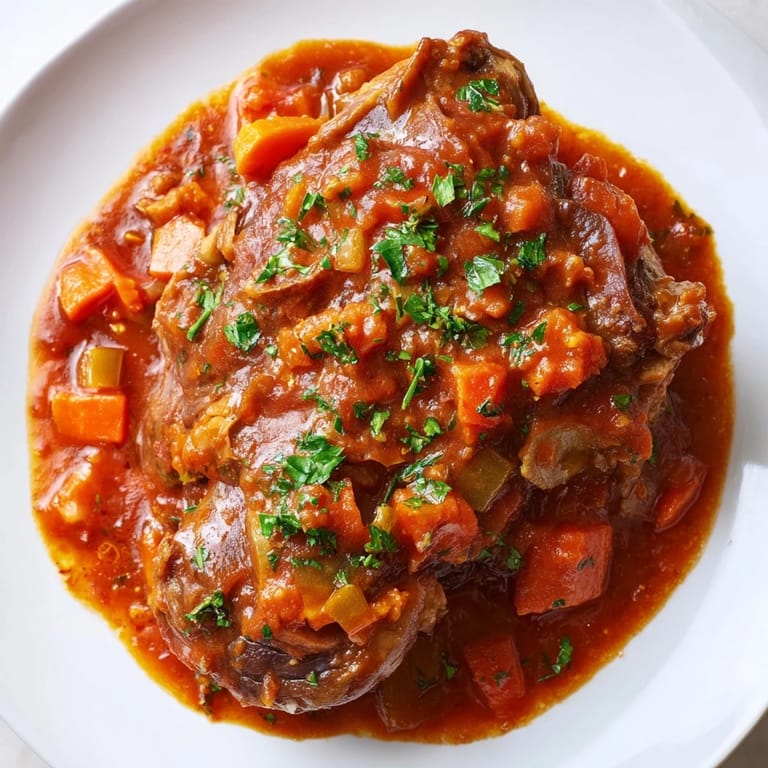
- Nestle the veal shanks back into the pot in a single layer and spoon sauce over them. Bring to a gentle simmer, then cover and transfer to a preheated 160°C (325°F) oven for 2 hours, until the veal is fork-tender and practically falling from the bone.
- Make the Gremolata:
- While the veal braises, mince the parsley, garlic, and remaining lemon zest together in a small bowl. This fresh mixture is your secret weapon for cutting through the richness at the very end.
- Finish and Serve:
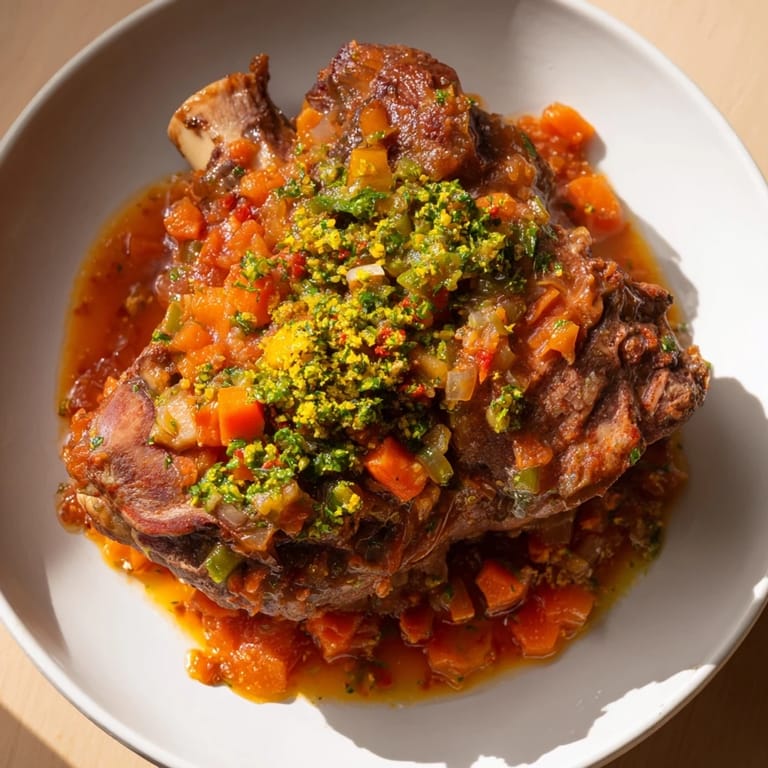
- Transfer the cooked shanks to a platter, then skim excess fat from the sauce and simmer it uncovered for a few minutes if you prefer it thicker. Spoon the sauce over the shanks and finish with a generous sprinkle of gremolata just before serving.
 Save on Pinterest
 I once brought osso buco to a potluck where someone asked why I bothered making something so complicated when I could have just grabbed takeout. I almost laughed, but instead I let them taste it, and their expression changed entirely—they understood that some things aren't about convenience, they're about presence and patience. That's when this dish became less about cooking for me and more about what it represents.
The Marrow Moment
The bone marrow is the hidden treasure in osso buco, something that transforms a simple veal braise into an experience. As the veal cooks, the marrow softens and enriches the sauce naturally, adding a richness that no cream could replicate. I learned to scoop out any marrow that surfaces during braising and stir it back in, intensifying that luxurious depth. Many people don't realize they're eating marrow until you tell them, and then it becomes this revelatory moment at the table.
What to Serve Alongside
Osso buco demands a starch that can soak up the sauce without competing for attention. Risotto alla Milanese—saffron-infused and creamy—is the traditional choice and honestly feels ceremonial alongside the braise. Creamy mashed potatoes work just as beautifully if you prefer something simpler, while polenta offers a different texture entirely. I've learned that whatever you choose should be relatively plain, because the sauce is the star and deserves a quiet supporting cast.
Make It Your Own
While this recipe follows the Milanese tradition closely, I've discovered small variations that honor the spirit while fitting your kitchen. Some cooks add a splash of cream to the sauce at the end, others prefer it completely unadorned. You can braise it low and slow for maximum tenderness, or at a slightly higher temperature if time is limited. The beauty of this dish is that it's forgiving as long as you respect the fundamentals of browning, braising, and that final bright gremolata.
- For a richer sauce, stir in a splash of cream just before serving, though purists might protest.
- If beef shanks are more accessible than veal, go ahead and use them; just add 20–30 minutes to the cooking time.
- Gremolata can be made up to a day ahead and stored in the fridge, but sprinkle it on warm plates moments before eating for maximum freshness.
 Save on Pinterest
 Osso buco is the kind of dish that rewards you for showing up and doing the work. Once you master it, you'll find yourself making it again and again, each time discovering something new in the kitchen.
Recipe Questions & Answers
- → What cut of meat is best for Osso Buco?
Veal shanks cross-cut with bone-in are traditional, providing tender meat and flavorful marrow during slow braising.
- → Can beef shanks be used instead of veal?
Yes, beef shanks are a suitable substitute; just adjust cooking time to ensure tenderness.
- → How is gremolata prepared and used?
Gremolata combines finely chopped parsley, garlic, and lemon zest, sprinkled over the dish right before serving for a fresh, zesty finish.
- → What side dishes complement this meal?
Classic pairings include saffron risotto, creamy polenta, or mashed potatoes to soak up the rich sauce.
- → How to make the dish gluten-free?
Use gluten-free flour for dredging veal shanks and verify other ingredients to ensure a gluten-free version.
- → What is the cooking temperature and time for braising?
Braise the shanks covered in an oven preheated to 160°C (325°F) for about 2 hours, until the meat is fork tender.