 Save on Pinterest
 I'll never forget the winter evening when my friend Sarah arrived at my holiday dinner with nothing but a sheepish smile and a request to use my kitchen. She'd seen a snowy pinecone centerpiece at a boutique shop and couldn't afford the forty-dollar price tag. So there we were, at my kitchen counter at seven o'clock, armed with cream cheese, almonds, and pure determination to create something just as magical. Two hours later, we'd built a edible masterpiece that became the talk of the evening—and the first thing guests wanted to taste.
That Christmas, after Sarah and I finished the centerpiece, we stood back and watched as each person who arrived immediately gravitated toward it, eyes wide. Nobody wanted to be the first to break into it—until my nephew, with the confidence only a child has, reached in and grabbed a handful of almonds dusted with powdered sugar. Within minutes, everyone was doing the same, and what started as a pristine winter scene became a shared experience of eating something beautiful together.
Ingredients
- Soft cheese (cream cheese or goat cheese, 250g/9 oz): This is your sculptural foundation—it needs to be soft enough to shape but firm enough to hold its form. Cream cheese gives you a mild, classic flavor, while goat cheese brings a slight tang that plays beautifully with the grapes. Room temperature cheese is your friend here; it spreads and shapes like butter.
- Sour cream or Greek yogurt (1 tablespoon): This loosens the cheese just enough to make it workable without making it runny. It's the difference between cheese that holds its shape and cheese that slumps.
- Fresh herbs, finely chopped (1 teaspoon, optional): Chives, dill, or parsley add a whisper of freshness that lifts the whole thing. I learned to mince them almost to a powder so they distribute evenly and don't create visible clumps.
- Garlic powder (½ teaspoon): A savory anchor that makes people say, "Wait, what is that delicious undertone?" without realizing it's garlic.
- Salt and black pepper: Season generously—more than you think you need. The cheese mutes flavors, so don't be shy.
- Sliced almonds or crisp crackers (1½ cups): These become your pinecone scales. Almonds are naturally elegant and stay crunchy; crackers like melba toasts shatter into perfect shards. I prefer a mix of both for varying textures.
- Seedless red and green grapes (1 cup each): These are your color contrast and your palate cleansers between bites of cheese and crunch.
- Assorted crackers (1 cup): Your building blocks for guests to scoop and eat. Choose a mix of textures and sizes.
- Fresh rosemary sprigs (½ cup): These aren't just garnish—they're edible, fragrant, and they make the whole platter smell like a winter forest.
- Powdered sugar (2 tablespoons): The final transformation that turns your creation into a snowy, magical centerpiece. A light hand here makes all the difference.
Tired of Takeout? 🥡
Get 10 meals you can make faster than delivery arrives. Seriously.
One email. No spam. Unsubscribe anytime.
Instructions
- Mix your cheese base into silky perfection:
- In a bowl, combine your soft cheese with sour cream or yogurt, then fold in the herbs, garlic powder, salt, and pepper. Stir until the mixture is completely smooth—no streaks, no lumps. This is the moment where you're building flavor and ensuring every bite tastes intentional.
- Shape your cheese into a majestic cone:
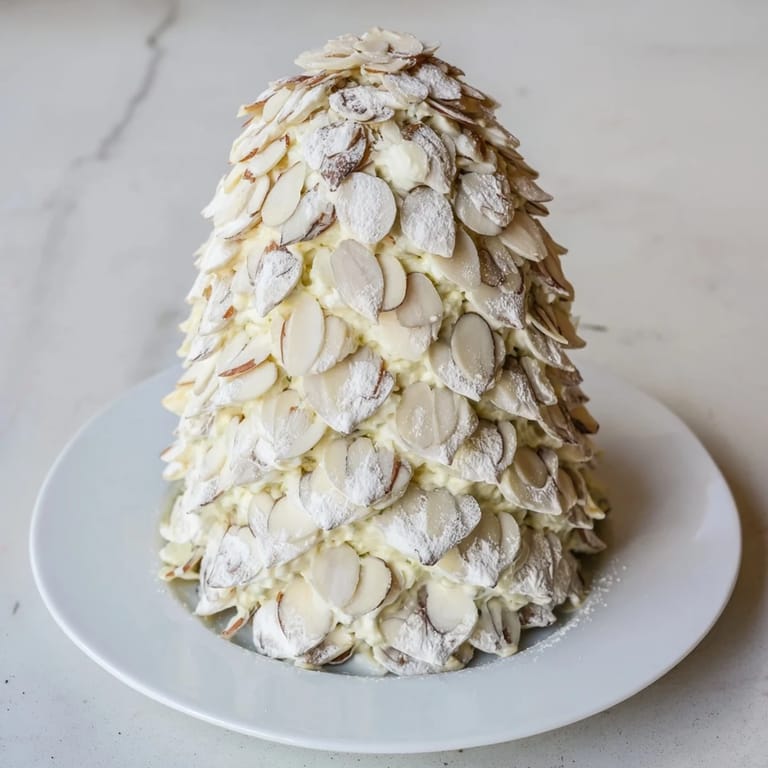
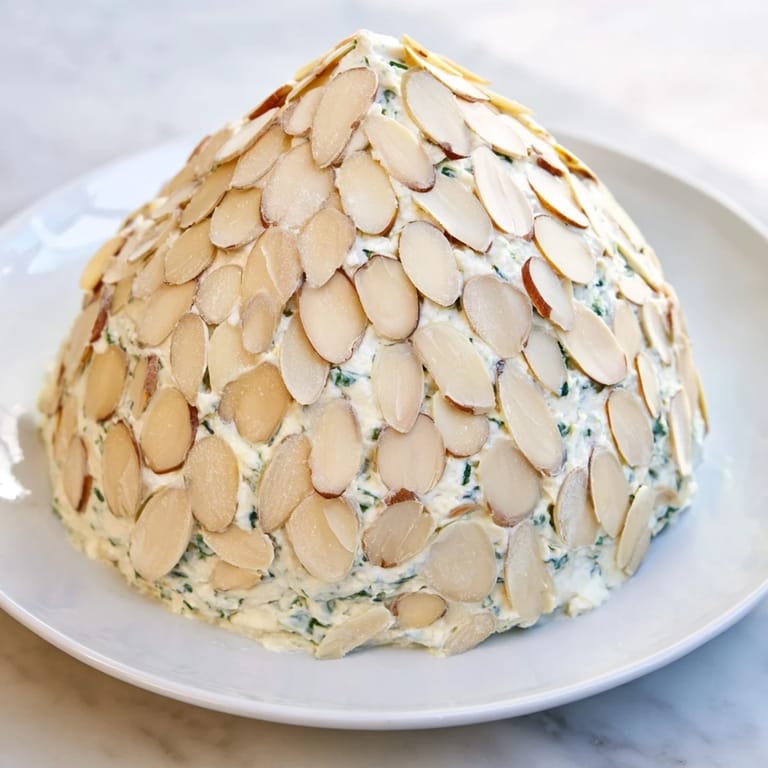
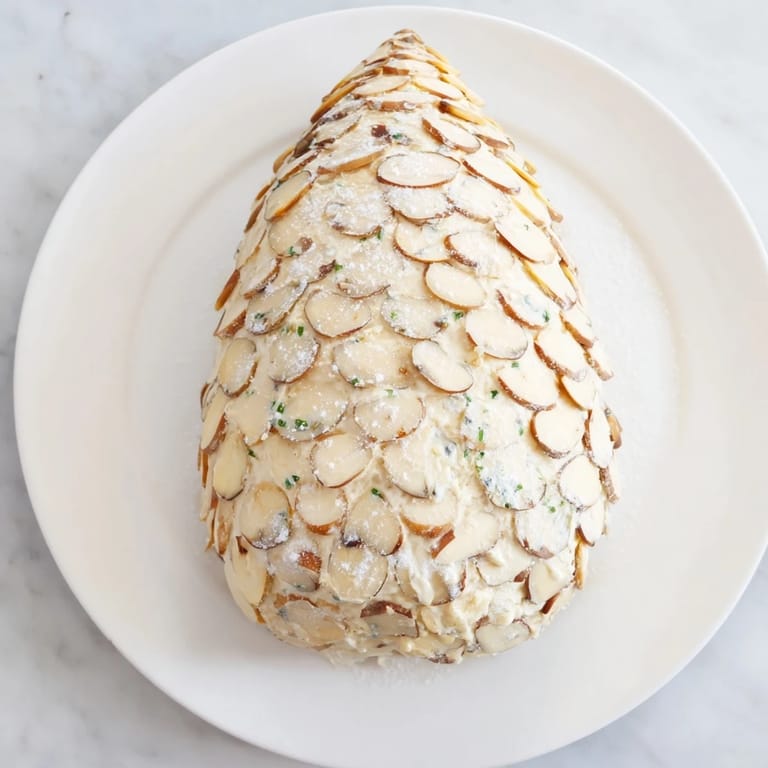
- Transfer everything onto your serving platter and gently mold it with your hands into a large, elongated oval or cone shape. Think less geometric perfection and more natural pinecone—slightly irregular is actually more beautiful. This should feel like you're cradling something precious.
- Press almonds into your creation like scales on a fish:
- Starting at the base, press almond slices or cracker shards into the cheese at a slight angle, overlapping them as you work upward. Each one should nestle slightly into the cheese below it. This is meditative work—take your time, let each scale catch the light. You're not just assembling; you're building a work of art.
- Create your edible landscape:
- Arrange grapes, crackers, and rosemary sprigs around the pinecone base in a way that feels natural and abundant. Cluster the red grapes on one side, green on the other, tuck rosemary sprigs like little evergreen branches. Step back frequently and look at it from different angles.
- Apply the finishing snow:
- Just before serving—and I mean just before, because the sugar will slowly dissolve and disappear—use a fine sifter or mesh sieve to gently dust powdered sugar over the entire pinecone and scattered across the platter around it. This is the magic moment. Watch as the transformation happens.
- Present your edible centerpiece with pride:
- Set it in the center of your table and watch people's faces light up. Invite them to break off the almond scales, scoop the creamy center with crackers, and eat the rosemary if they're feeling adventurous. This is food as theater, as connection, as art that feeds people.
 Save on Pinterest
 Years later, Sarah still mentions that Christmas. She'll text me a photo of a pretty appetizer and say, "Remember when we made that pinecone?" It wasn't the most complex thing we've ever created, but it was the moment we realized that food doesn't have to be complicated to be memorable—it just has to be made with intention and shared with people you love.
Why This Works as a Centerpiece
A centerpiece usually just sits there looking beautiful while you eat something else entirely. This one breaks that rule completely. The moment your guests realize they can eat it, everything changes. There's a playfulness in breaking off an almond scale, in using a cracker to scoop the creamy cheese, in discovering that rosemary is actually edible. It transforms what could be a stiff, formal moment into something interactive and fun. Plus, it takes up the visual real estate of the table center without requiring you to move it before you eat—it is the appetizer course.
Flavor Combinations That Surprise
On its own, this is a savory appetizer. But the magic happens when you eat the components together. The creamy, garlicky cheese meets the crunch of almonds, which meets the bright burst of cold grape, which meets the piney earthiness of rosemary, which meets the subtle salt of the cracker. None of these flavors scream for attention alone, but together they create a conversation. The powdered sugar adds a whisper of sweetness that keeps everything from feeling too one-note. It's the reason people eat more of this than they plan to.
Making It Your Own
This recipe is a foundation, not a law. I've made versions with goat cheese and chopped dried cranberries mixed into the base for a slightly sweet-savory thing that changes everything. I've swapped the almonds for crushed pistachios for a green pinecone that looks almost otherworldly. I've seen someone make a version with smoked paprika and crispy bacon pieces pressed into the cheese instead of almonds, and honestly, it was transcendent. The structure stays the same, but the flavor can go wherever your intuition takes you.
 Save on Pinterest
 Make this for people you want to impress or people you love—it doesn't matter which. Either way, you'll end up with a moment at the table that people remember long after they've forgotten what the main course was.
Recipe Questions & Answers
- → What type of cheese works best for the base?
Soft cheeses like cream cheese or goat cheese provide a smooth, moldable texture that holds the pinecone shape well.
- → Can I substitute almonds with other nuts?
Almond slices work best for the pinecone scale effect, but thinly sliced nuts like pistachios may be used for variation.
- → How should I store the centerpiece before serving?
Keep it refrigerated, covered lightly with plastic wrap, to maintain freshness and shape until serving.
- → What is the purpose of powdered sugar in this centerpiece?
Powdered sugar is sifted over to create a snowy, festive appearance that enhances the visual appeal.
- → Are there suggested pairings for this centerpiece?
It pairs well with crisp white wines like Sauvignon Blanc or sparkling wines, enhancing the fresh and creamy flavors.