 Save on Pinterest
 The first time I watched fondue being made properly, I was mesmerized—not by the cooking, but by how it brought everyone to the table at once, forks clinking, laughter building as we all reached for the same bread cube. Years later, I realized Swiss cheese fondue isn't really about the technique, though technique matters. It's about the moment when melted Gruyère and Emmental create that silky, almost gravity-defying pull, and suddenly you're not just eating—you're part of something ceremonial.
I made this for a dinner party one February when it was too cold to think about anything except warmth, and my friend Sarah arrived with a bottle of Fendant wine. We hadn't planned it that way—she'd just grabbed what looked Swiss at the shop. Halfway through the fondue, someone made a joke about losing bread in the pot (a supposed tradition of singing), and it became the kind of evening you remember not because everything went perfectly, but because nobody wanted to leave the table.
Ingredients
- Gruyère cheese, grated (200 g): This is the backbone—earthy, slightly sweet, and it melts without becoming grainy if you respect the temperature.
- Emmental cheese, grated (200 g): The softer counterpart that keeps things creamy and adds a gentle nuttiness that Gruyère alone won't give you.
- Dry white wine (1 cup / 240 ml): Never use cooking wine; this is half your flavor foundation, and a decent Fendant or even a lean Sauvignon Blanc makes all the difference.
- Kirsch, cherry brandy (1 tbsp / 15 ml, optional): If you find it, add it—it whispers complexity rather than shouts, and your guests will taste something they can't quite name.
- Cornstarch (1 tbsp / 8 g): This prevents the cheese from breaking and separating, which is the only real risk in fondue.
- Garlic clove, halved (1): A brief rub leaves ghost of garlic that seasons the entire pot without overpowering.
- Nutmeg, freshly grated (1/4 tsp): Ground nutmeg loses its soul; invest thirty seconds in a microplane and notice the difference.
- White pepper, ground (1/4 tsp): Subtler than black pepper and won't speckle the creamy sauce.
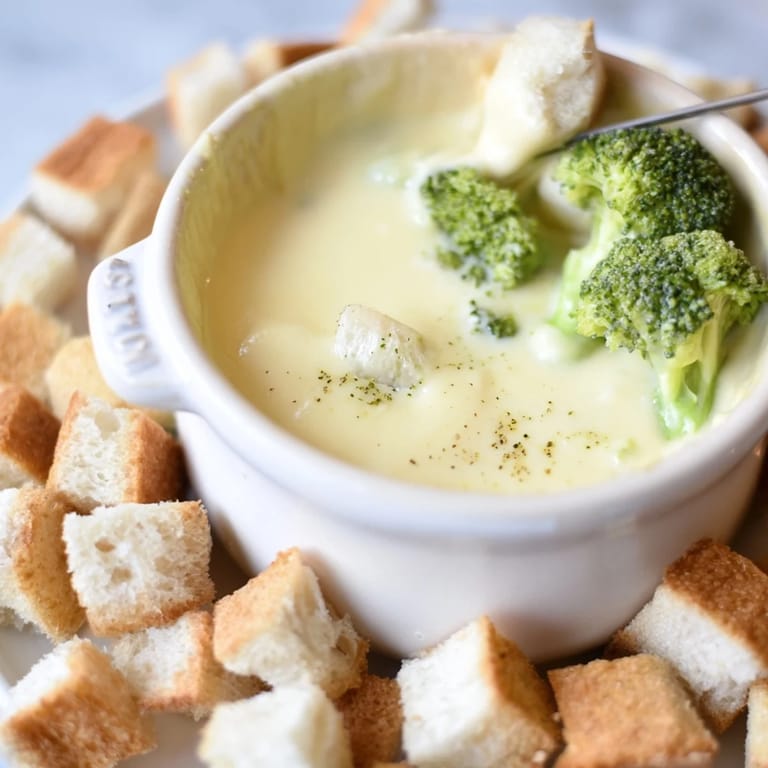
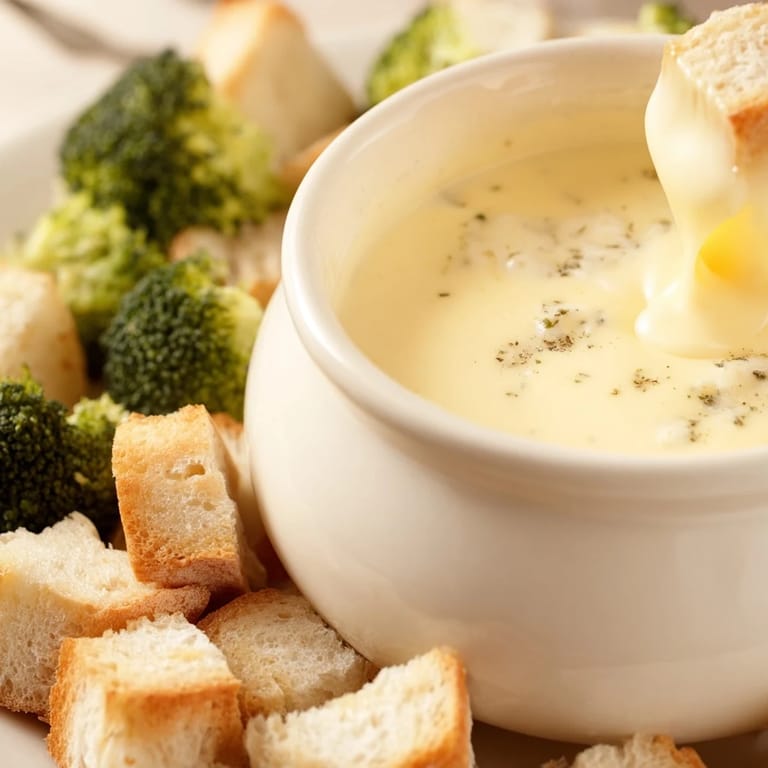
- Bread, cut into cubes (1 baguette or rustic country bread): Slightly stale bread grips the fork better and won't fall apart in the hot fondue.
- Broccoli florets, blanched (1 cup / 100 g): Brightens the richness and gives you something to feel virtuous about.
- Cauliflower florets, blanched (1 cup / 100 g): Milder than broccoli and equally good for soaking up cheese.
- Cherry tomatoes (1 cup / 100 g): These add a small burst of acidity that cuts through the richness.
- Baby carrots, blanched (1 cup / 100 g): Sweet and tender when lightly cooked, they're the textural break your palate will appreciate.
Tired of Takeout? 🥡
Get 10 meals you can make faster than delivery arrives. Seriously.
One email. No spam. Unsubscribe anytime.
Instructions
- Season your pot with garlic:
- Rub the inside of your fondue pot with the cut garlic clove—you're building flavor memory into the pot itself, not making it garlicky. Discard the clove.
- Warm the wine gently:
- Pour in the white wine and bring it to a barely-there simmer over medium-low heat. You want wisps of steam, not rolling bubbles; rushing this step and the cheese will seize.
- Coat the cheese with cornstarch:
- Toss your grated cheeses with cornstarch in a bowl so each shred gets a micro-thin coating. This is your insurance against a broken sauce.
- Add cheese slowly while stirring:
- Add the cheese in three or four batches, stirring in a figure-eight motion—this constant movement keeps every bit melting evenly and prevents clumping. Watch it disappear into silky liquid.
- Finish with kirsch and spices:
- Stir in the kirsch (if using), nutmeg, and white pepper until completely incorporated. Taste and adjust—sometimes you'll want a whisper more nutmeg.
- Serve over low heat:
- Transfer to your tabletop burner set to low, never high. The moment it boils, the magic ends and you're left with separated, grainy cheese.
 Save on Pinterest
 What struck me most about fondue wasn't the eating—it was watching my grandmother, who usually ate alone and quietly, suddenly animated and laughing with her whole face. Something about the slow pace and the ritual of dipping made conversation feel easier. That's when I understood fondue isn't a recipe; it's permission to linger.
The Wine Question
The wine isn't decorative—it's structural. It creates the acidic base that prevents the cheese from turning into a gluey paste, and it adds brightness that balances the dairy richness. I learned this the hard way by trying to substitute broth once, thinking it would work. It didn't. A dry white wine, nothing fancy, is worth the small expense. Fendant is traditional and affordable, but any lean, unoaked white wine—a Sauvignon Blanc, an Albariño, even a crisp Riesling—will work beautifully.
Why Fresh-Grated Cheese Matters
Pre-shredded cheese often contains anti-caking agents that prevent smooth melting and create a grainy texture that no amount of stirring can fix. Grating cheese yourself takes maybe five minutes and transforms the outcome completely. The first time you make fondue with freshly grated Gruyère, you'll taste the difference immediately—creamy, cohesive, luxurious in a way that bagged cheese can't quite achieve. It's one of those small kitchen decisions that feels minor until you taste it.
The Table Setup That Changes Everything
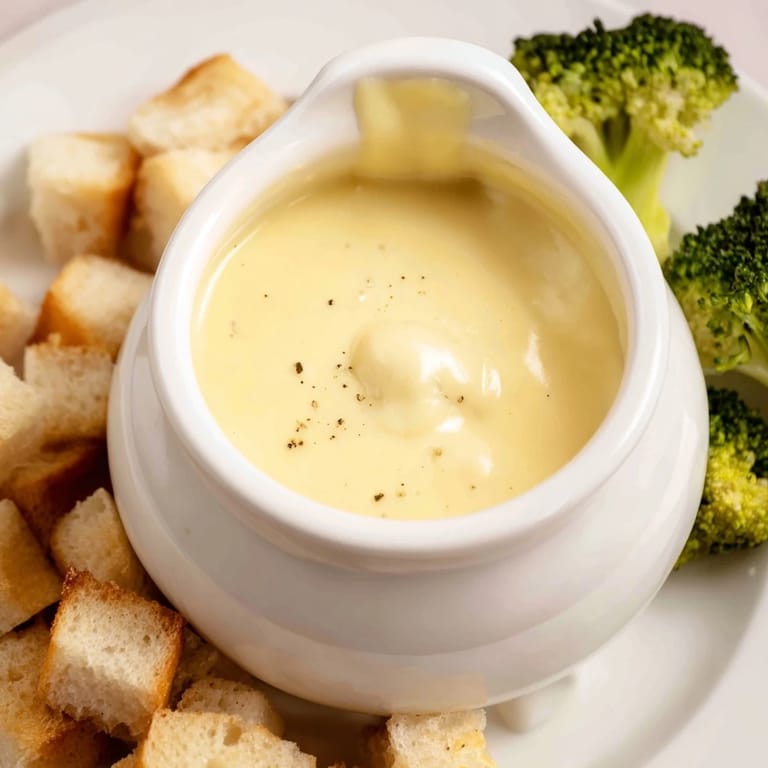
Fondue demands choreography. Arrange your vegetables and bread on a board or platter so everyone can reach without leaning. Fill small individual plates for people to assemble their fork before dipping—it prevents the chaotic moment where everyone's trying to skewer bread at once. Keep extra cubes in a bread basket under a clean cloth so they don't dry out, and have extra vegetables prepped and waiting. The better your setup, the longer the meal stays warm and the more relaxed everyone becomes.
- Blanch vegetables just enough to soften them slightly but keep them firm enough to stay on a fork.
- Cut bread into roughly equal cubes so everyone dips at the same pace and the sauce level stays consistent.
- Use long fondue forks if you have them, or regular wooden skewers—the distance between your fingers and the hot pot matters for safety and comfort.
 Save on Pinterest
 Fondue is less about perfection and more about presence. Make it for people you want to linger with, and everything else—technique, timing, even small mistakes—becomes part of the story.
Recipe Questions & Answers
- → What cheeses are used in this fondue?
Gruyère and Emmental cheeses are grated and combined to create a creamy, flavorful base.
- → How is the cheese mixture kept smooth and creamy?
Cornstarch is tossed with the grated cheeses to ensure a smooth melt and prevent separation.
- → What liquids are incorporated into the dish?
Dry white wine gently warms the cheese, with optional kirsch enhancing depth and aroma.
- → What are good dipping choices for this dish?
Crusty bread cubes and blanched vegetables like broccoli, cauliflower, cherry tomatoes, and baby carrots complement the cheese blend perfectly.
- → How should the dish be served to maintain its texture?
Keep the fondue warm over low heat using a fondue pot and tabletop burner to preserve its smooth consistency.
- → Can the flavor be altered?
Substituting some cheeses with Appenzeller or omitting kirsch adapts the flavor to preference.