 Save on Pinterest
 There was a Tuesday evening when my friend showed up unexpectedly at my door, and I had maybe thirty minutes to pull together something warm and filling. I opened the pantry and found dried lentils staring back at me, a bag I'd picked up weeks earlier with good intentions. While vegetables roasted in the oven, filling the kitchen with this incredible caramelized sweetness, I realized this simple soup was exactly what we both needed—no fuss, no pretense, just honest food that nourished without demanding much from me.
I made this soup for my parents one Sunday in late October, and my mom asked for the recipe before she'd even finished her bowl. What struck me was how she kept saying it tasted more complex than it should, like I'd layered flavors for hours when really I'd just let the vegetables caramelize and trusted the spices to do their thing. That's when I understood this soup works because it doesn't try too hard.
Ingredients
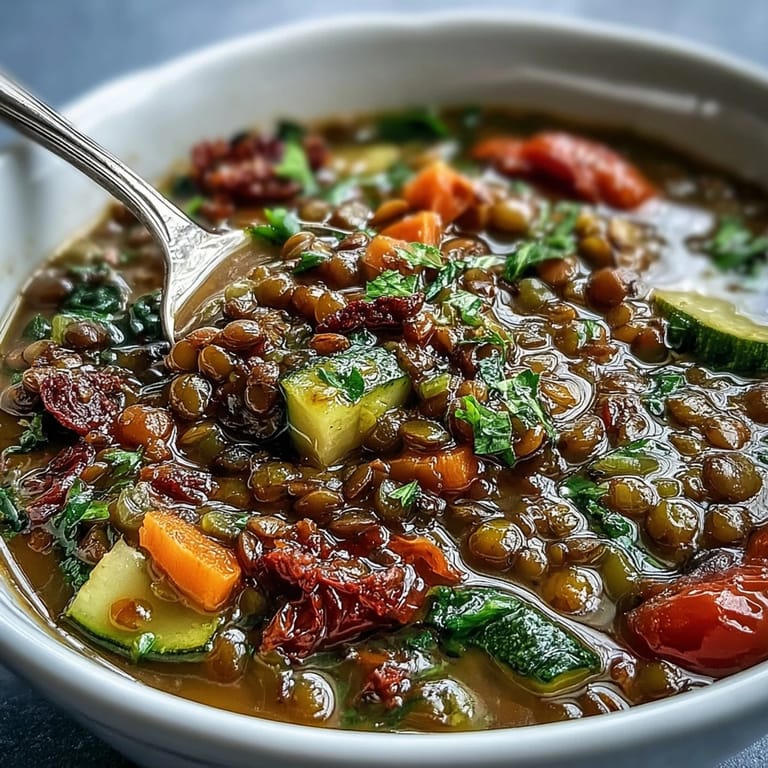
- Dried green or brown lentils (1 cup): These hold their shape beautifully and don't turn mushy, which is the whole secret to a soup that feels substantial. Always rinse them first, even though the bag says they're already cleaned—you'll see bits of debris that didn't make the cut at the factory.
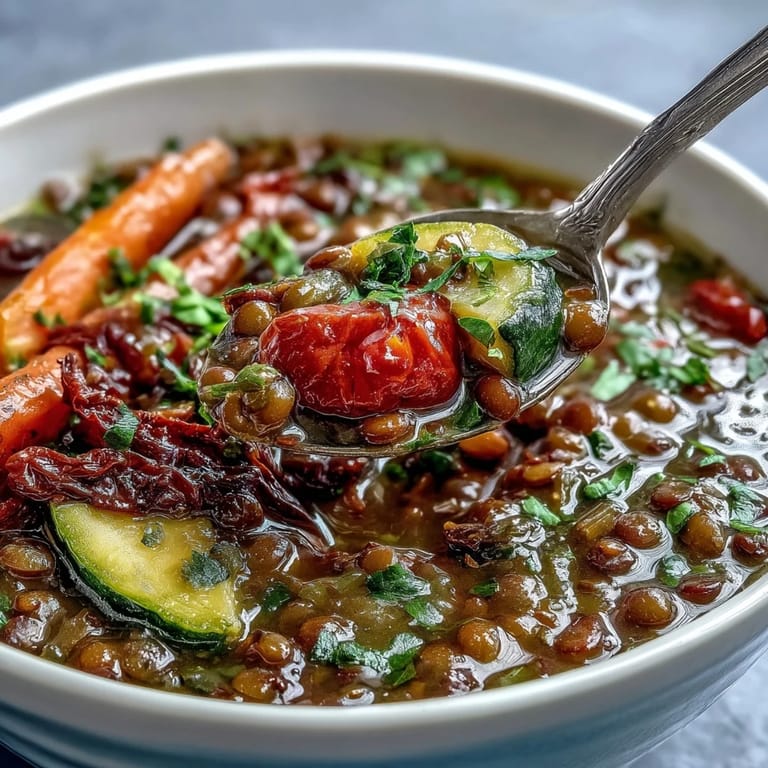
- Carrots, celery, zucchini, bell pepper (2 medium carrots, 2 stalks, 1 medium, 1 red): Roasting these instead of simmering them from the start creates a depth of flavor that simmering alone just can't match. The edges caramelize and concentrate their sweetness.
- Cherry tomatoes (1 cup, halved): These burst open in the oven and create little pockets of intense tomato flavor throughout the soup. Regular tomatoes work too, but cherry tomatoes' natural sugar really shines.
- Yellow onion and garlic (1 medium, 3 cloves): The onion softens in the pot while you wait for the vegetables to roast, building your flavor base. The garlic goes in just long enough to release its aroma without turning bitter.
- Vegetable broth (6 cups): Quality matters here since it's the backbone of every spoonful. I've learned to taste as I go and adjust with water if the broth is particularly assertive.
- Olive oil (2 tablespoons total): Split between roasting the vegetables and sautéing the aromatics, this modest amount is all you need since lentils themselves are lean.
- Dried thyme, oregano, and smoked paprika: These three create a warm, earthy backdrop that feels almost Mediterranean without being heavy-handed. The smoked paprika especially adds a complexity that catches people off guard.
- Bay leaf: One bay leaf is all you need—it seasons subtly and pulls out once the soup is done cooking. More than one and you'll taste that piney quality overpowering everything else.
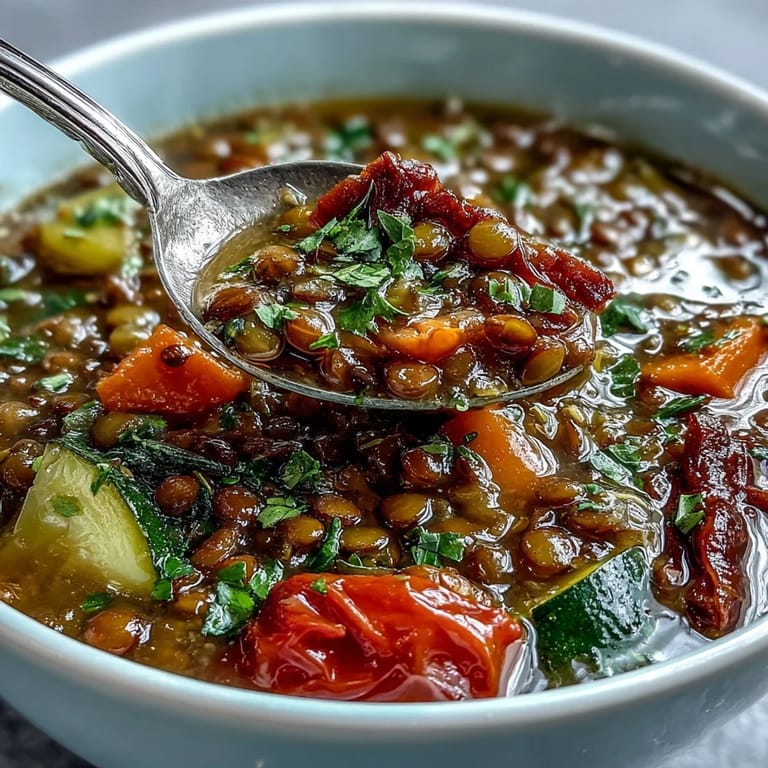
- Fresh parsley and lemon juice: Both are optional but absolutely change the final bowl. The parsley adds freshness, and the lemon brightness cuts through the earthiness of the lentils in a way that feels almost revelatory.
Tired of Takeout? 🥡
Get 10 meals you can make faster than delivery arrives. Seriously.
One email. No spam. Unsubscribe anytime.
Instructions
- Get your oven ready and start roasting:
- Set the oven to 425°F and toss your diced carrots, celery, zucchini, bell pepper, and halved cherry tomatoes with 1 tablespoon olive oil, salt, and pepper. Spread them on a baking sheet in a single layer—don't overcrowd—and slide them in. You're looking for edges that turn golden and caramelize, which usually takes about 20 minutes.
- Build your flavor base while vegetables roast:
- Heat the remaining 1 tablespoon olive oil in a large pot over medium heat and add your chopped onion. Let it soften for about 4 minutes, stirring occasionally, then add the minced garlic and cook for just 1 minute more until fragrant. You want the garlic to wake up the pot without burning.
- Combine everything for the simmer:
- Rinse your lentils one more time, then add them to the pot along with the roasted vegetables, vegetable broth, thyme, oregano, smoked paprika, and bay leaf. Give everything a good stir, bring it to a boil over medium-high heat, then immediately reduce the heat and let it simmer uncovered for about 25 minutes. The lentils should be tender but not falling apart.
- Finish with finesse:
- Remove the bay leaf and taste your soup—this is where you decide if it needs more salt, pepper, or a squeeze of lemon juice. The lemon especially transforms the bowl, so don't skip it if you have one on hand. Ladle it hot into bowls and top with fresh parsley if you're using it.
 Save on Pinterest
 There's something about stirring a pot of lentil soup that feels meditative, almost grounding. My grandmother never wrote down her recipes, but I think she'd recognize this approach—treating simple ingredients with respect and letting them speak for themselves rather than drowning them in cream or complicated techniques.
When to Roast Your Vegetables
I used to dump everything into the pot raw and simmer it all together, wondering why my soup tasted flat and one-dimensional. The turning point came when I realized roasting wasn't an extra step—it was the difference between a soup that tastes okay and one that tastes like you've unlocked something special. The high heat concentrates flavors, creates a little color, and builds complexity that simmering in broth alone simply can't achieve.
Variations That Feel Natural
Once you understand the structure of this soup, you can swap in whatever is fresh or lingering in your vegetable drawer. I've made it with butternut squash in the fall, added spinach in the summer, and thrown in mushrooms when I found them on sale. The beauty is that lentils are forgiving—they anchor the soup while everything else can change seasonally.
Serving and Storage Wisdom
This soup tastes even better the next day once the flavors have had time to mingle and settle. I usually make a double batch and freeze half in containers, which means I have comfort in a container whenever I need it. It reheats beautifully on the stovetop with a splash of water if it's thickened.
- Serve it with crusty bread to soak up every last bit of broth and flavor.
- A dollop of yogurt or a drizzle of tahini adds richness if you want to depart from vegan territory.
- Fresh herbs like basil or cilantro can replace the parsley if that's what you have on hand.
 Save on Pinterest
 This soup reminds me why I cook at all—it's an easy way to turn a handful of ingredients into something that feels generous and warm. Make it once and you'll find yourself returning to it again and again, always with a slight variation depending on what the season offers.
Recipe Questions & Answers
- → What type of lentils work best?
Green or brown lentils are ideal because they hold their shape well during cooking. Red lentils tend to break down more, resulting in a thicker texture. Rinse them thoroughly before adding to the pot.
- → Can I make this soup ahead of time?
Absolutely. This soup actually tastes better the next day as flavors have time to meld. Store in an airtight container in the refrigerator for up to 4 days. Reheat gently on the stove, adding a splash of broth if needed.
- → Is this soup freezer-friendly?
Yes, it freezes beautifully. Cool completely before transferring to freezer-safe containers. Leave some space at the top as liquids expand when frozen. It will keep well for up to 3 months. Thaw overnight in the refrigerator.
- → What vegetables can I substitute?
Feel free to use sweet potato, butternut squash, parsnips, or kale instead of or in addition to the suggested vegetables. The roasting step works well with most hearty vegetables that can withstand high heat.
- → How do I make the soup more filling?
For extra substance, serve with crusty bread or add a cup of cooked pasta or rice during the last 10 minutes of simmering. A dollop of pesto or a drizzle of good olive oil also adds richness.
- → Can I use canned lentils?
You can use canned lentils to save time, though the texture will be different. Use about 3 cups rinsed, drained canned lentils and add them during the last 10-15 minutes just to heat through.